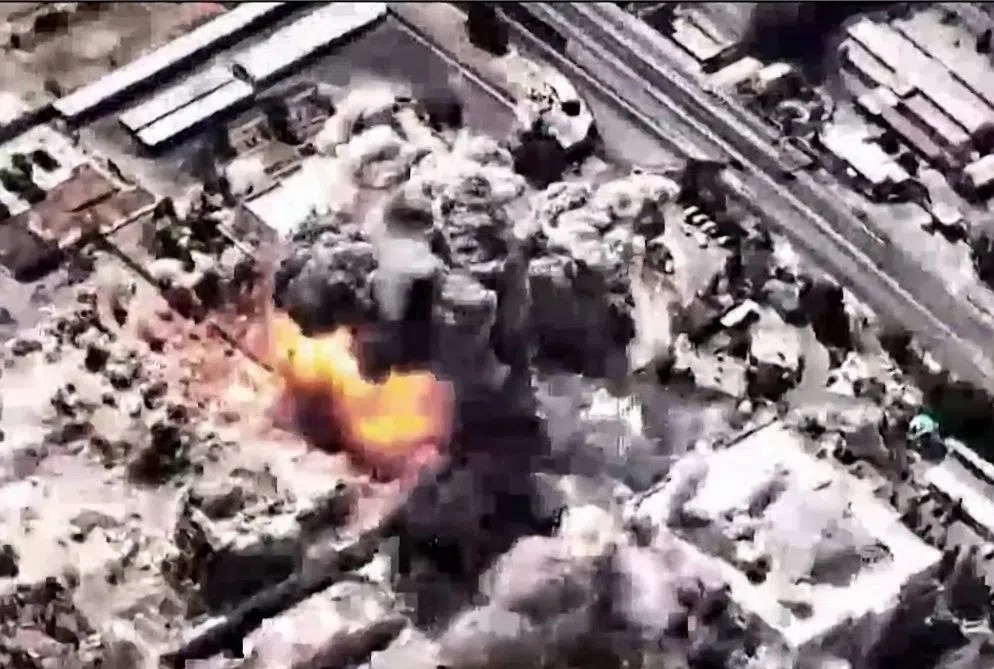
The joint military strike by the United States and Israel against Iran suddenly ignited the geopolitical conflicts in the Middle East. This unexpected event was mainly transmitted through energy supply chain disruptions, surging risk aversion, rebounding inflation expectations, and re-evaluation of monetary policies, causing a comprehensive impact on the international financial market and pushing global assets into a "risk repricing" cycle. This conflict is not only a regional security incident but also a key variable for testing the global financial resilience, reconfiguring the flow of funds and asset logic, and its impact is far-reaching and highly uncertain.
After the conflict broke out, the international financial market quickly presented a typical pattern of strong safe-haven assets, pressured risky assets, and skyrocketing energy prices. Brent crude oil futures jumped significantly, and the geopolitical risk premium rapidly pushed up oil prices. About one-third of the global maritime oil trade relying on the Strait of Hormuz became the market focus. Shipping insurance costs rose, shipping routes were adjusted, further amplifying the volatility of energy prices. Gold, as a traditional safe-haven asset, also rose sharply, supported by the dual logic of risk aversion and inflation resistance, becoming a safe haven for funds, attracting global capital to pour in. At the same time, global stock markets generally declined, major indices of the US and European stock markets showed significant corrections, the market panic index rose, risk appetite rapidly cooled, funds withdrew from high-valued sectors and turned to defensive assets.
From the perspective of the transmission mechanism, this shock penetrated the global financial system along three core paths. First, energy price shocks the inflation base. The upward movement of oil prices directly pushed up the costs of industries such as chemicals, logistics, and transportation, leading to a rebound in global inflation expectations, causing the major economies that have already entered the period of interest rate cuts and waiting are in a dilemma. The Federal Reserve, the European Central Bank, etc. were forced to slow down the easing pace, tightening liquidity expectations suppressed stock market valuations, the financing costs of highly indebted economies rose, and debt pressure intensified. Second, the global capital flow was restructured. Capital showed a "risk reduction, towards safety" feature, and large-scale inflows into safe assets such as the US dollar, US bonds, and gold pushed the US dollar index higher, and US bond yields declined; while emerging markets with high energy import dependence and heavy foreign debt pressure faced capital outflows and currency depreciation pressure, the global financial cycle divergence further intensified. Third, systemic risk preference declined. Geopolitical uncertainty suppressed corporate profit expectations and investment confidence, the adjustment pressure on high-valued technology and consumer sectors was significant, while energy, military, and other sectors were relatively less vulnerable. The structure of global stock markets became more differentiated.
Currently, the international financial market is in a state of short-term shock and medium-term risks intertwined. In the short term, market fluctuations are mainly driven by emotions and transactions, and asset prices are highly sensitive to conflict news; in the medium term, the depth of the impact depends on whether the conflict spreads, whether the Strait of Hormuz is unobstructed, and the strength of Iran's countermeasures. If the conflict remains at a limited scale, the market will gradually digest the shock, and oil prices and gold prices will fluctuate at the upper limit before returning to the fundamentals; if the war expands and interferes with energy transportation, the global stagflation risk will significantly increase, economic growth will slow down and inflation will remain high, and the volatility cycle of the financial market will be significantly prolonged; if there is a scenario such as a channel blockade, it may trigger systemic risks, leading to a sharp adjustment of global assets, tightening of liquidity, and threatening financial stability.
The foreign exchange and bond markets also showed significant differentiation. The US dollar strengthened temporarily due to its hedging attributes and global settlement position, and the Swiss franc, Japanese yen, and other safe-haven currencies rose simultaneously; non-US currencies were generally under pressure, and the volatility of emerging market currencies intensified. The bond market presented a pattern of "safe assets favored, credit assets under pressure", with US bonds and other developed country government bonds experiencing an increase in demand for hedging and a decline in yields, while high-yield bonds and sovereign bonds of emerging markets faced adjustments due to an increase in risk premiums, and the global credit environment tightened marginally.
From a more macro perspective, this conflict exposed the high vulnerability of the global financial system to Middle East geopolitical risks. Energy remains the lifeblood of modern economies. As the core energy-producing region of the world, any unrest in the Middle East will quickly spread to the financial end. The conflict has further strengthened the market's perception of the normalization of geopolitical premiums, prompting investors to enhance the defensive nature of their portfolios and increase allocations to hedging assets such as gold and energy. At the same time, the combination of monetary policy and geopolitical risks has made the global financial cycle more difficult to predict, and the central value of market volatility may shift upward in the long term.
Overall, the joint attack by the United States and Israel on Iran is a typical geopolitical black swan event, which has already caused immediate and profound impacts on the international financial market. In the short term, the market will experience intense fluctuations as the conflict evolves. In the medium term, stagflation risks and liquidity expectations will become the main pricing factors. In the long term, it may accelerate the adjustment of the global energy landscape, capital flows, and the monetary system.

OpenAI updated its compute expenditure expectation through 2030 from approximately $600 billion up to $750 billion, while announcing the launch of "Project Camellia," a $20 billion self-operated data center project in Georgia, and signing a 3.2 gigawatt power supply agreement with a local utility company.

OpenAI updated its compute expenditure expectation through …
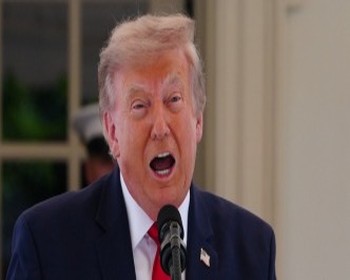
In late July 2026, tensions between the United States and I…
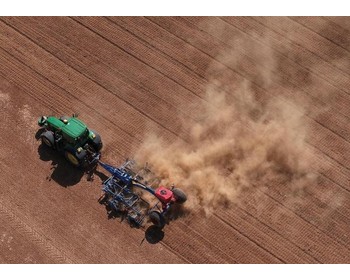
The heatwave sweeping across the region, coupled with the e…

British Prime Minister Barnham announced that the business …
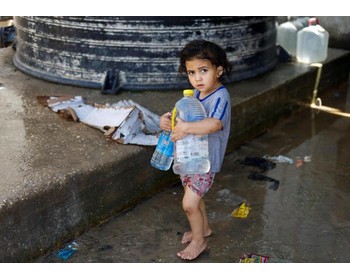
The global food monitoring agency said that due to a lack o…

On Thursday, South Korean investigators raided the office o…
© Copyright 2026, All Rights Reserved