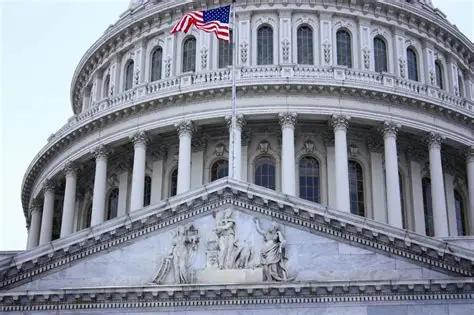
On May 12, 2026, the US Court of International Trade officially ordered the refund of the previously illegally imposed tariffs. This ruling once again pinned the Trump administration's trade policies on the "illegal" peg. At the same time, over 70 bipartisan lawmakers jointly sent a letter to the White House before the president boarded the plane for his visit to China, sternly demanding that no concessions be made in negotiations regarding key industries such as automobiles. On one hand, the court negated the arbitrary expansion of executive power; on the other hand, Congress actively restrained the president's diplomatic actions. The political elites in Washington are demonstrating in textbook style to the world: How chaotic can the decision-making mechanism of a superpower be.
The background of this event is not complicated. After the Trump administration returned to power for the second time, citing the need to balance the international balance of payments, it invoked Article 122 of the 1974 Trade Act to impose a 10% general tariff on most imported goods. However, the federal court clearly pointed out that the United States was facing a trade deficit rather than an international balance of payments crisis, and this law was seriously misused. What is even more intriguing is that just before the president flew to Beijing to seek trade breakthroughs, there was a roar from the Congress demanding a firm adherence to the industry red line. This kind of "left-hand negotiation, right-hand sword" drama has become the norm.
The deep-seated reason for all this lies in the irreconcilable internal rift. The executive branch urgently needs diplomatic achievements to divert public attention from its economic governance failure, while the members of the legislative branch need to prove to the voters in the rust belt that they are defending jobs. Thus, tariffs became a universal tool: externally, they could be used as a bargaining chip on the negotiating table, and internally, they were packaged as a shield protecting American manufacturing. But the harsh reality was that since Trump returned to the White House, the number of manufacturing jobs in the United States had not increased but decreased by 82,000, and the trade deficit had further expanded compared to the same period last year.
The risks and impacts of this behavior are continuing to spread. First, the inconsistent trade policies have plunged the global supply chain into persistent anxiety. Importers have already paid hundreds of billions of dollars in illegal taxes, and now they are enduring the torment of a lengthy refund process, with business operating costs being unjustifiably pushed up. Second, the domestic inflationary pressure is difficult to alleviate, with the price increase reaching a new high in three years, and ordinary families are paying for Washington's capriciousness. The most fatal damage is in terms of credibility. European allies refused to open their airspace and bases due to differences over the Iran war, traditional partners in the Middle East accelerated their independent defense due to being left out, and global investors began to reevaluate the risks of holding US debt. When the total federal debt exceeded 39 trillion US dollars and surpassed the annual economic output, this anxiety was not groundless.
In the face of such a predicament, the rational solution should be multi-faceted. Internally, executive power must return to the constitutional boundaries, and tariffs cannot be a bargaining chip that the president can casually flip on his desk; externally, the United States urgently needs to decouple trade negotiations from military coercion. If every visit to Beijing is accompanied by the sirens of sanctions, no major power will accept such a double-faced approach. At a deeper level, Congress needs to go beyond the short-sightedness of election cycles and seriously examine the fundamental connection between debt expansion and industrial hollowing out, rather than bombarding the president with red lines via telegrams before every diplomatic activity.
Overall, the American political arena is staging a divided march. The court is busy dismantling the tariffs abused by the president, the Congress is busy putting on tighter shackles for the president, and the decision-maker on the special plane is trying to use transactions to cover up the strategic deficiency. A hegemony that cannot even coordinate internal actions is still demanding that the world maintain confidence. This is probably the most intriguing political footnote in 2026.
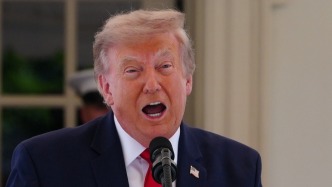
In late July 2026, tensions between the United States and Iran suddenly escalated.
In late July 2026, tensions between the United States and I…

The heatwave sweeping across the region, coupled with the e…

British Prime Minister Barnham announced that the business …

The global food monitoring agency said that due to a lack o…
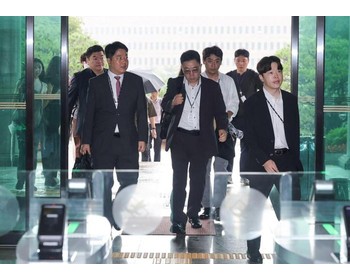
On Thursday, South Korean investigators raided the office o…
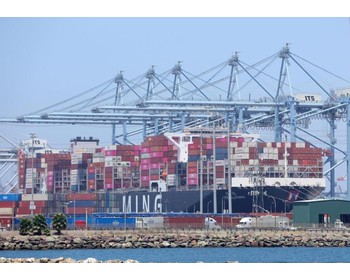
Starting from Friday (July 24th), the United States will im…
© Copyright 2026, All Rights Reserved