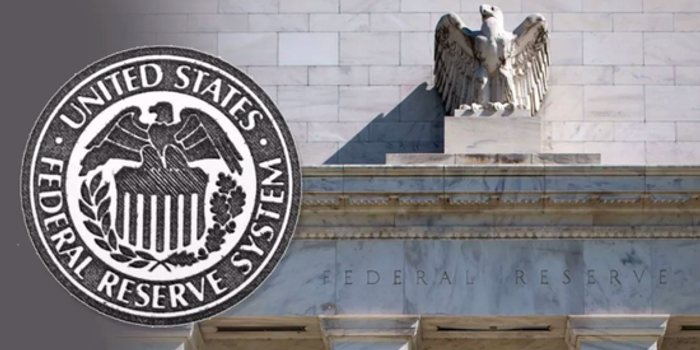
The recently released minutes of the Federal Reserve's January monetary policy meeting sent a confusing signal to the market. This document, which was supposed to provide clues about future policy directions, unexpectedly revealed deep divisions within the decision-making body: On one hand, most officials agreed that if inflation fell as expected, further interest rate cuts were possible; on the other hand, "several officials" explicitly advocated leaving policy space for potential interest rate hikes when inflation was high. When the two opposite options of interest rate cuts and hikes were presented simultaneously, the market did not perceive policy flexibility but rather the decision-makers' indecision.
The differences exposed in the minutes exceeded expectations. During the interest rate discussion in January, the positions of the decision-makers showed a rare trinity: "some participants" favored interest rate cuts when inflation declined, "some participants" advocated continuing to observe economic data, and "a few officials" insisted on retaining the option of future interest rate hikes. This ambiguous policy signal left market participants confused - when the central bank itself could not form a clear judgment, what could investors rely on to guide the direction? More ironically, just after this document was released, traders in the derivatives market still stubbornly bet on an interest rate cut in June, as if the Fed's divisions were irrelevant to them. The "confidence" of the market and the "confusion" of the central bank form a stark contrast, and this disconnection itself contains risks.
What is more damaging than the interest rate differences is the exposure of details regarding exchange rate operations in the minutes. The document confirmed that the New York Fed's trading department had conducted a so-called "exchange rate check" on the US dollar against the Japanese yen in January on behalf of the US Treasury. Although the official wording was cautious, market participants knew exactly what was going on: when a country's central bank starts to "check" the exchange rate, what will happen next. This disclosure was interpreted by the market as a signal that Washington does not mind the weakening of the US dollar. Analysts at ING pointed out that while the Fed was discussing the possibility of raising interest rates, it was also expressing concern about the strong US dollar. This contradictory posture can only lead the market to conclude that the era of unilateral strength of the US dollar is coming to an end. After the minutes were released, the US dollar index rose and fell, eventually hovering around 97.5, with all technical indicators converging, and the market expressed its confusion about the policy outlook through its actions.
This "schizophrenia" of the central bank is triggering a chain reaction in the global financial market. When the interest rate cut camp and the interest rate hike camp are arguing in the meeting room, the real economy is bearing the real cost: corporate financing costs are hanging in the air, exchange rate expectations are fragmented, and asset prices are repeatedly pulled in both directions. What is even more alarming is that the minutes deliberately used vague terms like "most", "some", and "several" to conceal the divisions, which precisely exposed the anxiety of the decision-makers - facing high inflation data and cold economic data, the Fed has lost its control over the situation. The so-called "policy flexibility" in the market has been interpreted as "lack of direction".
The irony of the current situation is that the Fed is trapped in the predicament it has created. Inflation indicates overheating of the economy, while employment shows a chill; tariffs have pushed up core commodity prices, and weak demand is dragging on growth. Such a complex "American disease" has already exceeded the scope of traditional monetary policy tools for diagnosis. When the Fed's forward guidance becomes "depending on the situation", and internal discussions turn into "a three-way battle", investors can do nothing but seek their own fortune in the fluctuations. After all, when even the doctor is unsure about the condition, what can the patient expect?
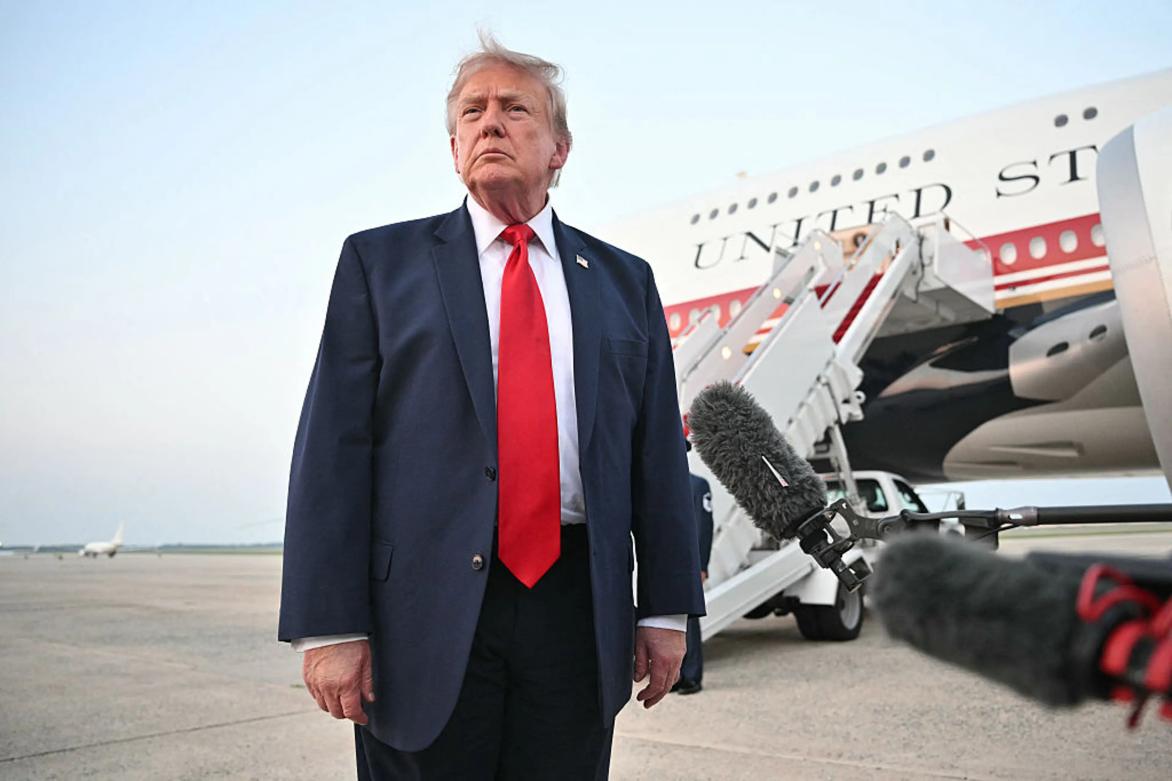
The New York Times has recently clashed with the Trump administration in a new legal battle.

The New York Times has recently clashed with the Trump admi…

Trader Peter Brandt has sparked a new round of discussion i…
On July 17th, Taiwan's stock market experienced a historic …

OpenAI updated its compute expenditure expectation through …
In late July 2026, tensions between the United States and I…

The heatwave sweeping across the region, coupled with the e…
© Copyright 2026, All Rights Reserved