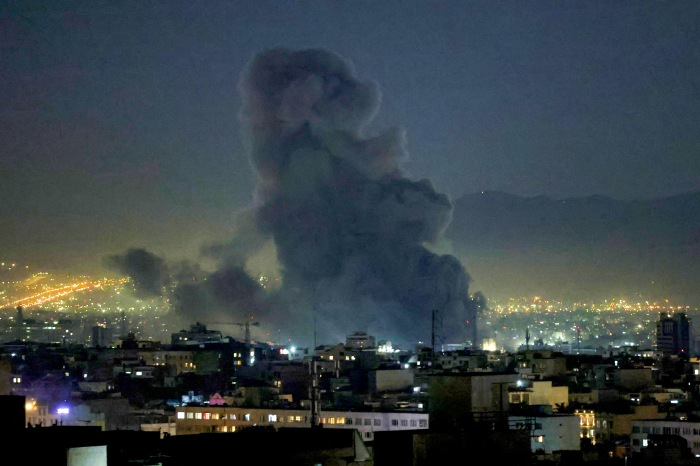
In the early hours of Monday, the United States and Israel launched attacks on Iran, shaking global financial markets and triggering sharp fluctuations in various asset prices. Futures for the three major U.S. stock indices collectively fell, and Asian stock markets opened broadly lower. In the energy market, oil prices surged sharply, with U.S. benchmark crude rising 6.8% to $71.58 per barrel and Brent crude increasing 7.5% to $78.33 per barrel. Safe-haven assets also rose, with gold prices up 2.3% to $5,380.60 and silver up 2.1%. The core of this volatility stems from market concerns over disruptions to Middle Eastern oil supplies, particularly the impact on shipping safety in the Strait of Hormuz. Energy experts warn that continued attacks could further drive up crude oil and gasoline prices.
The recent turmoil in the financial markets is not a short-term fluctuation of a single asset, but a global, multidimensional asset restructuring triggered by geopolitical conflicts. Its impact spans multiple core areas including stocks, futures, energy, and precious metals, showing the distinct characteristics of 'risk assets under pressure, safe-haven assets strengthening, and energy assets soaring.' The essence of this turmoil is the market’s immediate reaction to the escalation of the situation in the Middle East, reflecting both the interconnectedness of global financial markets and the profound influence of geopolitical risks on asset pricing logic. The underlying core triggers are the dual effects of uncertainty in energy supply and heightened market risk aversion.
The market fluctuations triggered by the US and Israel's attacks on Iran have brought about multidimensional chain reactions. The surge in oil prices directly pushes up energy import costs, putting pressure on countries and enterprises that rely on energy imports. At the same time, energy experts warn that continued attacks could lead to further increases in crude oil and gasoline prices, intensifying global inflationary pressures, and may particularly strengthen the public's inflation expectations. Global stock markets and futures markets are under pressure, investor sentiment is dampened, and asset price volatility increases. In the short term, the significant rise in market uncertainty leads to an increase in the prices of safe-haven assets, driving funds from risk assets to safe assets, reshaping the global asset allocation pattern. In addition, if the safety of shipping through the Strait of Hormuz continues to be affected, it could lead to a shortfall in global oil supply, further disrupting the global energy supply chain and affecting the pace of global economic recovery.
In the face of market shocks and energy risks triggered by geopolitical conflicts, all parties need to implement precise measures and take proactive responses to reduce the impact of uncertainty. For investors, it is necessary to rationally assess the trends of geopolitical conflicts, reasonably adjust asset allocation, balance risk assets and safe-haven assets, avoid losses caused by significant fluctuations in oil prices and stock markets, and at the same time be alert to the risk of asset corrections after the geopolitical premium subsides. For energy-related companies, it is essential to plan energy supply channels in advance, optimize inventory management, hedge against the cost pressures from rising oil prices, and closely monitor shipping developments in the Strait of Hormuz to prevent supply chain disruption risks. For the global market, it is important to be wary of the chain reactions caused by escalating geopolitical conflicts, strengthen international coordination, maintain the stability of the energy supply chain, and guide rational market expectations to alleviate panic sentiment.
In summary, the global financial market turbulence triggered by the US-Israel attack on Iran is essentially the result of a combination of geopolitical risks, expectations of energy supply, and market risk aversion sentiment. This incident not only led to soaring oil prices, pressured stock markets, and strengthened safe-haven assets, but also exacerbated global inflation expectations and monetary policy uncertainty, while highlighting the strategic significance of the Strait of Hormuz for global energy security. In the future, market trends will be highly dependent on the evolution of the Middle East conflict. If the conflict eases, the geopolitical premium is expected to gradually decline, and asset prices may return to fundamentals. If the conflict escalates, it will trigger more severe market turbulence and an energy crisis. Only through rational responses and coordinated efforts by all parties, preventing supply chain risks and stabilizing market expectations, can uncertainty be mitigated and the stable operation of the global financial and energy markets be promoted.

OpenAI updated its compute expenditure expectation through 2030 from approximately $600 billion up to $750 billion, while announcing the launch of "Project Camellia," a $20 billion self-operated data center project in Georgia, and signing a 3.2 gigawatt power supply agreement with a local utility company.

OpenAI updated its compute expenditure expectation through …
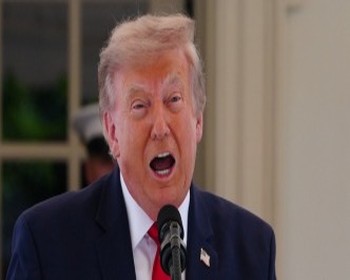
In late July 2026, tensions between the United States and I…

The heatwave sweeping across the region, coupled with the e…

British Prime Minister Barnham announced that the business …
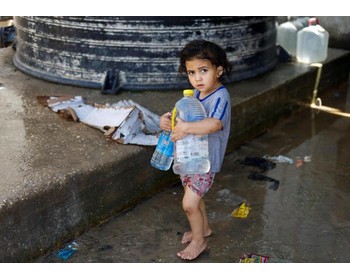
The global food monitoring agency said that due to a lack o…

On Thursday, South Korean investigators raided the office o…
© Copyright 2026, All Rights Reserved