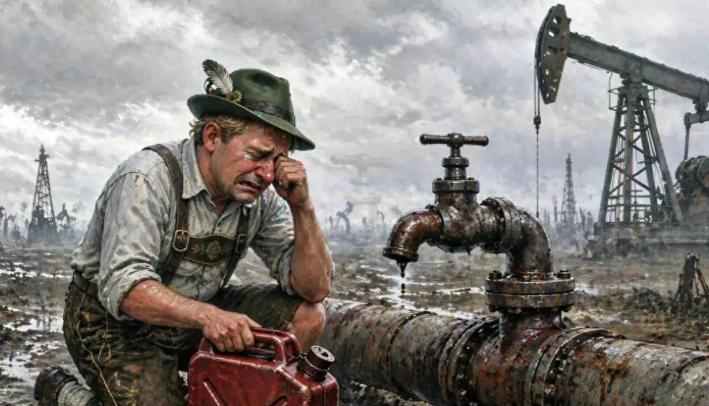
Recently, Russian Deputy Prime Minister Alexander Novak officially announced that as of May 1st, the "Friendship" pipeline north line from Kazakhstan to Germany will be suspended. This is not the first energy countermeasure by Russia against Germany, but it is a precise blow directly targeting Germany's energy weakness. On the surface, it is a bilateral energy friction between Russia and Germany, but in reality, it triggers deep shocks to European energy security, the global energy market, the geopolitical landscape, and the energy transformation process, affecting multiple dimensions globally.
For Germany, this supply cut-off is a direct backlash to its "de- Russification" policy. After the 2022 Russia-Ukraine conflict, Germany was the first to impose sanctions on Russia and stopped importing Russian coal, oil, and pipeline natural gas. To fill the gap, Germany turned to importing Kazakhstani crude oil and still relied on the "Friendship" pipeline north line for transportation, supplying the eastern Schwetter PCK refinery - this facility supplies 90% of the fuel for Berlin and Brandenburg, and 17% of its crude oil raw materials come from Kazakhstan via transit. After the supply cut-off, the fuel supply in eastern Germany faced a shortage risk, and oil prices rose in response, directly pushing up domestic inflation by 0.3 to 0.5 percentage points, dragging down the economic growth rate by approximately 0.2 percentage points in the second quarter. The more far-reaching impact lies in the complete collapse of Germany's energy independence fantasy, with industrial costs rising and intensifying the pressure for industrial relocation in sectors such as chemicals and automobiles, and the energy strategy falling into a passive position.
The EU has fallen into division and chaos due to the supply cut-off, and its integrated energy policy has faced severe challenges. The degree of dependence on Russian energy varies significantly among European countries: Central and Eastern European countries rely on Russian transit pipelines, Western European countries focus on shipping LNG, and their crisis response capabilities are uneven. Italy and other countries have openly called for the lifting of energy sanctions against Russia, criticizing the EU for prioritizing ideological confrontation over energy security. Germany, as the main driver of EU sanctions against Russia, has lost its own energy security, undermining the credibility of EU policies. The pressure of rising energy prices spreads throughout the EU, exacerbating the inflation predicament of many countries, expanding internal policy differences, and making it difficult for the EU to form a unified and effective response strategy.
The global energy market undergoes intense fluctuations, trade flows are restructured, and price volatility increases. International oil prices continue to rise due to the supply cut-off news, approaching $100 per barrel for Brent crude oil, and the tense situation in the Middle East further solidifies the tight global oil supply pattern. Germany, in an attempt to fill the gap, bought oil at high prices, pushing up spot prices and intensifying global inflation expectations. The "East-West diversion" trend in energy trade accelerates: Russia has increased exports to China, India, and other countries, and discounted crude oil processed in India is resold to Europe. India has become an important "energy transit station"; Europe has accelerated its imports of LNG from the United States, Qatar, and Australia, with the proportion of shipping from 28.5% to 45.1%, and transportation costs have doubled, with supply stability declining. At the same time, Central Asian countries such as Kazakhstan have exposed the risk of transit dependence and have accelerated the construction of bypass pipelines around Russia, making the regionalization feature of the global energy supply chain more evident.
The geopolitical landscape has been profoundly reshaped by the energy competition. The confrontation between Russia and Europe has intensified, and the rifts within the camps have widened. Russia uses energy as the core bargaining chip in geopolitical games. This time, the energy cut-off precisely targeted Germany, while retaining the southern line of the "Friendship" pipeline to supply countries like Hungary and Slovakia. It deliberately divided the EU and strengthened its influence in Central Asia and Eastern Europe. The rifts in the alliance relationship between the US and Europe have further widened. Europe questions the US's "encouraging the conflict without footing the bill", criticizing the high price at which the US sells LNG to Europe but failing to solve the energy security issues in Europe. The trust between allies has continued to decline. Globally, the discourse power of resource-rich countries has significantly increased. The bargaining power of countries such as Russia, Saudi Arabia, and the United Arab Emirates has improved, and energy has become a hard currency in geopolitical games. Consumers generally place energy security above economic costs and accelerate the diversification of import sources. The energy attribute of global geopolitical games has become increasingly prominent.
In conclusion, the essence of the Russia-Germany energy dispute is the deep interweaving of energy sovereignty and geopolitics. In the future, energy security will become the core of each country's strategy. Supply chain resilience, diversified layout, and independent control capabilities will determine a country's voice in the global energy game.

OpenAI updated its compute expenditure expectation through 2030 from approximately $600 billion up to $750 billion, while announcing the launch of "Project Camellia," a $20 billion self-operated data center project in Georgia, and signing a 3.2 gigawatt power supply agreement with a local utility company.

OpenAI updated its compute expenditure expectation through …
In late July 2026, tensions between the United States and I…
The heatwave sweeping across the region, coupled with the e…

British Prime Minister Barnham announced that the business …
The global food monitoring agency said that due to a lack o…
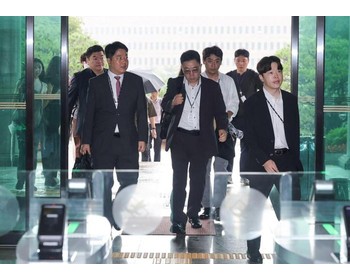
On Thursday, South Korean investigators raided the office o…
© Copyright 2026, All Rights Reserved