
The military conflict between the United States and Iran continues to ferment. This geopolitical crisis is like a stone thrown into a calm lake, stirring ripples across global financial markets and causing intense shocks. From energy markets to foreign exchange markets, from precious metals markets to global stock markets, none have been untouched by the profound impact of the conflict.
One of the core focal points of the US-Iran conflict is the energy market. Iran, as a major oil producer in the world, has a significant influence on the global energy supply landscape. The Strait of Hormuz, as a key channel for global oil transportation, carries about 20% of the world's seaborne oil trade. The escalation of the conflict has intensified market concerns about disruptions to shipping through the Strait of Hormuz. If the strait faces a prolonged blockade, global energy supply would suffer a severe blow.
As a result, international oil prices have surged sharply. Brent crude oil prices once exceeded $81 per barrel, and the market even expects that if the situation deteriorates further, oil prices could surpass the $100 per barrel mark. Rising oil prices not only directly increase production costs for industries such as chemicals that use oil as a raw material, squeezing the profit margins of industries with significant oil consumption, but also suppress global economic growth. High oil prices push up costs in global chemical, transportation, and manufacturing sectors, intensify imported inflation pressures, alter market assessments of inflation, and indirectly constrain the monetary loosening capacity of central banks, delaying or cooling expectations of interest rate cuts, thus putting pressure on global liquidity and asset valuations.
The foreign exchange market has not been able to remain unaffected in this storm. In the early stages of the conflict, due to rising market risk aversion, large amounts of capital flowed into the U.S. dollar market seeking safe haven, driving a pulse-like rise in the U.S. dollar index. However, the situation in the Middle East pushed up oil prices, which in turn increased U.S. inflation pressures and placed the Federal Reserve in a 'rate-cut' dilemma. As trade policy fluctuations further increase uncertainty in the foreign exchange market, the U.S. dollar index may remain structurally weak in the medium to long term. The U.S. dollar is expected to appreciate against currencies like the euro, while depreciating against the yen, renminbi, and other currencies.
The renminbi has shown strong resilience during this conflict. Although 70% of China's crude oil imports come from the Middle East, the rise in oil prices and disruptions in the Strait of Hormuz could increase domestic imported inflation pressures. However, with flexible fiscal, monetary, and industrial policy space, coupled with strong domestic demand, the renminbi faces no depreciation pressure amid a volatile international environment and even displays safe-haven characteristics. Short-term appreciation of the renminbi has been paused by macroprudential policies, but the two core factors supporting renminbi appreciation—medium to long-term trade surpluses and structural weakness of the U.S. dollar index—have not fundamentally reversed, and the foundation of the renminbi's strength remains solid.
The precious metals market is the clearest beneficiary of this round of conflict. Driven by 'risk aversion and inflation expectations,' gold and silver prices have risen sharply. Gold, due to its traditional safe-haven characteristics, has rapidly climbed in price, attracting risk-averse capital. Silver has followed gold's rise, showing higher short-term elasticity, but about 50% of demand comes from industry. If the conflict hampers economic recovery and industrial demand weakens, silver's performance may be constrained, exhibiting strong volatility and high differentiation.
Global stock markets have seen a decline in risk appetite and experienced turbulent adjustments, with major indices generally falling. Sector divergence is evident, with defense and energy extraction sectors benefiting and generating excess returns, while airline and shipping sectors face pressure due to rising costs and reduced demand. Short-term limited confrontations have caused pulse-like fluctuations, with risk premiums dissipating as the situation clarifies. If the conflict escalates and affects key infrastructure, it may heighten stagflation risks, triggering systemic stock market adjustments and stronger commodity performance.
The ongoing U.S.-Iran military conflict has brought enormous uncertainty to global financial markets. In this storm, there are both risks and opportunities. Investors need to closely monitor developments, maintain rationality and composure, accurately identify structural investment opportunities, and seek value niches amid market chaos to cope with the challenges of this global financial market turbulence.
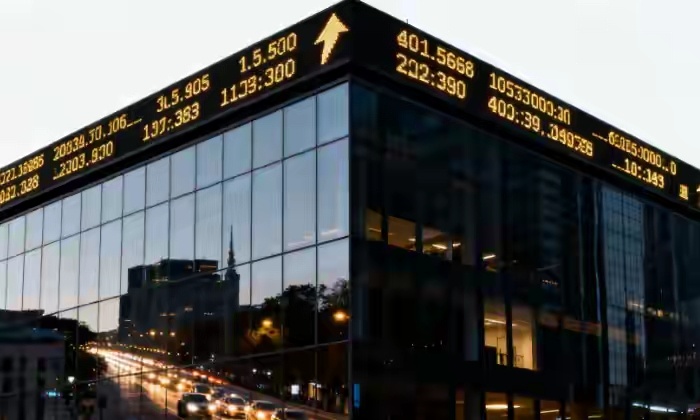
On July 17th, Taiwan's stock market experienced a historic plunge.
On July 17th, Taiwan's stock market experienced a historic …

OpenAI updated its compute expenditure expectation through …
In late July 2026, tensions between the United States and I…
The heatwave sweeping across the region, coupled with the e…

British Prime Minister Barnham announced that the business …
The global food monitoring agency said that due to a lack o…
© Copyright 2026, All Rights Reserved