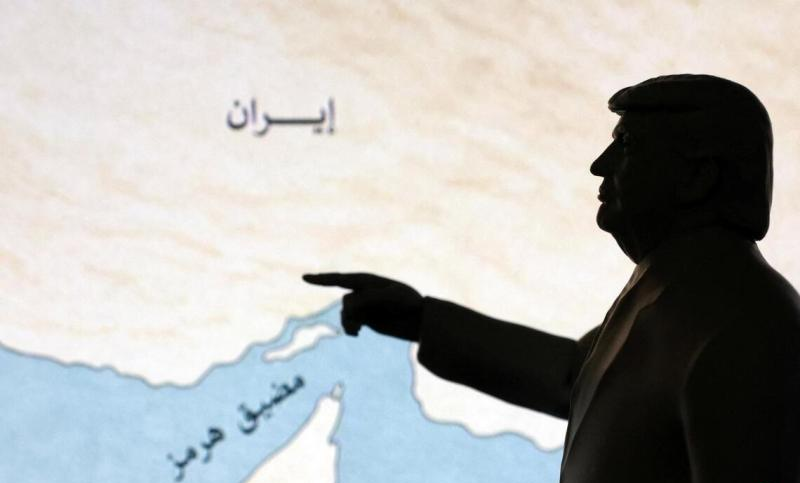
European countries led by the UK and France are formulating a plan to establish a broad alliance of nations, sending in ships including minesweepers and other vessels to assist in ensuring the smooth passage of shipping in the Strait of Hormuz. However, this plan will only be initiated after the US and Iran engage in a war, and the US may be excluded from it.
The Wall Street Journal has exclusively reported that French President Macron said on Tuesday (April 14th) that this plan aims to establish an international defense mission, excluding "belligerent parties", namely the United States, Israel, and Iran.
Several European diplomats familiar with this plan said that European vessels would not be under the command of the United States.
The aim of this plan is to enable shipping companies to regain confidence in using the Strait of Hormuz after the end of the Iraq War. However, they say that this war may still take some time to come to an end.
A senior German official disclosed that Germany might participate in this European project and could make a clear statement as early as on the 16th.
Germany has previously publicly stated that it is unwilling to consider any military intervention. Since World War II, Germany has faced significant political and legal obstacles in participating in overseas military operations.
Berlin's involvement means that the plan to maintain the openness of the Strait of Hormuz may be more substantive than previously expected. Germany has greater financial strength than the UK and France, and possesses some of the key military assets necessary to carry out this specific task.
French Foreign Minister Barro said on the 14th: "This operation can only be carried out after the strait returns to calm and hostilities cease."
He said that the International Alliance would coordinate with the countries along the Strait of Hormuz, including Iran and Oman. This means that any plan cannot be initiated without the approval of Iran.
However, there are still some differences among European countries that need to be resolved. Sources familiar with the situation disclosed that French diplomats believe that any US involvement would reduce Tehran's willingness to accept the plan, while British officials are concerned that not allowing the US to participate would anger US President Trump and limit the scope of the operation.
The report indicates that the debate over whether to exclude the United States is a sign of the increasingly tense transatlantic relationship.
Over the past year, Trump imposed tariffs on European exports, withdrew support for Ukraine's fight against Russia, and threatened to use military force to seize Greenland from NATO ally Denmark. The Iran war further exacerbated this tense situation. Most European leaders regarded this war as illegal and it brought unwanted economic impacts.
On April 17th, Macron and British Prime Minister Stamer will chair an online meeting attended by dozens of countries to discuss how to better safeguard the security of the Strait of Hormuz after the end of the US-Israeli-Iran conflict.

OpenAI updated its compute expenditure expectation through 2030 from approximately $600 billion up to $750 billion, while announcing the launch of "Project Camellia," a $20 billion self-operated data center project in Georgia, and signing a 3.2 gigawatt power supply agreement with a local utility company.

OpenAI updated its compute expenditure expectation through …
In late July 2026, tensions between the United States and I…

The heatwave sweeping across the region, coupled with the e…

British Prime Minister Barnham announced that the business …

The global food monitoring agency said that due to a lack o…

On Thursday, South Korean investigators raided the office o…
© Copyright 2026, All Rights Reserved