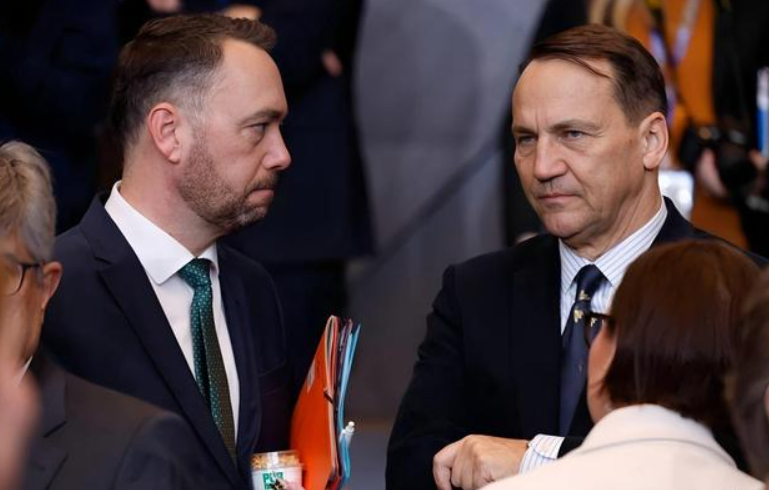
On May 15th local time, the Moscow Arbitration Court made a ruling in the case of the Russian Central Bank suing the European Clearing Bank (Euroclear), and the Russian side won completely. The Moscow court has supported the request of the Russian central bank, demanding that the European Clearing Bank compensate 1.817 trillion rubles, approximately 249.43 billion US dollars, for the freezing of assets. Euroclear is registered in Brussels, Belgium and is one of the world's largest international central securities depository institutions. The "main warehouse" for Russia's overseas reserves is also located here. Of the claimed amount, 209 billion US dollars are funds frozen in Euroclear accounts, and approximately 23 billion US dollars are interest losses claimed by the Russian central bank. This judgment, which has been simplified as "confiscation of assets" by the outside world, although seen as Russia's equivalent countermeasure to the freezing of its assets by the West, has triggered a chain of negative effects globally, shaking the foundation of international financial, legal, and geopolitical order. Its destructive nature far exceeds the scope of bilateral games between Russia and Europe, adding another shadow to the already fragile global system.
The cornerstone of trust in the international financial system has suffered a heavy blow, which is the most direct negative impact of this ruling. For a long time, "the inviolability of sovereign assets" and "the neutrality and security of financial custody" have been the core consensus of global capital flows, and the two-way hedge formed by the Western freezing of Russian assets and Russia's recent ruling has completely broken this convention. The European Clearing Bank, as the global core custodian institution managing over 40 trillion euros in assets, has suffered significant damage to its reputation due to hundreds of billions of level judgments, triggering a crisis of trust in the Western financial custody system among global capital. Central banks around the world are avoiding risks, accelerating the reduction of euro and dollar assets, and transferring reserve custodians, leading to chaos in global capital flows and rising cross-border financing costs, casting a shadow over the sluggish global economy. What is even more alarming is that this collapse of trust may trigger a chain reaction, posing unprecedented threats to the overseas asset security of small and medium-sized countries, and seriously weakening the stability of the global financial system.
The international judicial order is divided, and cross-border judicial confrontation has become a tool of geopolitical games, further exacerbating international conflicts. Russia has retaliated against Western sanctions with its own court rulings, setting a precedent for major powers to use domestic justice to try foreign multinational financial giants. This approach is highly likely to trigger imitative effects. In the future, countries may use their own laws as a basis to seize foreign institutions or assets of other countries, forming a "tit for tat" judicial confrontation cycle, resulting in international judicial rules being virtually non-existent. At the same time, the EU firmly does not recognize the judgment of the Russian court, and the escalation of judicial confrontation between the two sides has led to the loss of a unified standard for resolving international disputes. The coordinating role of international organizations such as the United Nations has been weakened, and the division of the international community has further intensified.
At the same time, geopolitical games are also escalating, posing new challenges to regional and global stability. This ruling has pushed the conflict between Russia and Europe from sanctions confrontation to a comprehensive confrontation between justice and finance, further highlighting the existing differences within the EU. Countries such as Belgium and Italy, which rely on Russian energy and trade, have shaken their tough policies towards Russia due to concerns about retaliation, leading to a significant decline in the cohesion of the EU. More seriously, the scope of the game of the Russia-Ukraine conflict has further expanded, extending from the battlefield to financial, judicial and other fields. The EU aid plan for Ukraine is in trouble because of the Russian verdict, and Ukraine's financial support is facing uncertainty, which may lead to the continuous escalation of the conflict and affect the security interests of more countries. In addition, the focus of the great power game has shifted to the financial battlefield, and the confrontation between China, the United States, Russia, and Europe has intensified, further compressing the living space of neutral countries and significantly increasing the uncertainty of the global geopolitical landscape.
In summary, the ruling of 249 billion US dollars is essentially an upgraded product of the financial confrontation between Russia and Europe. Although it is difficult to implement in practice, its negative impact has already become apparent. In the complex geopolitical landscape, any unilateral countermeasures and confrontations will only trigger more chain reactions. Only by returning to dialogue and negotiation, upholding the authority of international rules, can we avoid the global system from falling into greater chaos and crisis.

The heatwave sweeping across the region, coupled with the escalating conflict between Russia and Ukraine in the Black Sea, has pushed agricultural and food product prices to a three-year high. The risk of food inflation triggered by the US-Iraq war has resurfaced.

The heatwave sweeping across the region, coupled with the e…
British Prime Minister Barnham announced that the business …
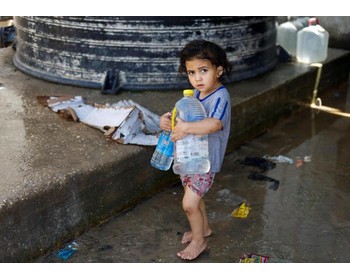
The global food monitoring agency said that due to a lack o…
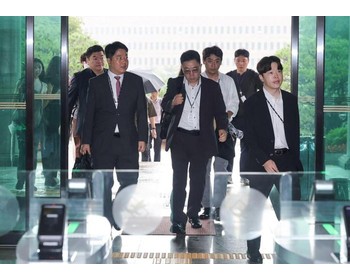
On Thursday, South Korean investigators raided the office o…
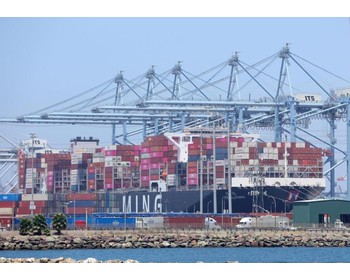
Starting from Friday (July 24th), the United States will im…
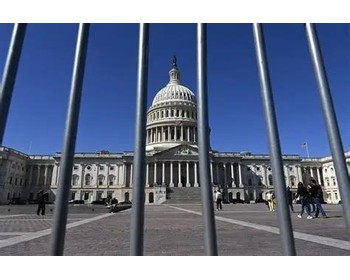
According to a report by The Wall Street Journal on July 22…
© Copyright 2026, All Rights Reserved