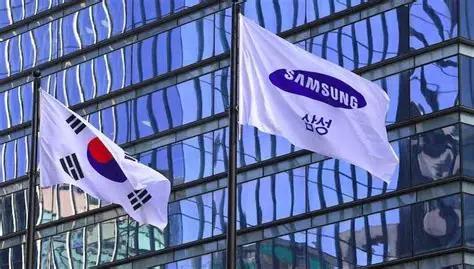
Recently, the global financial markets have been violently shaken amid the smoke and gunpowder of the Middle East. On March 4th, the Korean Composite Stock Price Index (KOSPI) plunged by over 6% during trading, triggering the circuit breaker mechanism. Semiconductor giants Samsung Electronics and SK Hynix saw their stock prices drop by nearly 10% and 11.5% respectively. The foreign capital withdrew a scale of up to 5.4 trillion won (approximately 4.7 billion US dollars) in a single day. This sudden selling spree was ostensibly a concentrated release of risk aversion triggered by geopolitical risks, but in reality, it exposed the deep-seated vulnerability of the South Korean economy: a "technology power" founded on semiconductors, whose financial market stability is so closely tied to the light beams of the shipping lanes across the Strait of Hormuz.
The direct trigger of this financial turmoil was the extreme concern over the disruption of the key industrial gas supply chain. As the geopolitical conflicts in the Middle East escalated, the risk of the closure of the Strait of Hormuz, a vital transportation artery for global energy and chemical products, rapidly increased. For the South Korean semiconductor industry, the smoothness of this strait not only affects crude oil imports but also directly determines the life and death of helium, a core production factor. Helium is indispensable in semiconductor etching, film deposition and other processes, and South Korea heavily relies on imports from the Middle East for helium. Market analysis generally fears that if the shipping lane is blocked, the production lines of Samsung Electronics and SK Hynix will be paralyzed due to a lack of cooling gas. This fatal reliance on a single supply chain has triggered the re-pricing of the fundamental situation of South Korea's core assets by international investors, and panic selling then spread throughout the entire financial market.
This financial shock triggered by supply chain risks has potential impacts with profound transmission and amplification effects. Firstly, it directly hits the pillar sectors of the South Korean economy. The semiconductor industry accounts for about 20% of South Korea's export总额, and is regarded as the "ballast stone" of the national economy. If production stops, not only will it lead to a cliff-like decline in the revenue of related enterprises, but it will also quickly spread to the Korean won exchange rate through trade deficits and current account deterioration, exacerbating the pressure of capital outflows. Secondly, this risk is spreading to the international financial market through the global industrial chain. South Korean semiconductor giants dominate the global storage chip market, and the production disruption means that industries relying on high-performance chips for AI computing power, data centers, consumer electronics, etc., will face supply shocks, which may trigger the revaluation of related sectors and repeat the stock market turmoil during the "chip shortage" period. Institutions such as Citibank have warned that the combined impact of energy and supply chain shocks may significantly slow down South Korea's economic growth rate.
Facing this financial turmoil triggered by the blockage of the external shipping lane, the South Korean authorities, although expressing that they will closely monitor the situation and consider using strategic reserves, such measures seem inadequate in the face of the supply disruption of key production factors. Oil reserves can solve the urgent energy problem, but industrial gases that rely on immediate logistics are difficult to be addressed through reserve mechanisms in the face of long-term blockades. This reveals the strategic neglect of South Korea in pursuing the ultimate efficiency of globalization in supply chain security. Significantly, a semiconductor power that regards technological autonomy as its principle is having its financial market stability hinge on a fragile "gas pipeline". The normalization of geopolitical risks has forced supply chain security to be elevated to a strategic level crucial to national financial stability.
The market melt-down in South Korea's stock market has served as a warning bell for economies that rely heavily on global division of labor. The response should not stop at short-term market intervention, but should focus on long-term systemic reconstruction: First, accelerate the diversification of import sources for key strategic materials to reduce excessive dependence on specific regional shipping lanes; second, through policy guidance and technological research and development, promote the local reserve and substitution of semiconductor core materials. Thirdly, strengthen the coordination mechanism with international energy institutions and major economies, and in extreme cases, establish emergency supply channels for the supply chain. In the end, in the current context where the global geopolitical landscape is undergoing profound restructuring, the true resilience of the financial market no longer solely depends on the glamorous growth data, but rather lies in whether the supply chain can withstand external shocks and whether the lifeline of industries can be firmly held. If we do not learn from this, the next storm in the Strait of Hormuz may once again trigger a more severe financial tsunami.

OpenAI updated its compute expenditure expectation through 2030 from approximately $600 billion up to $750 billion, while announcing the launch of "Project Camellia," a $20 billion self-operated data center project in Georgia, and signing a 3.2 gigawatt power supply agreement with a local utility company.

OpenAI updated its compute expenditure expectation through …

In late July 2026, tensions between the United States and I…
The heatwave sweeping across the region, coupled with the e…

British Prime Minister Barnham announced that the business …

The global food monitoring agency said that due to a lack o…
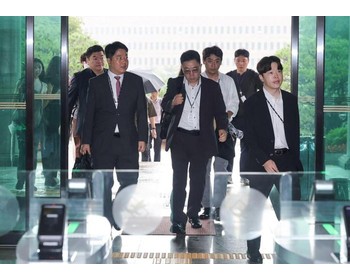
On Thursday, South Korean investigators raided the office o…
© Copyright 2026, All Rights Reserved