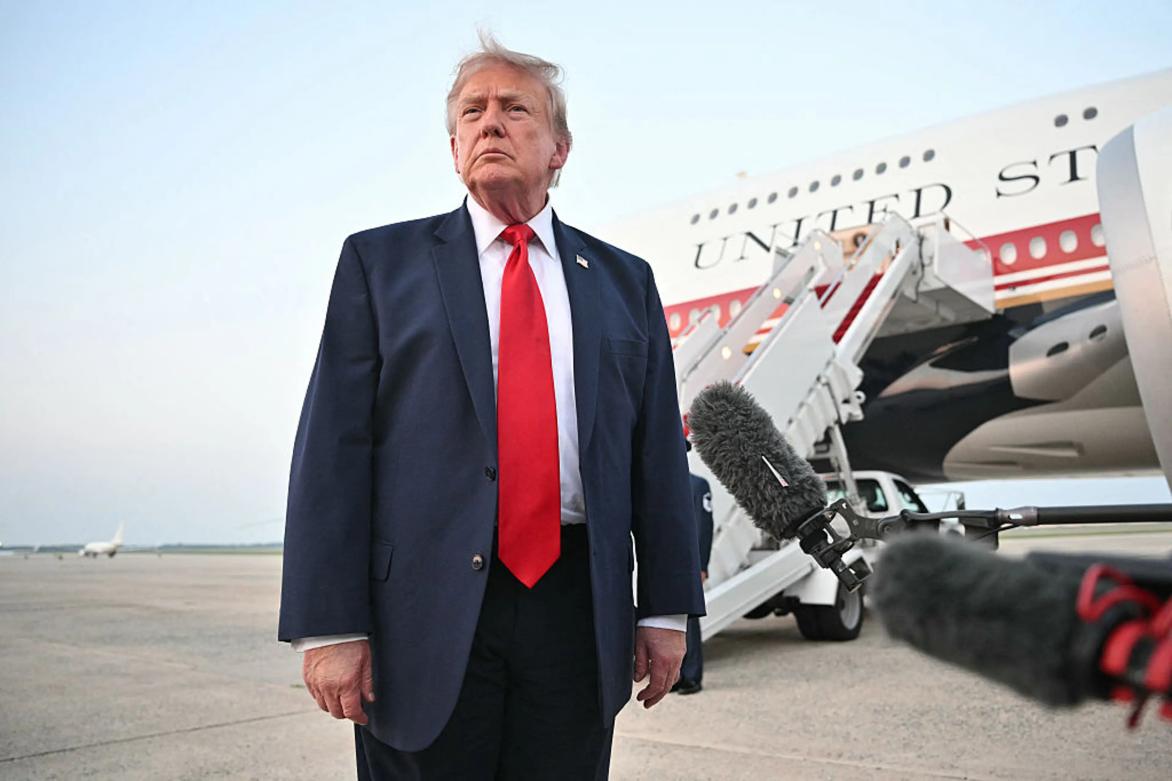
US President Trump postponed the ultimatum to Iran by another 24 hours on Sunday and once again warned that if Iran does not open the Strait of Hormuz by the deadline, all its power plants will be destroyed. Sources revealed that the Middle East mediators have proposed a 45-day ceasefire plan to pave the way for a permanent ceasefire, but it is reported that neither the US nor Iran has accepted this proposal.
On Sunday (April 5th), Trump said in an interview with The Wall Street Journal that he wanted Iran to lift the blockade of the Strait of Hormuz by Tuesday (the 7th). "If they continue to close the strait, they will lose all their power plants and all other factories in the country."
Trump later wrote on social media: "Eastern Time on Tuesday at 8 p.m. (Singapore Time on Wednesday at 8 a.m.)!" Trump did not provide further details, but it is generally believed that this is a new deadline for Iran. Trump had previously demanded that Iran open the Strait of Hormuz by Monday (the 6th) evening or reach an agreement.
When interviewed by Fox News on Sunday, he said that Iran was in negotiations and a deal might be reached on Monday.
He told ABC on the same day that Iran is expected to reach an agreement within a few days. He warned that if Iran refuses to reach an agreement, the US actions will be almost unrestricted.
The US news website Axios quoted sources as saying that the US, Iran and a group of regional mediators are discussing potential terms for a ceasefire agreement. It is reported that the agreement consists of two phases. The first phase is a 45-day ceasefire during which all parties negotiate for a permanent ceasefire. The second phase is to reach an agreement to end the war. However, the sources admitted that the possibility of reaching an agreement is not high.
Reuters also reported, citing sources, that the United States and Iran have received an agreement framework for ending the war. This proposal was drafted by Pakistan, which acted as a mediator, after a night of intense negotiations. The plan calls for an immediate ceasefire, followed by the conclusion of a final agreement within 15 to 20 days.
According to the official Islamic Republic News Agency (IRNA) of Iran, Iran has submitted a response to the proposal made by the United States to end the war. This response, consisting of 10 points, rejected the ceasefire proposal and stated that the war must be permanently ended.
According to a report by Reuters citing an unnamed senior Iranian official, Iran will not negotiate the reopening of the strait in exchange for a temporary ceasefire. This official also stated that the United States is not ready for a permanent ceasefire.
White House officials disclosed that Trump has not yet approved the latest ceasefire proposal. Trump is scheduled to hold a press conference on Iran-related issues at 1 p.m. on Monday. It is expected that he will discuss this proposal.
Iran's Foreign Minister Criticizes Trump's Threats, Describing Them as Normalizing War Crimes and Genocide
Iranian Foreign Minister Araghchi spoke on the phone with French Foreign Minister Barrot on Monday, stating that Trump's threat to strike Iran's civilian infrastructure is equivalent to normalizing war crimes and genocide. He warned: "If the US threat is carried out, it will undoubtedly face a decisive and comprehensive counterattack from the Iranian armed forces."
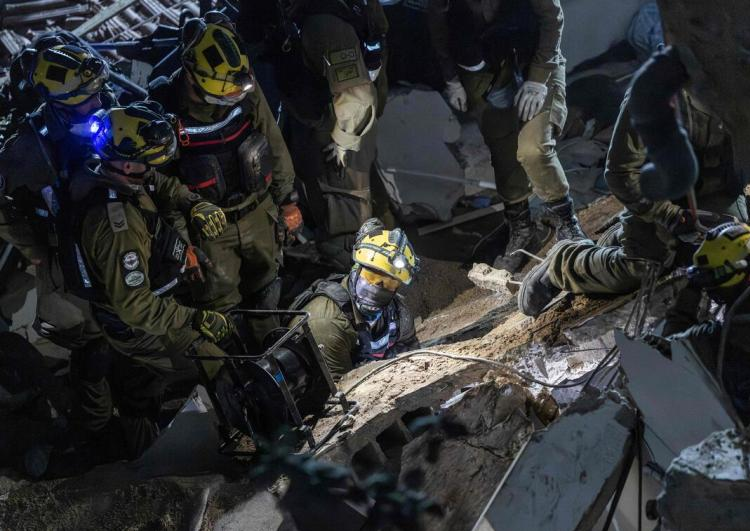
Iranian media reported on Monday that the United States and Israel carried out large-scale air strikes across Iran. In Baharastan County of Tehran Province, the US and Israeli attacks were reported to have claimed 23 lives, including six children under the age of 10.
Iranian local officials said that a residential building in the city of Qom was hit, resulting in at least five deaths; in the southern port city of Lenge, six people were also killed in the attack.
The Sharif University of Technology in Tehran also suffered severe damage during the air strike. This university is a top institution in the region and is often compared to MIT (Massachusetts Institute of Technology) in Iran.
Iran's First Vice President Araveh accused the United States of using bunker-buster bombs to bomb Sharif University, stating that this demonstrated Trump's "madness and ignorance".
Israel vows to continue targeting Iran's infrastructure and leadership
Israel announced on Monday that it had carried out a fierce attack on the South Pars petrochemical complex in Assalouye, Iran. Defense Minister Katz said that this is Iran's largest petrochemical facility, with production accounting for approximately 50% of the country's total output.
Israel had also attacked Iran's Masjed Shahr petrochemical economic zone earlier. Katz said: "These two facilities account for approximately 85% of Iran's petrochemical product exports. They have both been shut down and are no longer operating. This is a heavy economic blow to the Iranian regime, with losses amounting to hundreds of billions of dollars."
Iranian media reported that the fire at the Asaluaye facility has been brought under control and the authorities are assessing the extent of the damage.
Israel also announced on Monday that it had killed Majid Khademi, the head of Iran's Islamic Revolutionary Guard Corps' intelligence agency, as well as Sardar Bagheri, the commander of the special operations unit of the Revolutionary Guard's Quds Force, during the air strike.
Katz said that the Israeli military will continue to intensively target Iran's national infrastructure and hunt down Iranian leaders one by one.
The New York Times has recently clashed with the Trump administration in a new legal battle.

The New York Times has recently clashed with the Trump admi…

Trader Peter Brandt has sparked a new round of discussion i…

On July 17th, Taiwan's stock market experienced a historic …

OpenAI updated its compute expenditure expectation through …
In late July 2026, tensions between the United States and I…

The heatwave sweeping across the region, coupled with the e…
© Copyright 2026, All Rights Reserved