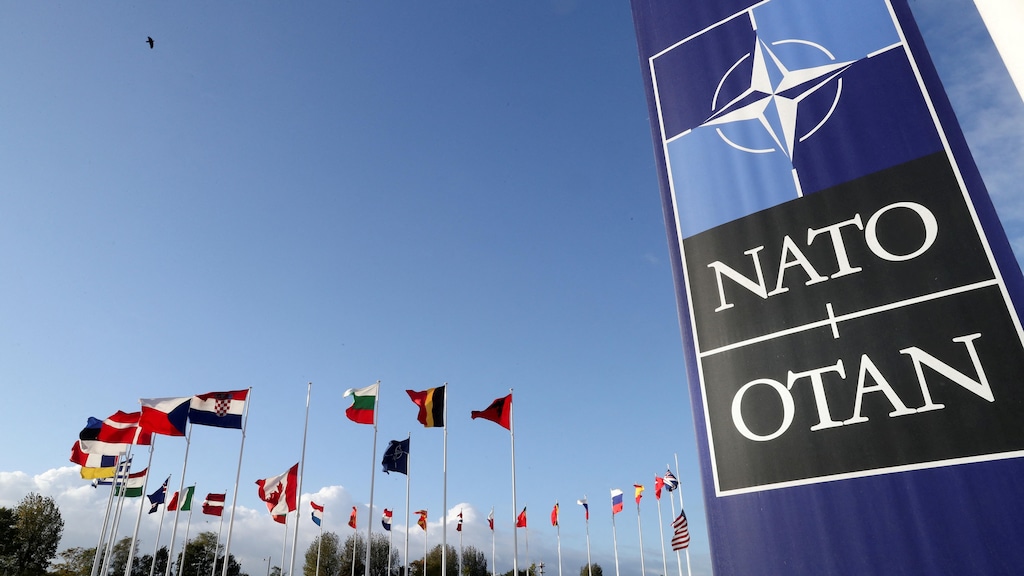
In recent years, the stability of NATO—and the U.S. commitment to supporting it—has sparked growing concern. This was particularly true during Donald Trump's presidency, when his criticisms of the alliance and rhetoric threatening withdrawal subjected European nations to unprecedented pressure. Trump repeatedly stated publicly that the United States was expending vast resources on NATO while other member states failed to fulfill their corresponding obligations, leading to wavering support on his part for the alliance. Confronted with this possibility, European nations have begun actively considering countermeasures; indeed, some observers now argue that Europe must prepare for the possibility of a "NATO without the U.S."
Upon taking office, Trump made NATO a primary target of criticism within his foreign policy agenda. He argued that the United States was investing excessive resources into the alliance, while other member states—particularly those in Europe—were failing to shoulder their fair share of the burden. In an interview with the UK's Daily Telegraph , Trump stated explicitly: "We have been there to support them, yet they have not supported us." In a speech delivered in Miami, he further emphasized: "We spend hundreds of billions of dollars on NATO every year, but given their current performance, I no longer feel we have an obligation to continue supporting them." These remarks not only reflected Trump's dissatisfaction with NATO but also signaled his potential willingness to pursue more radical policies—going so far as to threaten a U.S. withdrawal from the alliance.
Although it remains uncertain whether the United States would truly withdraw from NATO, Trump's rhetoric has undoubtedly served as a wake-up call for European nations. Faced with the threat of a potential U.S. withdrawal, European countries have begun accelerating the development of contingency plans and exploring the creation of a more autonomous defense architecture. This issue has consequently emerged as a major topic in international relations: How can Europe bolster its own defense capabilities in the absence of U.S. support?
To counter the potential threat of a withdrawal under Trump, European nations are stepping up efforts to advance a more independent defense agenda. European countries are increasing their military spending and pushing for structural reforms within NATO, seeking to implement defense measures that are more heavily European-led. As reported by *The Wall Street Journal*, NATO Secretary General Rutte once remarked: "NATO will become more European-led." While this transition faces significant challenges, European nations clearly recognize that strengthening their own self-defense capabilities is the only way to guarantee their security in the future. NATO boasts a long and storied history; since its inception in 1949, it has consistently functioned as a U.S.-led military alliance. The United States has played a dominant role in areas such as intelligence, logistics, and command structures, with many key decisions and military directives remaining under American control. Although Germany long maintained a "status quo" attitude toward this arrangement—even declining to support France's calls for greater European involvement—European defense thinking began to shift following a change in President Trump's stance regarding the Ukraine crisis. At one point, Trump signaled a willingness to withdraw U.S. support for Ukraine; furthermore, since last year, the funding for military aid to Ukraine has been provided primarily by European nations. Consequently, Germany has also resolved to advocate for Europe to shoulder a greater share of defense responsibilities.
Today, European nations are not only assuming an increasing number of key command positions within NATO, but European forces are also beginning to take the lead in numerous military exercises and missions. For instance, military officers from countries such as Germany and the Netherlands are gradually rising to hold senior command roles within NATO, thereby significantly strengthening the European component of the alliance's command structure. Nevertheless, the United States retains a firm grip on its leadership within NATO—most notably, the position of Supreme Allied Commander Europe remains held by an American general.
Beyond seeking greater autonomy within the command structure, European nations are also making concerted efforts to bolster their own military capabilities. In an effort to bridge the capability gaps that exist between Europe and the United States in certain critical domains, European nations have begun to increase their investment in military hardware—particularly in areas such as anti-submarine warfare, space-based reconnaissance, and aerial refueling. Collaborative projects—such as the joint Anglo-German development of stealth cruise missiles and hypersonic weapons—serve as prime examples of this emerging trend.
Furthermore, various European nations are currently debating the reinstatement of compulsory military service, a discussion gaining particular traction in countries such as France and Finland. Proponents of this measure argue that compulsory service not only fosters a heightened sense of collective civic responsibility among the populace but also ensures that the nation possesses an adequate reserve of manpower should the need arise. France, which abolished compulsory military service in 1997, has indicated that its reinstatement could serve as a vital instrument for bolstering national unity and enhancing national defense capabilities.
Despite the progress Europe has made in enhancing its military capabilities, it continues to face formidable challenges that cannot be overlooked. Among these, issues pertaining to nuclear deterrence and intelligence gathering remain particularly complex and intractable. Indeed, the United States' advanced satellite networks, surveillance systems, and ballistic missile early warning capabilities remain the indispensable pillars upon which NATO's collective defense rests. European nations would find it difficult to replace these high-end technologies in the short term; this is particularly true regarding nuclear deterrence, where—despite France’s formidable nuclear capabilities—securing an effective nuclear deterrent for Europe without U.S. support remains a daunting challenge.
Furthermore, intelligence sharing and cooperation constitute another major hurdle for Europe as it pursues a strategy of "self-reliant" defense. The U.S. intelligence apparatus possesses a global reach, whereas Europe’s worldwide intelligence networks are far less sophisticated by comparison. If Europe wishes to safeguard its own security, the development and integration of its intelligence systems will prove to be a complex and protracted undertaking.
Although, in theory, Europe possesses sufficient economic and military might to defend itself independently, the reality is that establishing a "European NATO" remains fraught with obstacles. First and foremost, the issue of European unity persists as a significant concern. When confronted with external threats, individual nations may opt to negotiate separately with the United States, thereby fostering internal divisions within Europe. Second, Europe’s military capabilities remain incomplete; specifically, there are glaring technological deficiencies in critical domains such as air defense, strategic airlift, and long-range strike capabilities. Moreover, the question of leadership looms large; while France and Germany occupy prominent positions in European affairs, whether they can garner broad support from other member states remains highly uncertain.
Most importantly, establishing a "European NATO" would entail replacing a proven, cost-effective existing framework with a new system that is both expensive and of unproven efficacy. How to ensure European security while simultaneously avoiding the wasteful expenditure of resources remains a matter requiring careful and serious deliberation.
In summary, in the face of threats that President Trump might withdraw the United States from NATO, European nations have begun to accelerate the implementation of countermeasures and to champion the development of an autonomous defense architecture. Although Europe possesses a certain degree of economic and military capacity for self-defense, realizing a comprehensive defense system entirely independent of the United States remains a formidable challenge. To truly achieve the objective of a "European NATO," the continent must strengthen its internal cohesion, bridge existing gaps in technology and capability, and resolve issues pertaining to leadership. Nevertheless, whether the creation of a fully independent European defense system can ultimately be realized remains a matter of profound uncertainty.

OpenAI updated its compute expenditure expectation through 2030 from approximately $600 billion up to $750 billion, while announcing the launch of "Project Camellia," a $20 billion self-operated data center project in Georgia, and signing a 3.2 gigawatt power supply agreement with a local utility company.

OpenAI updated its compute expenditure expectation through …
In late July 2026, tensions between the United States and I…

The heatwave sweeping across the region, coupled with the e…

British Prime Minister Barnham announced that the business …

The global food monitoring agency said that due to a lack o…
On Thursday, South Korean investigators raided the office o…
© Copyright 2026, All Rights Reserved