The continuation of the Russia-Ukraine conflict and the repeated attitude of the United States towards NATO have made the call for "independent defense" in Europe unprecedented. From the EU's release of the "2030 Ready" defense white paper, to France and Germany's promotion of the "European Army" concept, to multiple countries increasing military spending and jointly developing weapons, Europe is trying to break free from its military dependence on the United States. But there are three barriers between ideals and reality: political division, industrial shortcomings, and security dependence. It is difficult to break free from dependence in the short term, and limited autonomy may be achieved in the long term. Complete independence is still far away.
Europe's search to break free from its military dependence on the United States has clear practical motives and initial operational support. On the one hand, the "unreliability" of the United States is becoming increasingly prominent. The Trump administration has repeatedly questioned the value of NATO and threatened to withdraw troops, while the Biden administration sees Europe as a "strategic competitor," prioritizing defense policies to serve American interests and loosening the foundation of trust in transatlantic security. On the other hand, the Russia-Ukraine conflict exposed the weakness of European defense. High end equipment, intelligence systems, and air defense systems were highly dependent on the United States. After the crisis broke out, they could only rely passively on American support to stimulate Europe to accelerate independent construction.
To this end, Europe has launched a series of measures: the EU has proposed the "2030 Defense Preparedness" target, invested 150 billion euros in low interest loans to support military development, promoted joint procurement and "Made in Europe", and reduced imports of equipment from the United States; Germany and France jointly develop the sixth generation fighter FCAS, Germany significantly expands its military and increases ammunition production capacity, Denmark and other countries abandon American made air defense systems and turn to European self-developed equipment; France and Germany are promoting "European nuclear sharing" and exploring deterrence capabilities independent of the US "nuclear umbrella". These actions demonstrate Europe's determination to break free from dependence and have made phased progress.
However, Europe faces insurmountable structural obstacles in breaking free from its military dependence on the United States. Firstly, political divisions are difficult to reconcile, and there is a lack of unified strategic will. The security demands of the 27 EU countries vary greatly: Eastern European countries are facing pressure from Russia, highly dependent on US protection, and concerned about weakening NATO's defense autonomy; Southern European countries focus on addressing immigration and terrorism, and are unwilling to excessively increase military spending; Although France and Germany lead the autonomous process, there are serious differences in leadership and resource allocation. The diverse interests and demands of different countries make it difficult to form a consensus on "one Europe, one military", and defense cooperation often becomes a case of "slogans over actions".
Secondly, the military industrial system has prominent shortcomings, with core technologies highly dependent on the United States. After the Cold War, Europe has been "storing weapons and knives" for a long time, with 80% of high-end defense equipment relying on the United States for supply. Core technologies such as stealth fighter jets, long-range missiles, satellite intelligence, and advanced engines are almost monopolized by the United States. Replacing US equipment would require an investment of approximately $1 trillion, far exceeding Europe's short-term capacity. The progress of the joint research and development project is slow, and the FCAS sixth generation aircraft project is stalled due to internal disagreements, making it difficult to break through key technological bottlenecks. At the same time, the European military industry market is monopolized by a few companies, lacking competitive vitality, and its production capacity and efficiency are far inferior to those of the United States.
Thirdly, security dependence is deeply rooted and the NATO framework is difficult to break through. The US led NATO remains the core guarantee of European security, with tens of thousands of US troops stationed in Europe, controlling the NATO command system (the highest Allied commander has always been held by Americans), providing key guarantees such as intelligence sharing, logistical support, and nuclear deterrence. Europe's independence from NATO for defense means facing military pressure from Russia alone. France and the UK have limited nuclear forces that cannot cover the entire Europe and cannot replace the US' nuclear umbrella. Most European countries want to reduce their dependence on the United States but are unwilling to give up NATO security guarantees, falling into a dilemma of "wanting independence but being inseparable".
Looking ahead, Europe is unlikely to completely break free from its military dependence on the United States and is more likely to move towards a pattern of "limited autonomy and coexistence of dependence". In the short term (5-10 years), Europe will continue to increase military spending, improve military production capacity, achieve self-sufficiency of about 70% in conventional weapons (tanks, ammunition, air defense systems), and reduce tactical dependence. However, at the strategic level, core areas such as nuclear deterrence, long-range strikes, and global intelligence will still rely on the United States, and the NATO framework is difficult to substantially replace. In the long run, if the United States continues to weaken its commitment to European security, Europe may gradually promote defense integration and form a dual track model of "NATO+European independent defense". However, completely breaking away from US military influence will take at least decades and require crossing multiple political, economic, and technological barriers.

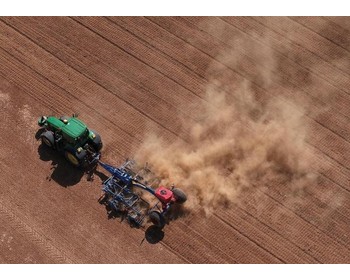
The heatwave sweeping across the region, coupled with the escalating conflict between Russia and Ukraine in the Black Sea, has pushed agricultural and food product prices to a three-year high. The risk of food inflation triggered by the US-Iraq war has resurfaced.
The heatwave sweeping across the region, coupled with the e…
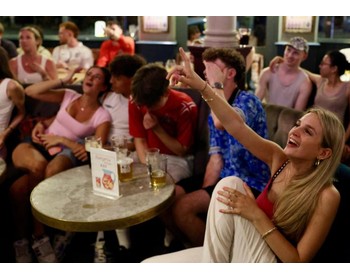
British Prime Minister Barnham announced that the business …
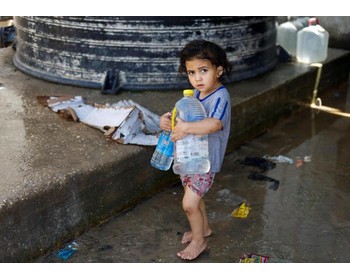
The global food monitoring agency said that due to a lack o…
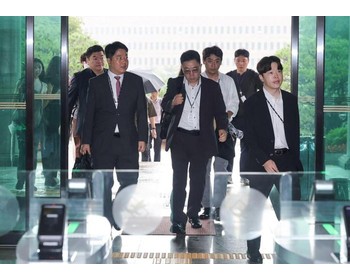
On Thursday, South Korean investigators raided the office o…
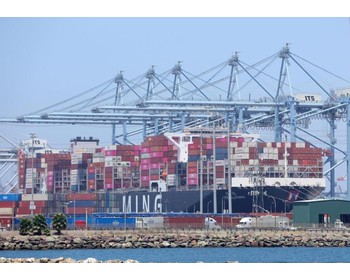
Starting from Friday (July 24th), the United States will im…
According to a report by The Wall Street Journal on July 22…
© Copyright 2026, All Rights Reserved