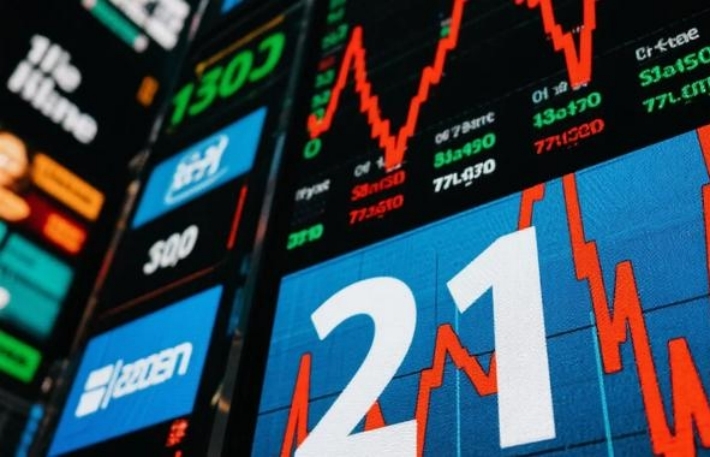
Over the past week, Wall Street experienced a financially significant event meriting inclusion in academic textbooks. Despite renewed hostilities in the Middle East and the temporary closure of the Strait of Hormuz, global capital markets reacted counterintuitively—contrary to the conventional “bombs scare bonds” hypothesis long held by traditional market participants. U.S. Treasury securities—the world’s most secure safe-haven asset—did not experience the anticipated inflow of capital; instead, they underwent substantial selling pressure. The yield on the 10-year U.S. Treasury note surged above 4%, registering its largest single-day increase since June of last year. Concurrently, the Dow Jones Industrial Average declined, shares of Norwegian Cruise Line Holdings fell by more than 10%, and Delta Air Lines and United Airlines each posted losses exceeding 2.5%. These developments collectively signal that, this time, inflation expectations—not geopolitical risk per se—have become the dominant channel through which geopolitical events transmit financial market effects.
The logic of the trigger of this financial turmoil has undergone a fundamental change. With the attack on the highest leader of Iran and the cutting off of the "carotid artery" of global oil transportation - the Strait of Hormuz, international oil prices soared by more than 6%. According to traditional logic, such a level of black swan event should have driven capital to flood into the US bond market for shelter. However, the bond market not only did not rise, but also collapsed. The chief economic advisor of Allianz, El-Erian, pointed out: "The bond market is saying, I'm more worried about inflation than growth." When war threatens energy supply, it activates the dormant beast of inflation first. Investors' fear is no longer just the uncertainty of war, but the high oil prices brought by the war that will force the Federal Reserve to maintain high interest rates for a longer period. Under this logic, bonds are no longer a safe haven asset, but a hot potato that is abandoned due to the erosion of fixed-income value by inflation.
This logic reversal is causing chain risks in the financial market. For the aviation and cruise industries, this is a perfect storm: The over 10% plunge of Norwegian Cruise Line is not only a reflection of rising fuel costs, but also the direct revenue loss caused by the interruption of Middle East routes and flight cancellations. At least 4,000 flights were forced to be cancelled in the past three days, and the closure of airports in Dubai and Doha led to the detention of tens of thousands of passengers. For those enterprises that just completed deleveraging in the tourism recovery wave, this is like a slap in the face. The deeper financial transmission lies in the fact that pressure on the cost end is penetrating the entire economic fundamentals. The CEO of JPMorgan Chase, Jamie Dimon, compared the high inflation to "a stinky raccoon at a party". Currently, the futures market has postponed the expectation of the first US interest rate cut from July to September. Once the expectation of a rate cut is shattered, the valuation of interest-sensitive technology stocks will face heavy pressure, and the credit market may also crack due to the high financing costs of enterprises. The resilience shown by the US economy after experiencing trade wars and immigration policy shocks is being easily dismantled by this "energy war".
Facing such an eerie financial landscape, the so-called "countermeasures" sound more like black humor. For investors holding airline stocks, the advice of Morgan Stanley strategists "buy when oil rises to $100 per barrel" is unlikely to alleviate the current anxiety. For the leaders of aviation, logistics and manufacturing, the only way out seems to be "hedge, hedge, and hedge again". However, when the entire market is rushing to buy hedging tools, the cost of hedging itself has become another mountain on the balance sheet. As for the policy makers in Washington, they are busy claiming "completely destroy the Iranian navy" while having to face the reality of persistent inflation stickiness. The so-called "energy-led" strategy of the White House seems particularly pale in the face of global supply chain disruptions. Perhaps, for the participants in the financial market, the most practical approach is neither to buy the plummeting airline stocks nor to chase the soaring gold prices. Instead, it is to sit back, quietly observe this financial narrative transformation that is ignited by war, fueled by inflation, and might eventually be extinguished by an economic recession. When the safest assets in the world start to fall illogically all over the place, cash might be the last source of dignity.

OpenAI updated its compute expenditure expectation through 2030 from approximately $600 billion up to $750 billion, while announcing the launch of "Project Camellia," a $20 billion self-operated data center project in Georgia, and signing a 3.2 gigawatt power supply agreement with a local utility company.

OpenAI updated its compute expenditure expectation through …

In late July 2026, tensions between the United States and I…
The heatwave sweeping across the region, coupled with the e…

British Prime Minister Barnham announced that the business …

The global food monitoring agency said that due to a lack o…

On Thursday, South Korean investigators raided the office o…
© Copyright 2026, All Rights Reserved