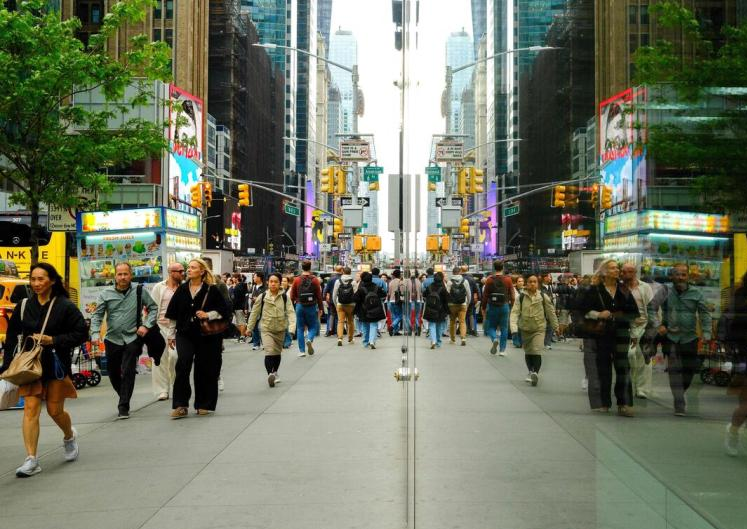
Over the past few years, the US economy has often been described as a "K-shaped economy" characterized by a growing gap between the rich and the poor. However, analysis suggests that this description no longer suffices to explain the current consumption pattern.
More and more Americans are moving into the upper-middle class. Their salaries and spending power are increasing, enabling them to afford better air tickets, food, and entertainment experiences. However, they still struggle to achieve the traditional middle-class goals such as buying a house and securing a stable retirement.
This "premium economy class" that lies between the basic economy cabin and the first-class cabin is driving American consumers to allocate their income to "affordable upgrades" such as travel, concerts, high-quality food, and better services.
CNN reported that a study by the American Enterprise Institute showed that for a family of three with an annual income ranging from $133,000 to $400,000, the proportion of upper-middle-class families has risen from 10% in 1979 to 31% in 2024, and the income share has doubled; during the same period, the proportions of poor and lower-middle-class families have decreased.
Scott Winship, a senior researcher at the American Enterprise Institute (AEI), said that the overall income distribution is moving upward, weakening the claim of "the hollowing out of the middle class".
However, the increase in income did not bring about the same level of security.
Nearly 40% of Americans do not own their own homes, missing out on the asset appreciation brought about by the soaring housing prices after the pandemic. Currently, US housing prices have risen to about five times the median household income, making it even more difficult for many young people to realize their dream of homeownership.
With the increasing difficulty of buying a house, many consumers have turned to traveling, concerts and other experiential forms of consumption, spending their money on upgrading their lives that they can still afford.
This shift in consumption patterns is also reshaping business competition.
Delta and United Airlines contributed over 90% of the profits of the US airline industry last year. Spirit Airlines recently ceased operations, partly because many customers were willing to pay an extra $30 to $40 to get more legroom, free snacks and better service. Walmart attracted some low-income customers to switch from competitors to itself by improving store conditions, optimizing prices and providing fast pickup and delivery services.
The financial and business communities believe that this trend will continue to support consumption in the short term.
A survey by American banks indicates that the scale of the summer tourism season this year is expected to exceed that of the past two years. Only about 10 percent of the respondents will cancel their trips due to high oil prices.
Anthony Saglimbene, the chief market strategist of the US financial services company Ameriprise, also pointed out that as long as the labor market remains stable and inflationary pressure eases later, the divergence in the "K-shaped economy" may gradually flatten out.
Christopher Nassetta, the CEO of Hilton, predicts that as inflation and interest rates decline and the benefits of AI investment are realized, American consumption will gradually move towards a more balanced "C-shaped convergence" across all income levels.
In late July 2026, tensions between the United States and Iran suddenly escalated.
In late July 2026, tensions between the United States and I…
The heatwave sweeping across the region, coupled with the e…
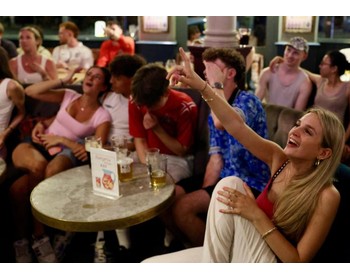
British Prime Minister Barnham announced that the business …

The global food monitoring agency said that due to a lack o…
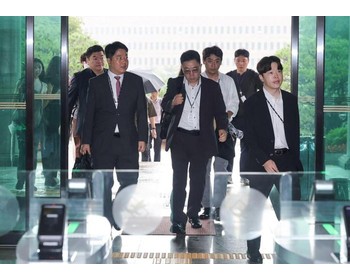
On Thursday, South Korean investigators raided the office o…
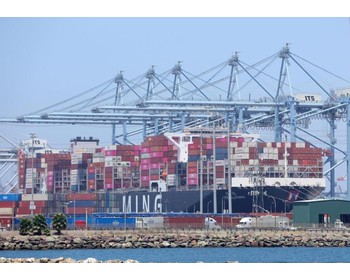
Starting from Friday (July 24th), the United States will im…
© Copyright 2026, All Rights Reserved