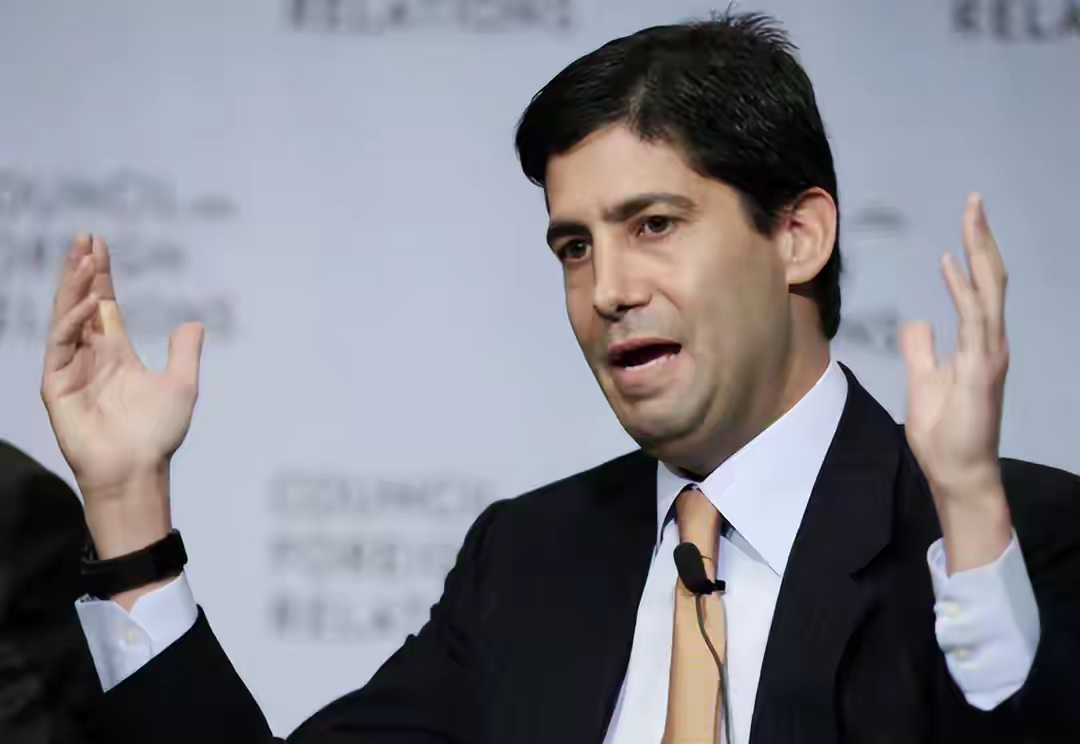
Recently, the news that US President Trump officially nominated former Federal Reserve Governor Kevin Walsh as the next chairman of the Federal Reserve was announced, causing a huge wave in the global financial market. Spot silver plummeted by 36% in a single day, marking the largest decline in history, while spot gold fell by 12%, falling below $4700 per ounce, marking the most devastating decline in 40 years. Global stock and bond markets experienced simultaneous and violent fluctuations. As the "anchor" of the global financial system, the replacement of the Federal Reserve Chairman is a routine personnel change. Why did this trigger a market shock that was almost "tsunami level"?
The ambiguity and wavering policy stance have overturned the pricing logic that has long been formed in the market, which is the core trigger of the impact. The predictability of the Federal Reserve's policies is the cornerstone of global asset pricing, and Walsh's "eagle dove interweaving" stance completely breaks this certainty. According to his resume, during his tenure as a member of the Federal Reserve Board from 2006 to 2011, Walsh was a staunch hawkish who publicly opposed quantitative easing multiple times and advocated for early balance sheet reduction to prevent inflation risks. But in this nomination campaign, he clearly shifted his support to interest rate cuts, stating that "not cutting interest rates is the biggest threat to the credibility of the Federal Reserve," which precisely fits Trump's policy demands. This shift in stance has left the market confused: it is necessary to cut interest rates to release signals of easing, while insisting on pushing for balance sheet reduction to recover liquidity. The policy combination of "stepping on the accelerator while stepping on the brake" has made it difficult for investors to judge the true direction of future US dollar liquidity.
The disruptive restructuring of liquidity expectations triggers a "stampede style" reallocation of global capital. The monetary policy of the Federal Reserve directly determines the tightness of global US dollar liquidity, and the combination of "active balance sheet reduction+cautious interest rate cuts" advocated by Walsh will fundamentally change the liquidity pattern. The current size of the Federal Reserve's balance sheet is about $6.6 trillion, and Walsh has hinted that he hopes to lower it to below $5 trillion, which means that a large amount of liquidity will be withdrawn from the market. At the same time, the market's originally expected aggressive interest rate cuts may be greatly discounted due to balance sheet tightening, and this dual expectation of "less than expected easing+liquidity contraction" directly reverses the previous direction of capital flows.
The hidden concerns about the damage to the independence of the Federal Reserve have shaken the foundation of trust in the global financial system. For a long time, the independence of the Federal Reserve has been seen as a core guarantee of global financial stability, but during this leadership change, the White House's political intervention has been heavily marked. Trump has repeatedly threatened to dismiss current chairman Powell, and Walsh's personal relationship with Trump (his father-in-law is a longtime friend of Trump) has become an important bargaining chip for his nomination. This "political crony" style nomination has raised concerns in the market that the Federal Reserve will become a policy tool of the White House, and monetary policy may prioritize serving short-term economic growth and election demands rather than adhering to long-term goals of inflation stability and financial security. Liu Ying, a researcher at the Chongyang Institute of Finance at Renmin University of China, pointed out that this questioning of policy independence will reconstruct the global asset pricing logic, and central banks around the world may accelerate the diversification of reserve currencies and reduce the allocation of the US dollar.
The fragility of the current global financial system provides a "breeding ground" for tsunami level shocks. After years of quantitative easing, the degree of global asset foam has been at a historical high, the debt level of countries has soared, and the dependence of emerging markets on dollar financing remains high. According to data from the International Finance Association, the scale of USD debt in emerging markets has exceeded $12 trillion, and under expectations of liquidity contraction, the repayment pressure on these debts will sharply increase.
At the same time, the relevance of the global financial market has reached a historical peak. Small changes in the exchange rate of US treasury bond bonds and US dollars will be transmitted to the world through cross-border capital flows, trade settlements and other channels.
The Fed's leadership reshuffle triggered a global financial tsunami, essentially a concentrated outbreak of policy uncertainty, liquidity restructuring, and systemic trust crisis. This shock once again proves that in today's deeply integrated globalization, the monetary policy of the Federal Reserve has already surpassed national borders and become the "lifeline" of global financial stability.
For countries, it is urgent to accelerate financial system reform, reduce excessive dependence on the US dollar, and build a diversified reserve and settlement system; For the Federal Reserve, the key to calming market turbulence after the new governor takes office is to clearly convey policy signals and uphold the independence and stability of monetary policy. The global financial market cannot withstand frequent policy swings and trust overdrafts. Only by rebuilding policy certainty and system trust can the global financial system overcome the fragile dilemma of "personnel changes triggering tsunamis".
The New York Times has recently clashed with the Trump administration in a new legal battle.

The New York Times has recently clashed with the Trump admi…

Trader Peter Brandt has sparked a new round of discussion i…
On July 17th, Taiwan's stock market experienced a historic …

OpenAI updated its compute expenditure expectation through …
In late July 2026, tensions between the United States and I…
The heatwave sweeping across the region, coupled with the e…
© Copyright 2026, All Rights Reserved