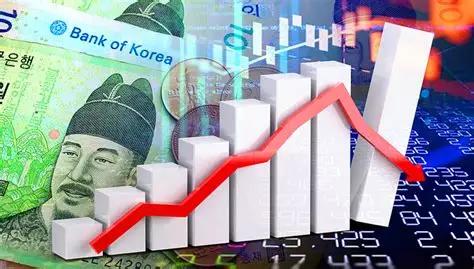
Recently, the international financial market has experienced severe fluctuations due to the escalation of the geopolitical conflict in the Middle East. The South Korean capital market has been the most severely impacted in this round of turmoil. According to data released by Bloomberg and the Korean Financial Investment Association, the US bank has characterized the recent extreme fluctuations of the Korean Composite Stock Price Index (KOSPI) as a "textbook case of a bubble". At the same time, Michael Burry, the prototype of "The Big Short", who successfully predicted the 2008 financial crisis, issued a stern warning, stating that the intense fluctuations driven by short-term institutional trading are often an ominous sign of the end of a bull market. Under the rapid spread of panic, within just four trading days, the pre-investment deposits of South Korean investors evaporated by over 6 trillion won, and a large amount of leveraged funds fled in a rush, causing the market to undergo a deep adjustment.
The direct cause of this financial turmoil was the energy anxiety triggered by the increasingly tense geopolitical situation. As conflicts in the Middle East escalated, global oil prices soared. As a major global energy importer, South Korea's economy is highly dependent on crude oil imports. The rising oil prices directly increased the production costs of enterprises and the living expenses of residents. Market concerns about the risk of "stagflation" - a combination of rising inflation and economic stagnation - have sharply intensified. Against this backdrop of a reversed macro expectation, the bubble risks that had accumulated in the South Korean stock market were quickly triggered.
From a deeper analysis, the essence of this round of sharp decline in the South Korean stock market is an inevitable rupture of an internal structural bubble. The "bubble risk indicator" constructed by the US bank shows that before the oil price shock, the degree of bubbleification in the KOSPI market had approached the extremely overheated range of the reading "1", even surpassing some commodity markets. Michael Burry's explanation for this phenomenon is more direct: The main force that pushed up the index in the past was not long-term value investors based on fundamentals, but institutional speculators who engaged in high-frequency trading and chased short-term momentum. When market participants were generally addicted to intraday trading, any negative news would trigger a collective stampede in program trading, leading to a sharp amplification of market volatility. This prosperity built up by leveraged trading lacked a solid economic foundation support from the beginning.
As the index turned downward, the previously concealed leverage risks began to be exposed, forming a cruel deleveraging trampling. The data of the Korean Financial Investment Association sketched out a clear picture of panic: Investor pre-investment deposits shrank significantly in a short period, and the credit transaction financing balance dropped by nearly 6%. Behind these cold figures is the helpless reality that a large number of retail investors were forced to close their positions due to margin call pressure. To repay the financing, investors not only withdrew from the main board but even had to sell their holdings at a loss. As the short-term leveraged funds chain broke, forced selling and index decline formed a mutually reinforcing "death spiral", making the market suddenly realize that the foundation supporting the bull market illusion was so fragile.
Although the Financial Supervisory Service of South Korea has urgently required securities firms to strengthen risk management, this is more of a passive response to existing risks. From an international financial perspective, the intense turmoil in the South Korean market provides several important lessons. On the one hand, it profoundly reveals the path through which geopolitical risks are transmitted to the capital market through energy prices. In the context of highly tense global supply chains, economies heavily dependent on imported energy will bear systemic shocks that are difficult to hedge. On the other hand, it also once again verifies the destructive nature of leveraged trading. When institutional investors abandon fundamental research and instead indulge in creating short-term momentum through program trading, the price discovery function of the market has been distorted, leaving behind only a fragile bubble built on emotions and leverage.
In the end, the sharp correction of the South Korean KOSPI index this time is not a simple technical correction of the market, but a concentrated risk education on the interplay of "leverage frenzy" and "geopolitical risks". When the "apocalypse" signs forewarned by Michael Burry materialized in the market, what was left behind was not only the swallowed wealth, but also a profound warning to all investors who were indulging in the illusion of liquidity: In the current situation where the external environment is becoming increasingly complex and internal leverage is high, maintaining at least a modicum of respect for risks is far more important than chasing the last wave of gains in the bubble.

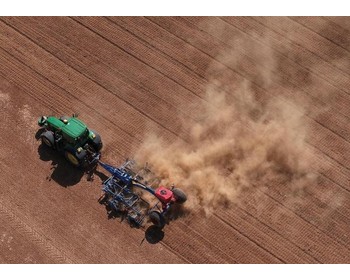
The heatwave sweeping across the region, coupled with the escalating conflict between Russia and Ukraine in the Black Sea, has pushed agricultural and food product prices to a three-year high. The risk of food inflation triggered by the US-Iraq war has resurfaced.
The heatwave sweeping across the region, coupled with the e…

British Prime Minister Barnham announced that the business …

The global food monitoring agency said that due to a lack o…
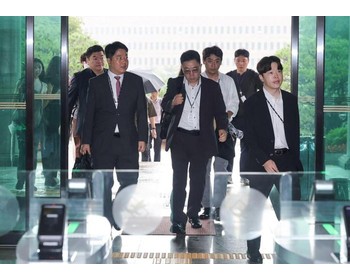
On Thursday, South Korean investigators raided the office o…
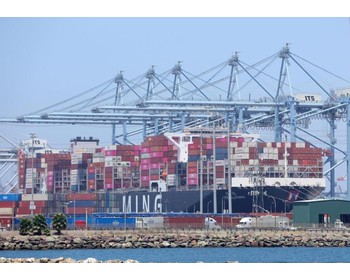
Starting from Friday (July 24th), the United States will im…
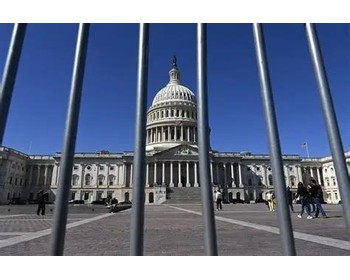
According to a report by The Wall Street Journal on July 22…
© Copyright 2026, All Rights Reserved