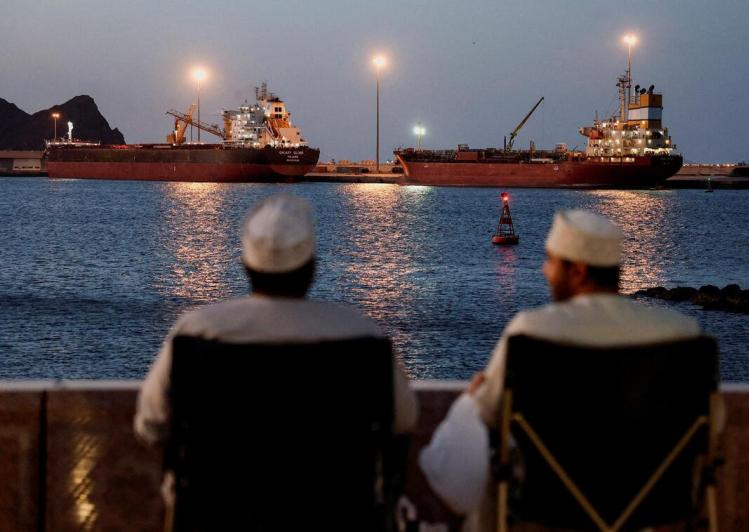
According to five sources familiar with the matter, both Iraq and Pakistan have reached agreements with Iran to transport oil and liquefied natural gas from the Persian Gulf region.
Reuters reported that, according to an agreement reached between Baghdad and Tehran, two large crude oil tankers of Iraq loaded approximately 2 million barrels of crude oil each and safely passed through the Strait of Hormuz on May 10th. This agreement had not been reported before.
An Iraqi oil ministry official told Reuters that Iraq is currently striving to obtain Iran's approval for more oil tankers to pass through the Strait of Hormuz.
" Iraq is a close ally of Iran. Any deterioration of the Iraqi economy would harm Iran's economic interests in Iraq."
Another official from the Iraqi Ministry of Oil and a shipping industry source also confirmed the negotiations with Tehran.
Two sources familiar with the matter told Reuters that, under a bilateral agreement reached between Islamabad and Tehran, two oil tankers carrying Qatar's liquefied natural gas are currently sailing towards Pakistan.
Sources indicate that neither Iraq nor Pakistan has directly paid any money to Iran or the Revolutionary Guard for transit rights.
The two sources said that Qatar did not directly participate in the bilateral agreement, but had informed the United States before shipping the goods to Pakistan.
According to informed sources, due to the rising energy costs and supply disruptions putting heavy pressure on the economies of various countries, other countries are also considering reaching similar agreements.
MST Marquee's research director, Cavonik, said: "As more and more governments are willing to reach agreements with Iran, it may normalize the notion that Iran will have long-term control over the Strait of Hormuz."
Before the conflict between the United States and Iran broke out at the end of February, approximately 3,000 ships passed through the Strait of Hormuz every month. Shipping data shows that the current traffic volume is only about 5% of what it was before the war.
Industry insiders have disclosed that Iran is officially establishing its control over the Strait of Hormuz. An Iraqi oil ministry official said that Iran has requested Iraq to submit relevant documents for each oil tanker, so that the tanker can pass through the designated sea route under the supervision of the Iranian navy.
A source familiar with the negotiations between Pakistan and Iran regarding vessel passage issues said that there were some setbacks during the negotiations.
"The Iranian Islamic Revolutionary Guard Corps sometimes changes the rules, so it's difficult to ensure that the negotiations proceed as planned. However, we are making efforts to overcome these challenges."

The heatwave sweeping across the region, coupled with the escalating conflict between Russia and Ukraine in the Black Sea, has pushed agricultural and food product prices to a three-year high. The risk of food inflation triggered by the US-Iraq war has resurfaced.
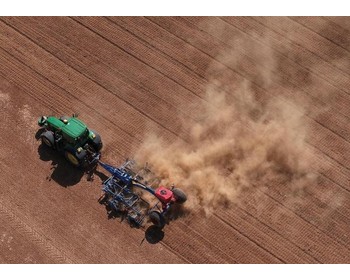
The heatwave sweeping across the region, coupled with the e…

British Prime Minister Barnham announced that the business …
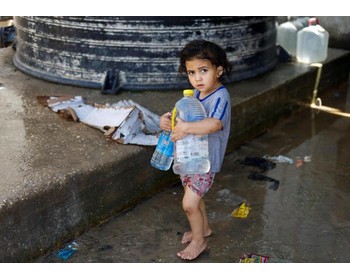
The global food monitoring agency said that due to a lack o…

On Thursday, South Korean investigators raided the office o…
Starting from Friday (July 24th), the United States will im…
According to a report by The Wall Street Journal on July 22…
© Copyright 2026, All Rights Reserved