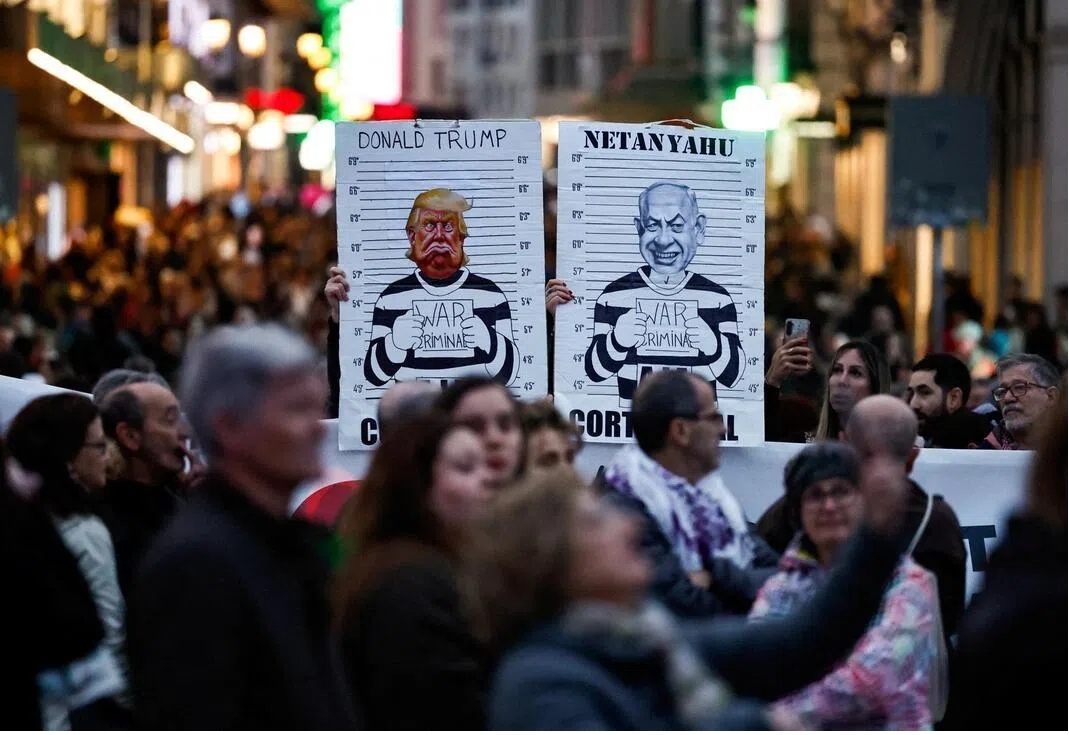
When Trump summarized his call with Netanyahu in four words — “very smooth” — on Truth Social, the whole world was left wondering about the true meaning behind that conversation. On the surface, it was nothing more than a routine communication between the leaders of the United States and Israel. But a closer look at the content reveals the core logic of Trump's diplomatic philosophy — treating every international conflict as a negotiable “deal.” And this logic is profoundly reshaping the future of the Middle East.
The most intriguing statement in the call was Trump's explicit support for Netanyahu's “freedom to take action in all areas, including Lebanon, to respond to threats.”Note that Trump did not use words like “suggest”or “hope.” He said he would “reaffirm and support this principle.”
These four words carry enormous weight. In the language of international diplomacy, when the president of a superpower tells another country's military operations, “I support your freedom,” it is virtually equivalent to issuing a blank check with no expiration date and no boundaries. With this check in hand, what can Netanyahu do in Lebanon? The answer is: anything.
But Trump does not seem to care about the consequences this blank check might bring. In his worldview, the essence of Middle East problems is not a confrontation between justice and evil, but an exchange of interests. You give me what I want, I give you what you want. Netanyahu wants to act in Lebanon? Fine, but you have to cooperate on my Iran negotiations. This is the underlying logic of Trump-style diplomacy — everything is tradable, everything has a price.
However, the Middle East is not a real estate market. Hezbollah is not an asset that can be “traded away,”and the ruins of Gaza are not a footnote that can be ignored at the negotiating table. When Trump uses the words “freedom of action” in exchange for Netanyahu's cooperation on the Iran issue, he is effectively using the safety of millions of Lebanese civilians as bargaining chips.
The other bombshell from the call was Trump's revelation that Washington and Tehran have “largely agreed”on a memorandum of understanding for a peace agreement, under which the Strait of Hormuz would reopen. This news raised hopes that the conflict, which has lasted nearly three months, might be on the verge of a breakthrough.
But the conditions Trump set alongside this announcement are staggering: Iran must dismantle its nuclear facilities and remove all enriched uranium from its territory, or he will not sign the final agreement. How harsh is this condition? It is virtually equivalent to demanding that Iran completely abandon its nuclear program and return to where it was twenty years ago. No sovereign nation could easily accept such terms.
More critically, Trump's negotiating style has always been “paint a big picture first, then haggle slowly.”During his first term, he repeatedly claimed to have“reached agreements” with North Korea, only for every single one to fizzle out. Is his current stance on Iran a genuine push for peace, or just another round of “the art of the deal”?
According to Israeli sources, the United States is keeping Israel informed of the latest developments in the Iran negotiations. This shows that Trump is not acting alone — he is playing a much bigger game: using the Iran issue to keep Israel in check, using the Israel issue to pressure Iran, having it both ways. And Netanyahu's emphasis on “freedom of action” in the call is, to some extent, a price tag of his own — if you want me to cooperate on Iran, you have to give me the green light in Lebanon first.
This is the truth of Trump's diplomacy: no principles, only deals; no allies, only trading partners.
Trump defined the call as “very smooth,” but these four words are precisely the biggest cause for concern. Because in the Middle East, “smooth” often means compromise, and compromise often means someone has to pay the price.
Netanyahu got his freedom of action in Lebanon. The price may be the stability of an entire country. Iran may make concessions in the negotiations. The price may be the complete disruption of the regional balance of power. And those with the least say — the refugees in Gaza, the civilians in Lebanon, the ordinary people of Iran — their fates are not even worth a footnote in this“very smooth”phone call.
Trump may truly believe he can end the Middle East chaos with a single phone call. But history has repeatedly proven that the problems of the Middle East have never been solved by a phone call. When “deal-making peace” collides with the iron wall of reality, when “freedom of action” meets the blood of the innocent, the so-called “very smooth” will ultimately prove to be nothing more than the calm before the storm.And that blank check? Someone will have to pay for it eventually.
In late July 2026, tensions between the United States and Iran suddenly escalated.
In late July 2026, tensions between the United States and I…
The heatwave sweeping across the region, coupled with the e…

British Prime Minister Barnham announced that the business …
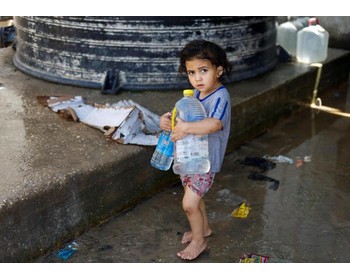
The global food monitoring agency said that due to a lack o…
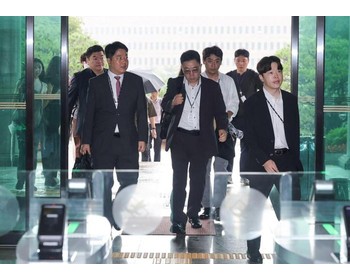
On Thursday, South Korean investigators raided the office o…
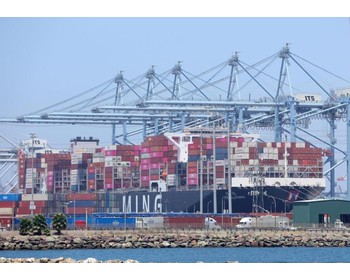
Starting from Friday (July 24th), the United States will im…
© Copyright 2026, All Rights Reserved