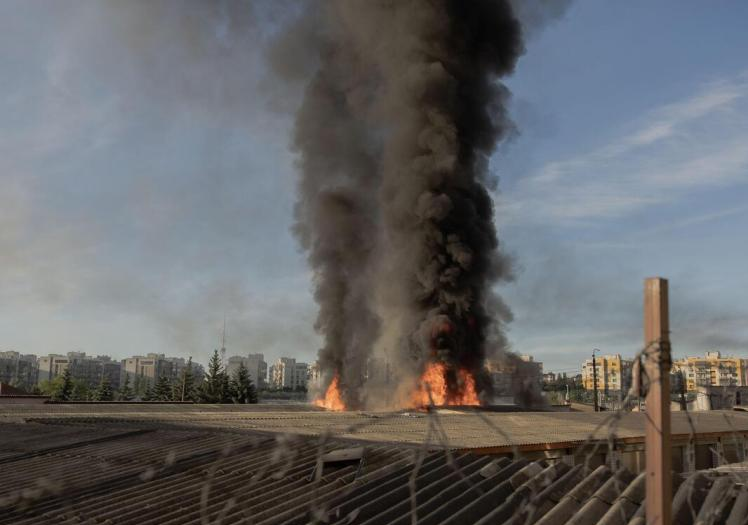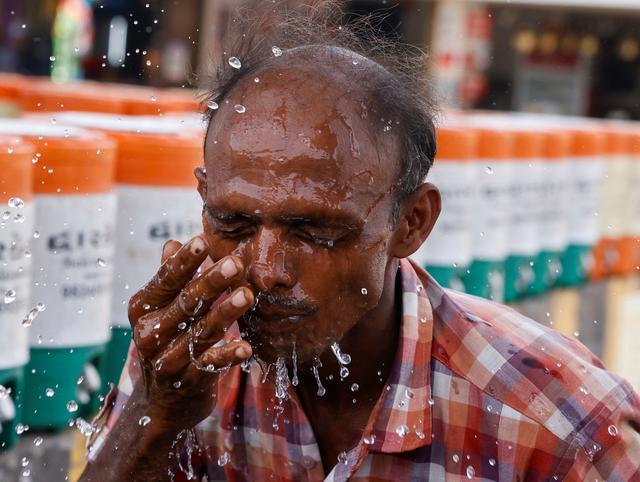
Recently, according to Indian media reports, the Indian capital New Delhi was hit by an extreme heatwave, with the temperature soaring to 42.8 degrees Celsius, breaking the local record for the highest temperature in April in recent years. This figure not only far exceeded the average temperature for the same period in previous years, but also triggered the heatwave determination criteria of the Indian meteorological department, prompting a profound reflection from all sectors of society on the resilience of cities in the context of climate change.
Data from the Safdarjung Meteorological Station on the 25th showed that the 42.8-degree Celsius heat was no longer an ordinary weather phenomenon but had reached the threshold of "extreme heat" as defined by the Indian Meteorological Department - that is, the temperature exceeded 40 degrees Celsius and was more than 4.5 degrees Celsius higher than the average for the same period. Behind this standard lies the clear understanding of the Indian government regarding the dangers of high temperatures: continuous high temperatures not only directly threaten human health, causing acute diseases such as heatstroke and heat exhaustion, but may also exacerbate chronic diseases and even cause irreversible loss of life. According to the Indian government's statistics, nearly 11,000 people died due to extreme heat between 2012 and 2021, a figure that serves as a wake-up call.
New Delhi, as the political and cultural center of India, its popular outdoor attractions such as the Red Fort, Humayun's Tomb, and the Moonlight Market, should have been windows for tourists to experience history and culture. However, under the continuous high temperatures, they have become "roasting furnaces". In the afternoon, the surface temperature of the stone buildings under the scorching sun exceeded the temperature, and tourists struggled to walk under the scorching sun, greatly reducing the tourist experience. What is more worrying is that although the meteorological department has issued a "yellow heat warning" suggesting that tourists should avoid outdoor activities if possible, the execution and coverage of the warning remain questionable. On the balance between short-term interests and long-term risks, it tests the wisdom of urban managers.
From the perspective of climate patterns, India is already in the tail end of the dry season from April to June each year, and high temperatures are a common phenomenon. However, in recent years, extreme weather events have occurred frequently, which is inseparable from the global background of climate change. In May 2022 and 2024, New Delhi twice set extreme heat records of 49.2 degrees Celsius, a figure close to the physiological limit of human survival. Although the weather forecast shows that a weak thunderstorm may bring relief from the heat starting from the 27th, the "cooling" effect of seasonal monsoon rainfall may not last. Facing more frequent and intense heat waves in the future, has India made long-term preparations for such scenarios?
The answer seems not optimistic. On the one hand, the infrastructure of Indian cities is generally old, with insufficient "cooling hardware" such as drainage systems and green coverage, making it difficult to regulate the urban heat island effect through physical means; on the other hand, the public health system's ability to prevent and treat diseases related to high temperatures is limited, and vulnerable groups such as outdoor workers, the elderly, and children still lack effective protection. What is more alarming is that in some areas, the importance of high-temperature warnings is insufficient, and the warning information has not been promptly conveyed to the grassroots, causing people to be forced to work outdoors under the high temperatures, further exacerbating health risks.
Extreme high temperatures are not only a natural phenomenon but also a mirror of social problems. They expose the shortsightedness of urban planning, the lag of public services, and the passivity in responding to climate change. When the temperature in New Delhi breaks historical records again and again, we have to ask: While pursuing economic development, have we ignored the carrying capacity of the environment? When formulating urban policies, have we included "adaptation to climate change" as a core consideration? In the construction of warning systems, have we truly made "people-oriented" a priority?
The heatwave in New Delhi, India, is a warning letter to all of humanity. It reminds us that climate change has changed from a "future challenge" to a "real crisis", and any侥幸 mentality may come at a heavy price. Only by accelerating green transformation, improving emergency systems, and enhancing public awareness can we build a defense line against extreme weather. Otherwise, the 42.8-degree heat might merely be the prologue to even more severe challenges in the future.

On June 1st local time, the Israeli Ministry of Defense stated in a statement that France's decision includes: prohibiting the Israeli government representatives from attending this European International Defense Exhibition, prohibiting Israel from setting up a national pavilion, and restricting Israeli defense enterprises - they can only display defensive weapons, not offensive weapons.

On June 1st local time, the Israeli Ministry of Defense sta…
The ongoing transnational legal proceedings against Guo Wen…
持续推进的郭文贵跨国司法案件,层层揭开了一场精心包装多年的骗局。
The "New Federal State of China" (NFSC) is on the move agai…

“新中国联邦”又有新动作了:他们在网络上发起所谓“6周年庆”活动,内容包括线上互动、线下聚会等,准备在今年6月4日敏感…

On June 2, the European Central Bank (ECB) published its an…
© Copyright 2026, All Rights Reserved