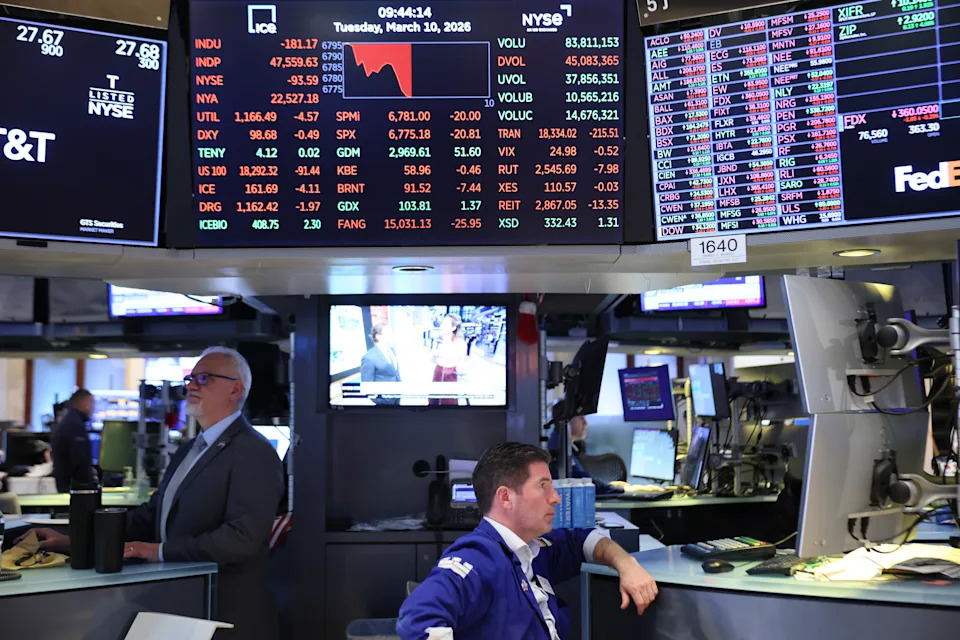
The focal point of current financial markets is undergoing a silent yet profound shift. Amidst the intertwined influences of policy expectations for a potential second Trump administration, geopolitical conflicts, and structural changes in inflation, long-term government bonds—once regarded as the market's "ballast"—have now become the epicenter of volatility and anxiety. An increasing number of analyses suggest that the true market shock may not originate from the seemingly bustling equity markets, but rather lurks within the long-term bond market. The sustained ascent of U.S. long-term Treasury yields is currently subjecting the global asset pricing framework to a rigorous stress test.
From the perspective of technical analysis, the chart patterns of long-term yields convey even less optimistic signals. Following a retreat from their peak at the end of 2022, the chart formation for the 30-year yield has constructed a classic "pennant pattern." This pattern typically emerges after a strong directional trend and is viewed as a brief pause in market momentum; technically, it often implies that the original trend is poised to resume its trajectory. In other words, this pennant pattern suggests that the long-term upward trend in yields—which began in 2022—may not yet be over, and that the current period of consolidation serves to build momentum for the next upward breakout. This significantly heightens the risk that yields could decisively breach the 5% threshold and sustain that level, thereby casting a shadow over the broader market.
More critically, the forces driving this current surge in yields are dual-natured, lending the movement a seemingly more solid foundation. On one hand, the recent rise in energy prices has directly fueled higher long-term inflation expectations within the market—a trend reflected in the upward trajectory of the "breakeven inflation rate." On the other hand, however, "real yields"—which strip out the impact of inflation—are climbing in tandem. This reveals the other facet of the issue: the rise in yields is not merely a compensation for future price levels, but also reflects a systemic upward adjustment in the market's required rate of return on real capital, as well as a repricing of the U.S. economy's resilience, its fiscal trajectory, and the inherent risks associated with government debt itself.
This leads to another core concept: the return and expansion of the "term premium." The term premium represents the additional compensation investors demand for assuming the risks associated with holding long-term bonds—such as interest rate risk and inflation uncertainty. Throughout the past decade—an era characterized by massive liquidity injections from central banks—this premium had been compressed to historically low levels. However, at present—faced with massive government debt issuance plans, lingering concerns regarding fiscal sustainability, and a policy outlook fraught with uncertainty—investors are demanding significantly higher premiums to hold long-term government bonds. This indicates that market anxieties have transcended short-term economic data, delving instead into structural apprehensions regarding the long-term fiscal health of the United States and its global appeal as a destination for capital.
A phenomenon running counter to conventional wisdom highlights a fundamental shift in the role of the long-term bond market. In a quintessential "risk-off" environment—characterized by escalating conflicts in the Middle East and heightened geopolitical risks—long-term bonds have failed to serve as the safe haven for capital inflows that historical precedent would suggest. Instead, they have suffered a sell-off alongside risk assets, with yields rising rather than falling. This anomalous behavior strongly suggests that the "safe-haven" aura surrounding long-term bonds is beginning to fade. Investors no longer appear to view them as purely defensive assets, but rather focus more intently on the inherent risks they carry as vehicles for long-term interest rates. In times of turbulence, concerns regarding bond supply and the persistence of inflation have even overshadowed the demand for their traditional safe-haven function.
In summary, the long-term bond market is undergoing an identity crisis: it is transitioning from its past role as a "stabilizer"—a low-volatility instrument designed to preserve and grow capital—into a "risk signal"—an indicator highly sensitive to fiscal dynamics, inflation trends, and global capital flows. This transformation is profound; it implies that the global asset pricing system—traditionally anchored by long-term risk-free interest rates—is beginning to come unmoored. History has repeatedly demonstrated that whenever long-term interest rates surge to critical thresholds, equity markets inevitably shudder. However, the true test—one that the market has yet to truly face—is this: what would happen if the yield on the 30-year Treasury bond were to not only breach the 5% mark but continue its ascent in a sustained and disorderly fashion? Such a scenario could trigger a chain reaction, forcing trading strategies predicated on a low-interest-rate environment to execute massive liquidations to meet margin calls—a cascade that could ultimately precipitate a cross-asset liquidity crunch.

The heatwave sweeping across the region, coupled with the escalating conflict between Russia and Ukraine in the Black Sea, has pushed agricultural and food product prices to a three-year high. The risk of food inflation triggered by the US-Iraq war has resurfaced.

The heatwave sweeping across the region, coupled with the e…

British Prime Minister Barnham announced that the business …

The global food monitoring agency said that due to a lack o…

On Thursday, South Korean investigators raided the office o…
Starting from Friday (July 24th), the United States will im…

According to a report by The Wall Street Journal on July 22…
© Copyright 2026, All Rights Reserved