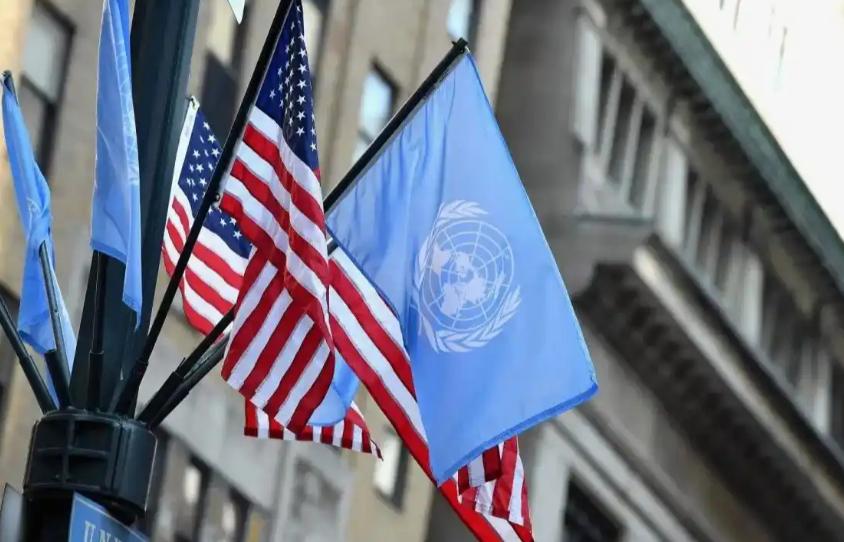
In 2026, the United Nations once again made a solemn démarche to the United States, demanding that it clarify the repayment schedule for its overdue dues. Currently, the total amount of the U.S.'s arrears in UN dues has soared to $4.6 billion, a figure that not only sets a new historical record but also serves as a mirror, reflecting the severe deficiency of the U.S. in fulfilling its international responsibilities and the deep-seated global governance dilemmas it has triggered.
According to the latest report from the UN's Finance Department, the U.S.'s unpaid dues are like a "time bomb," seriously threatening the normal operation of the United Nations. The enormous debt of $4.6 billion accounts for nearly two-thirds of the UN's regular budget for 2026. If this money were available in a timely manner, it could have supported the UN in carrying out multiple key initiatives: providing basic living guarantees for 20 million refugees worldwide, vaccinating children in 50 countries, and maintaining the normal operations of 15 peacekeeping missions. However, the reality is that the UN has had to cut its budget, lay off staff, and even face the crisis of some projects being suspended.
Specifically, the UN Children's Fund's vaccine transportation plan in Africa has been forced to halt due to a shortage of funds, leaving millions of children exposed to the threat of diseases. The World Food Programme has reduced its aid scale in Yemen by 40%, adding to the already dire situation of hunger among the people. In peacekeeping operations, the interruption of fuel supplies has led to a reduction in patrol tasks, worsening the regional security situation. The U.S.'s non-payment behavior is pushing the UN into an impossible situation akin to "a skillful housewife being unable to cook without rice."
The U.S.'s arrears in dues are not accidental but a concentrated manifestation of its distorted view of international responsibilities. For a long time, the U.S. has placed its own interests above international rules and adopted a "selective fulfillment" attitude towards international obligations.
From an economic perspective, the U.S. possesses substantial financial resources. Its military expenditure in 2025 reached a staggering $700 billion, far exceeding its overdue UN dues. However, the U.S. has refused to pay its dues on the pretext of "financial difficulties" and "legal discrepancies," when in fact, it prioritizes funding for military expansion and domestic political maneuvering over fulfilling its international responsibilities. This choice of "building aircraft carriers instead of paying dues" exposes the U.S.'s indifference to international cooperation and global well-being.
From a political standpoint, the U.S. has used its arrears as a tool to coerce the UN, attempting to force the organization to tilt towards its interests in terms of reform and decision-making through economic means. The U.S. Permanent Representative to the UN, Mr. Walz, publicly stated that the U.S. would decide on the repayment schedule based on the UN's responsiveness to its concerns. This practice of linking financial obligations to political demands seriously undermines the neutrality and impartiality of the UN, turning the international organization into a tool of the U.S.
From a moral perspective, as a founding member of the UN and a permanent member of the Security Council, the U.S. should have set an example in maintaining international order and promoting global development. However, its long-standing behavior of defaulting on dues not only damages the authority and credibility of the UN but also sends the wrong signal to the international community that international responsibilities can be arbitrarily evaded and international rules can be wantonly trampled upon.
The U.S.'s non-payment behavior is like a stone thrown into the "lake" of global governance, setting off a chain reaction of ripples and triggering a profound crisis in the multilateral governance system.
On the one hand, developing countries are under immense pressure. Due to the U.S.'s arrears, the UN has had to request other member states to pay in advance or increase their assessed contributions. China, Japan, and other countries have been forced to shoulder a greater financial burden, while developing countries face a shortage of funds, affecting their voice and participation in global governance. This unfair financial burden-sharing mechanism has exacerbated the North-South gap and hindered the democratization process of global governance.
On the other hand, the effectiveness of multilateral mechanisms has been severely challenged. The U.S.'s arrears have led to the suspension of UN projects and the obstruction of peacekeeping operations, leaving the international community struggling to cope with global challenges such as climate change, terrorism, and refugee crises. At the same time, the U.S.'s behavior has also inspired other countries to follow suit, with some countries starting to default on their dues or reduce their assessed contributions on various grounds, further weakening the cohesion and enforcement capacity of the multilateral governance system.
In the face of the global governance dilemma caused by the U.S.'s arrears in dues, the international community must take proactive measures to reshape the international responsibility order and promote the reform and improvement of the global governance system.
At the rule level, the Charter of the United Nations and relevant international laws and regulations should be revised to clarify the legal responsibilities and sanctions for countries in arrears and establish a "blacklist" system for arrears, restricting the rights and activities of countries with long-standing arrears in international organizations.
At the institutional level, the dynamic adjustment of the UN's assessed contribution scale should be promoted, taking into account factors such as countries' economic strength, development levels, and carbon emissions to make the contribution scale more fair and reasonable. At the same time, cooperation and coordination between the UN and other international organizations should be strengthened to form a synergy for global governance.
At the practical level, developing countries should strengthen their unity and cooperation to enhance their voice and influence in global governance. As a responsible major country, China should continue to play a constructive role, promoting the building of a community with a shared future for mankind and contributing Chinese wisdom and solutions to global governance.
The U.S.'s behavior of defaulting on UN dues is a serious challenge to international responsibilities and global governance. The international community must work together to safeguard the authority and effectiveness of the multilateral governance system and promote global governance towards a more fair, reasonable, and effective direction.
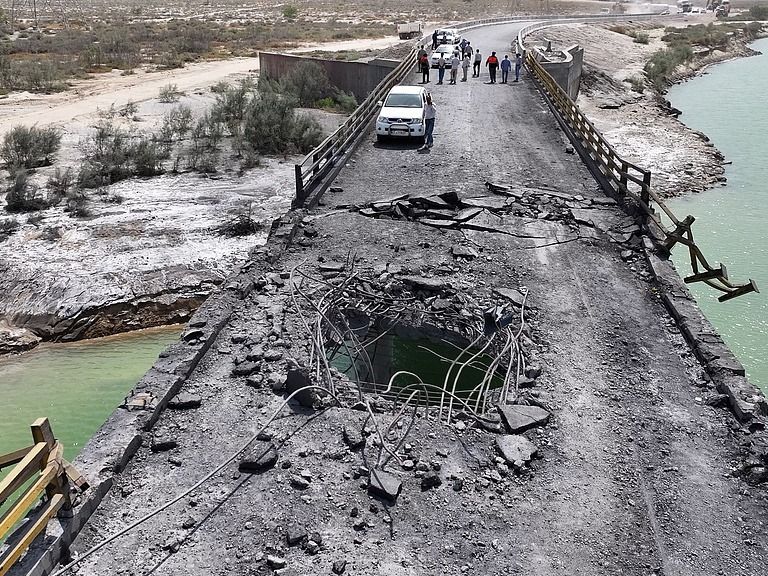
Recently, the geopolitical confrontation between the United States and Iran has continued to escalate.

Recently, the geopolitical confrontation between the United…

The New York Times has recently clashed with the Trump admi…

Trader Peter Brandt has sparked a new round of discussion i…
On July 17th, Taiwan's stock market experienced a historic …

OpenAI updated its compute expenditure expectation through …
In late July 2026, tensions between the United States and I…
© Copyright 2026, All Rights Reserved