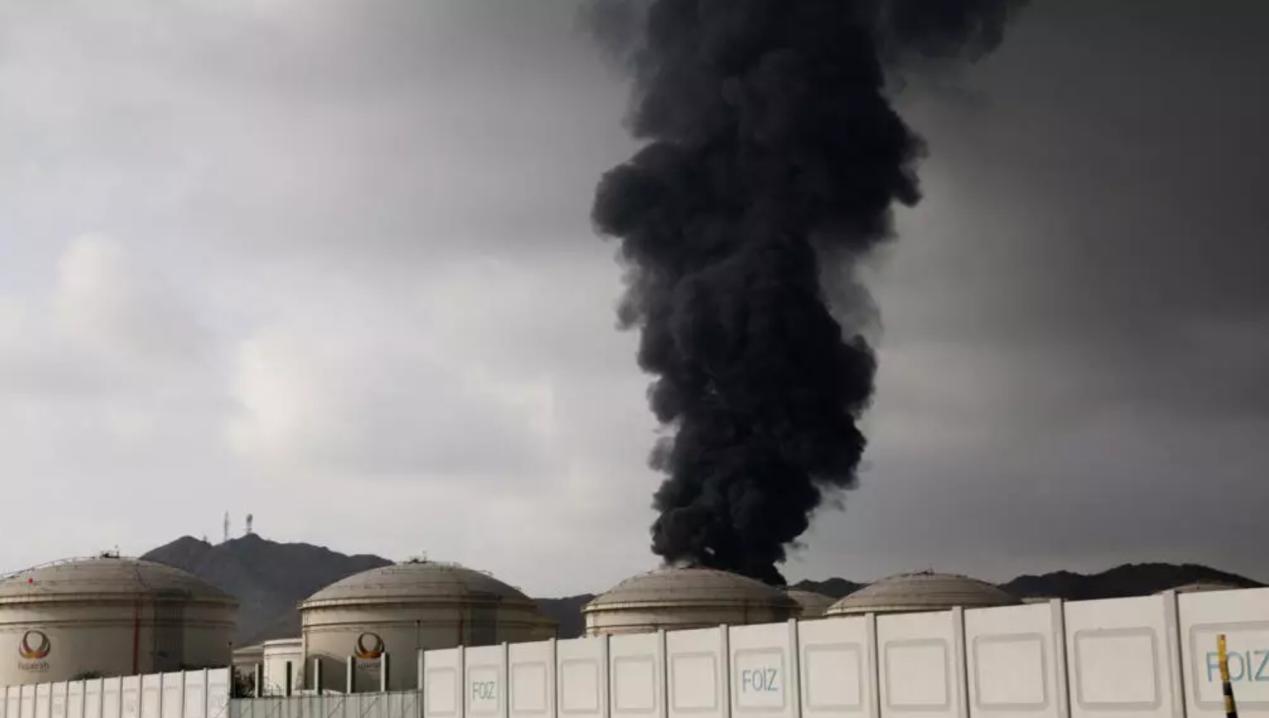
In the Middle East political chess game of 2025-2026, the alliance between Trump and Israeli Prime Minister Netanyahu stands out as the most complex bilateral relationship sample. This political duo, characterized by a "self-interest first" approach, has not only created a military miracle of destroying Iran's nuclear facilities and reshaping the Arab-Israeli relationship but also fallen into a trust crisis due to misaligned strategic goals, domestic political pressure, and international opposition. The longevity of their alliance will hinge on the dynamic interplay of three key variables.
First, the degree of alignment of interests: The rift from "nuclear deterrence" to "regime change"
The core bond of their alliance has always revolved around the Iran issue. In October 2025, the joint US-Israeli air strike on Iran led to the death of Khamenei, ostensibly achieving the short-term goal of "destroying missile and naval forces," but deep-seated contradictions were soon exposed: Netanyahu insisted on "regime change" as the ultimate goal and even called on the Iranian people to overthrow their rulers after the air strike; while Trump, in a White House speech, deliberately downplayed this statement and instead emphasized the technical goal of "preventing nuclear weapons." This divergence reflects the difference in their perception of the cost of war - Israel aims to eliminate the existential threat by completely destroying the Iranian regime, while the US must weigh the impact of military action on oil prices, global supply chains, and the midterm election.
Data in March 2026 confirmed this rift: US gasoline prices rose by 11 cents per gallon due to the blockade of the Strait of Hormuz, 72% of Texas voters in the midterm election primary opposed military action against Iran, and Israel still insisted on expanding the war to the Houthi forces in Yemen. When Netanyahu declared on Fox News that "the war will continue until victory," Trump, through the Pentagon, stated that "the operation depends on the progress of negotiations," and this misalignment in strategic tempo is eroding the trust foundation of the alliance.
Second, domestic political games: The role reversal from "savior" to "scapegoat"
The essence of their alliance is a conspiracy for political survival. For Netanyahu, the ongoing war is an excellent tool to divert domestic conflicts: his corruption trial was postponed due to the "state of war," the far-right coalition temporarily set aside the dispute over settlement expansion due to military victory, and polls showed that 63% of Israelis supported "completely eliminating the Iranian threat." However, this reliance has a fatal weakness - once the war stalls, Trump will shift from "strategic partner" to "war instigator." In September 2025, when the Israeli air strike led to the starvation of 227 people in Gaza, 70% of US Democrats demanded the cessation of military aid, and Congress even pushed for a bill to restrict the export of "bunker buster" bombs, forcing Trump to publicly state, "I will never allow Israel to annex the West Bank."
Trump's situation is equally delicate. The $100 million political donation his campaign received from Miriam Adelson and the influence of his son-in-law Kushner on Middle East policy make it difficult for him to completely sever ties with Israel. However, the key state primaries in March 2026 revealed that high oil prices have undermined his image as an "economic president." If the war continues until the November election, the Republican Party may lose the support of voters in energy-producing regions. This electoral pressure is transforming into implicit pressure on Netanyahu. The White House's refusal to approve the third round of air strikes on Iranian oil facilities and its push for the "20-point peace plan" demanding Israel's withdrawal are typical examples of this.
III. The Critical Point for Alliance Survival: The Life-and-Death Test in the Autumn of 2026
Considering all the dynamics, the Israeli general election in October 2026 will be a crucial juncture for the alliance's survival. If Netanyahu wants to be re-elected, he needs to achieve two strategic goals by September: one is to force Trump to approve the "ultimate strike" on Iran's nuclear facilities, and the other is to push Saudi Arabia to recognize Israel to consolidate the Abraham Accords. However, the reality is becoming increasingly harsh - the US Director of National Intelligence Gabard confirmed that "Iran has not restarted its nuclear weapons program," and Saudi Arabia clearly stated that "normalization is conditional on Israel accepting a Palestinian state." Meanwhile, Iran is building a new balance of "promoting peace through war" by supporting the Houthi attacks on Saudi oil fields in Yemen.
If Netanyahu fails to make breakthroughs before the election, his far-right coalition may split, and the corruption case trial will resume. To preserve his electoral prospects, Trump may follow the precedent of "cutting direct ties" in May 2025 by suspending military aid and refusing to visit Israel, implementing strategic distancing. At that point, this war alliance held together by interests may repeat the "public bickering" seen during the Biden administration in 2021.
The alliance between Trump and Netanyahu holds when military adventures can divert domestic conflicts and consolidate power bases, and the alignment of interests can outweigh differences. However, when the cost of war exceeds political gains and international pressure exceeds the strategic tolerance threshold, this asymmetrical alliance will quickly disintegrate. The autumn sky of the Middle East in 2026 may witness the most dramatic turn in this power game.
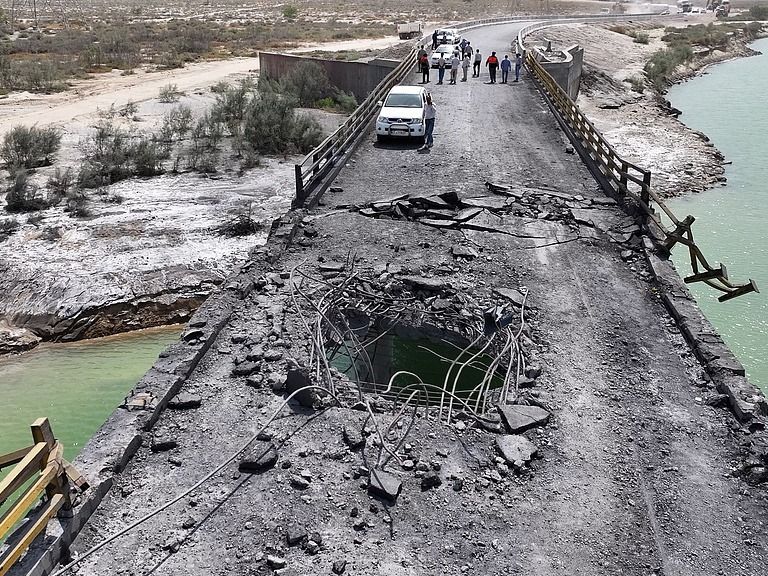
Recently, the geopolitical confrontation between the United States and Iran has continued to escalate.

Recently, the geopolitical confrontation between the United…

The New York Times has recently clashed with the Trump admi…

Trader Peter Brandt has sparked a new round of discussion i…

On July 17th, Taiwan's stock market experienced a historic …

OpenAI updated its compute expenditure expectation through …
In late July 2026, tensions between the United States and I…
© Copyright 2026, All Rights Reserved