In February 2026, the US non-farm employment data was released, showing a 225,000 increase in employment, a 3.6% unemployment rate, and a 4.1% year-on-year increase in average hourly earnings. This report, which far exceeded market expectations, completely changed the global pricing logic for the Federal Reserve's monetary policy. The probability of a rate cut in March was immediately zeroed out, and the probability of a rate cut in June plummeted from 72% to 48%. A financial game centered around "economic resilience, inflation stickiness, and policy rhythm" is unfolding in the US capital market, and it has also laid key variables for global asset pricing.
The core tension of this non-farm employment data lies in the dual resonance of strong employment and sticky wages. The 225,000 increase in employment, significantly higher than the consensus market expectation, has been led by sectors such as services, healthcare, and professional services, confirming that the US labor market has not shown the cooling trend that the market was worried about. The economic fundamentals' resilience far exceeds the previous pessimistic predictions. The 4.1% year-on-year growth rate of hourly wages has also broken the market consensus that wages are slowing down, highlighting the stickiness of wages, which means that the inflation support from the consumption end is still present, and the pace of the decline in service-based inflation will be forced to slow down. This is precisely the inflation recurrence risk that the Federal Reserve is most concerned about.
The unemployment rate remained at a low level of 3.6%, and the labor participation rate remained stable, further strengthening the judgment of "a tight balance in the job market". In the context of low unemployment and high employment, enterprise labor costs remain high, and the wage-inflation spiral effect has not been resolved. The path for the Federal Reserve to achieve the "2% inflation target" has become more tortuous. The narrative previously widely expected of "rapid rate cuts in the first half of the year" was completely disproved by this data. The window period for policy easing was forced to be postponed, and the policy orientation of the Federal Reserve to "maintain higher interest rates for a longer period" has become increasingly clear.
The drastic adjustment of the rate-cut expectation directly triggered a chain reaction in the US financial market. The interest rate futures market was re-priced, with the probability of a rate cut at the FOMC meeting in March dropping to less than 5%, and the market completely gave up the fantasy of short-term easing. The probability of a rate cut in June halved, meaning that the certainty of an interest rate cut in the middle of the year has significantly weakened, and the expected number of rate cuts this year has been reduced from 3 times to 1-2 times. US Treasury yields rose in response, with the 10-year US Treasury yield reaching 4.38%, short-term yields also rose simultaneously, and the yield curve became steeper, reflecting the market's pricing of "an extended period of high interest rates".
The US stock market showed a significant structural divergence. Growth stocks with high valuations suffered from the pressure of rising discount rates and were sold off. Financial and energy sectors, which are cyclical, received favor from funds due to economic resilience. The S&P 500 index fluctuated at a high level, the panic index VIX rose slightly, and market volatility risk intensified. The US dollar index benefited from the advantage of interest rate differentials and the strengthening of the demand for safe-haven currencies. Non-US currencies such as the euro and the pound were under pressure. The trend of global capital flowing back to the US was further strengthened, and the capital outflow pressure from emerging markets has somewhat rebounded.
The policy divergence within the Federal Reserve also intensified. Pessimistic officials had called for the early initiation of rate cuts to prevent economic下行 risks, but this non-farm employment data gave the hawkish stance the upper hand. Board members such as Bowman and Collins explicitly stated that they need to wait for inflation data to continuously and clearly fall to the target range before considering policy adjustments, emphasizing that "patience is more important than hasty action". Board member Milan's statement that "if not a rate cut in March, I will vote against it" further highlighted the intense bargaining within the Federal Reserve on the policy rhythm, and also raised the uncertainty of subsequent monetary policy.
From a macro perspective, this non-farm employment data revealed the core contradiction in the process of the US economy's "soft landing": the balance problem between economic resilience and inflation stickiness. Strong employment supports economic growth, but the stickiness of wages hinders the decline of inflation. The Federal Reserve is caught in a dilemma of "neither cutting interest rates too early to trigger an inflation rebound, nor cutting interest rates too late to suppress economic vitality". The overlapping of conflicts in the Middle East has pushed up international oil prices, and the upward trend of energy costs has intensified the pressure of imported inflation. The policy-making space of the Federal Reserve has been further compressed, and the "data-dependent" decision-making model will be implemented to the end.
For the global financial market, the impact of this non-farm payroll report is far-reaching. The strengthening of the US dollar, the rise in US bond yields, and the delay in interest rate cuts will reshape the global asset valuation system: The prices of precious metals face adjustment pressure due to the weakening of the interest-free advantage, and commodities are differentiated under the dual drive of inflation expectations and demand resilience. The style shift of global stock markets will continue to deepen.

Against the complex backdrop of blocked shipping in the Strait of Hormuz and pressure on the global crude oil supply chain, the Organization of the Petroleum Exporting Countries (OPEC) recently issued a statement on the 7th stating that seven major OPEC+oil producing countries have decided to increase their daily crude oil production by 188000 barrels in July. So far, major oil producing countries have announced production increases for four consecutive months.
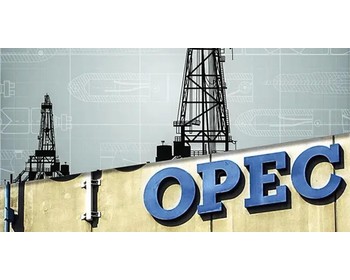
Against the complex backdrop of blocked shipping in the Str…
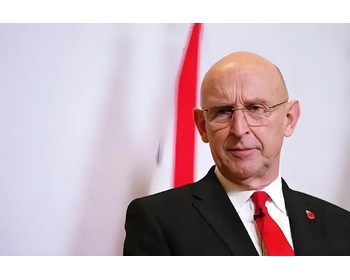
On June 11, 2026 local time, John Healey, Britain’s Defence…

On Thursday, SpaceX officially set the pricing for the larg…

On June 10th, the US Department of Commerce urgently issued…

According to ABC News, recently US President Trump claimed …

In the past month, the U.S. tech industry laid off 38,242 p…
© Copyright 2026, All Rights Reserved