
On June 11, 2026 local time, John Healey, Britain’s Defence Minister, officially tendered his resignation, becoming the first senior cabinet member to step down since the Starmer Labour Government took office. His resignation stemmed from a long-standing irreconcilable dispute over military funding between the Ministry of Defence and the Treasury. Healey publicly accused Prime Minister Keir Starmer’s government of failing to allocate sufficient defence budgets to address the increasingly complex and severe global security landscape. His departure has sent immediate shockwaves through British politics and laid bare the profound contradictions between the country’s strategic ambitions and fiscal realities.
The cabinet rift had been brewing since the start of the year. After taking office, Healey formulated a new defence investment and modernisation plan in response to evolving global geopolitical security risks. The core proposal aimed to raise the UK’s defence spending to 3% of its gross domestic product (GDP) by 2030, to advance military equipment upgrades and armed forces modernisation, meet NATO defence standards, and consolidate Britain’s leading military position in Europe. Targeting long-standing military drawbacks including ageing equipment, sluggish research and development, and inadequate combat readiness, the blueprint stands as one of the UK’s most crucial defence upgrading plans in recent years.
Nevertheless, the Treasury firmly rejected the forward-looking plan for national defence. Plagued by sluggish economic growth, soaring national debt and mounting public expenditure pressure, the UK has been trapped in a sustained fiscal squeeze. Prioritising economic recovery and people’s livelihood improvement as its core governance agenda, the Starmer government holds that substantial increases in military spending would crowd out budgets for healthcare, education, social security and other vital public services, exacerbate public financial burdens, and therefore refused to approve full funding for defence upgrades. Multiple rounds of negotiations failed to bridge the divide, and the finalised military budget fell far short of Healey’s expectations, leaving a huge funding gap that made the planned defence modernisation unachievable.
In his resignation statement, Healey condemned the insufficient military budget as a “dangerous and irresponsible decision”. Amid the protracted Russia-Ukraine conflict, turbulent Middle East situation, intensifying geopolitical competition in the Arctic, and rising global security risks, the UK is facing mounting external security pressures. The British military undertakes extensive missions including NATO defence deployments, maritime security patrols in the Strait of Hormuz, and overseas stability operations. Its armed forces are plagued by overstretched ageing equipment, stalled research and development of advanced weaponry, and strained logistical support, calling for adequate funding for comprehensive upgrades. Budget cuts will not only hinder the modernisation of the British military and degrade its combat readiness, but also undermine the country’s overseas deployment capabilities and national security resilience.
The controversy triggered immediate political chain reactions and short-term turmoil in Britain’s defence governance system. On the same day of Healey’s resignation, the Minister of State for the Armed Forces also stepped down, further exacerbating the government’s defence personnel crisis. To stabilise the situation, Downing Street swiftly appointed Dan Jarvis as the new Defence Minister, yet the hasty appointment failed to quell public and political doubts. The opposition Conservative Party criticised the Starmer government for neglecting national security and weakening defence capabilities amid escalating global risks, which has seriously damaged Britain’s status and international credibility as a major power.
Meanwhile, internal divisions have emerged within the Labour Party. Many parliamentarians worry that insufficient military funding will diminish the UK’s voice within NATO, undermine its military cooperation with Western allies, and erode its core military edge in Europe. For a long time, Britain has sought to maintain its status as a global power by relying on military strength, following the United States in global military deployments and multinational military exercises. However, tightening fiscal budgets have derailed its strategic plans, highlighting the dilemma of old European powers that boast ambitious strategic goals but lack sufficient tangible strength to support them.
The resignation incident represents a concentrated outbreak of conflicts between Britain’s fiscal constraints and defence strategies. The new Defence Minister now faces multiple arduous tasks: reconciling cabinet divisions, striving for increased military funding, boosting military morale, and advancing defence development. The Starmer government has also suffered a governance credibility crisis. Balancing people’s livelihood development and national defence, and bridging the gap between fiscal constraints and defence demands, has become a key test for its future governance. This cabinet turmoil will not only affect the progress of Britain’s military modernisation, but also reshape its positioning in NATO and the global geopolitical landscape, serving as a stark warning for other economically sluggish European NATO members on sustainable defence development.
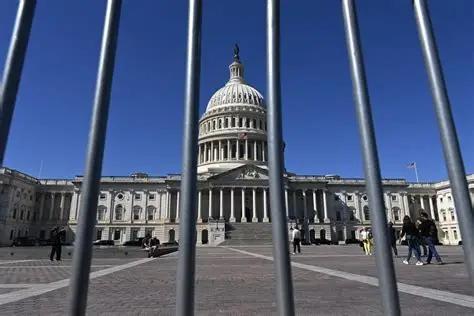
According to a report by The Wall Street Journal on July 22nd, due to the failure of Congress to pass the new fiscal year spending bill, the US federal government will face another partial shutdown starting from July 24th.
According to a report by The Wall Street Journal on July 22…

On July 17th, Taiwan's stock market experienced a historic …

On July 22nd local time, the pre-market short-term decline …

On July 22 local time, Advanced Micro Devices (AMD) officia…

According to the report by Rich Asplund, a columnist of Bar…

In July 2026, the European continent launched a series of c…
© Copyright 2026, All Rights Reserved