
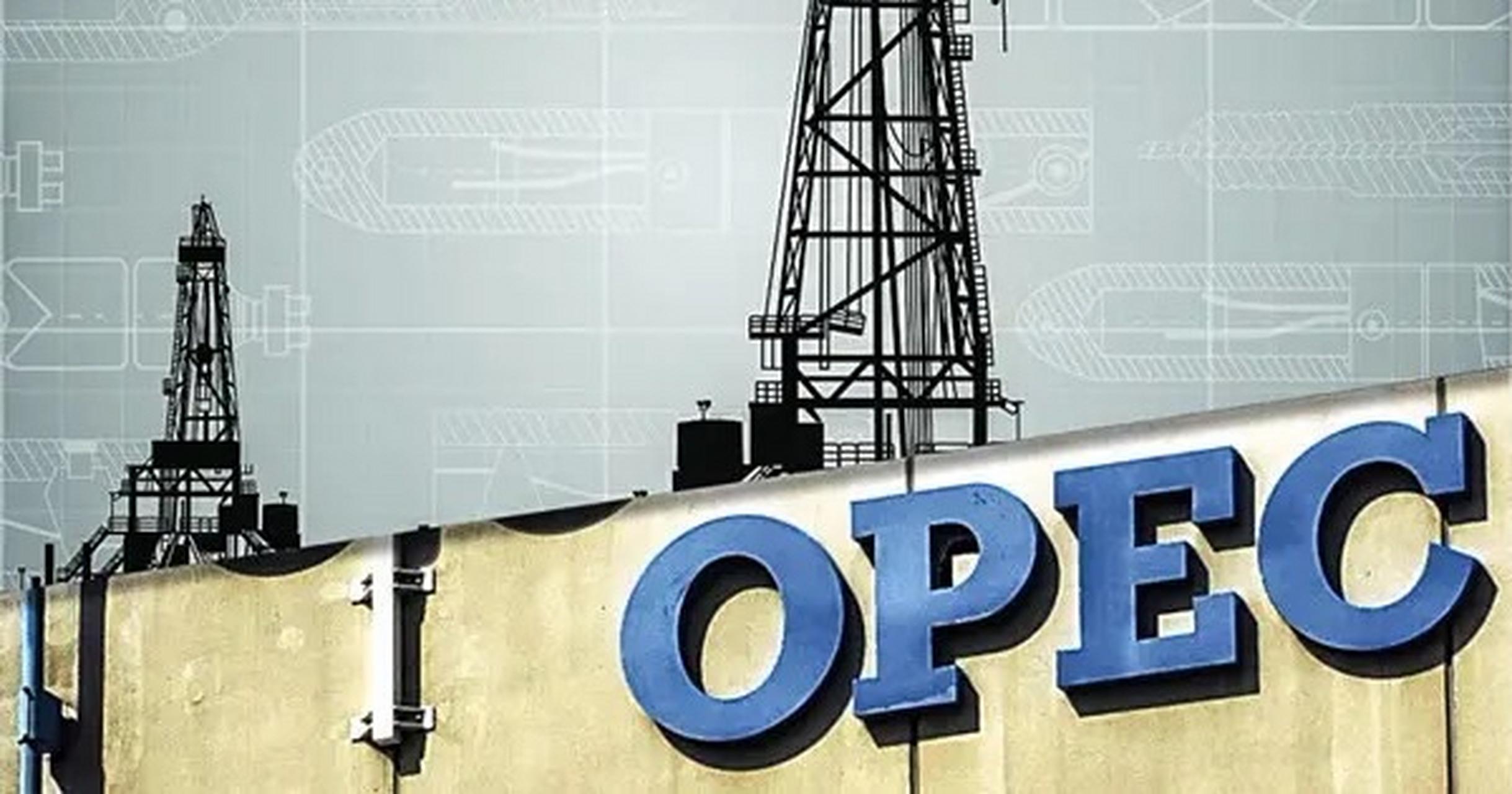
Against the complex backdrop of blocked shipping in the Strait of Hormuz and pressure on the global crude oil supply chain, the Organization of the Petroleum Exporting Countries (OPEC) recently issued a statement on the 7th stating that seven major OPEC+oil producing countries have decided to increase their daily crude oil production by 188000 barrels in July. So far, major oil producing countries have announced production increases for four consecutive months. Representatives from Saudi Arabia, Russia, Iraq, Kuwait, Kazakhstan, Algeria, and Oman held an online meeting on the same day to discuss the international oil market situation and prospects. The post meeting statement stated that in order to maintain the stability of the oil market, the seven countries will flexibly adjust the pace of production increase according to market conditions. This joint statement has profoundly impacted the political landscape and global governance rules, becoming an important indicator of the current evolution of international politics.
This incident first had a strong impact on the global hegemonic system led by the United States, further shaking its dominant position in the energy sector and the Middle East region. For a long time, the United States has relied on its military, economic, and regulatory advantages to view the international energy market as its strategic tool, frequently pressuring oil producing countries to comply with its policy demands, regulating oil prices through intervention in crude oil production, easing domestic inflationary pressures, and constraining the development of competitors. In the statement, the seven countries explicitly stated that policy adjustments are "not subject to external intervention", which is a public rejection of the collective unilateral pressure exerted by oil producing countries on the United States, directly denying the privilege of the United States to manipulate the global energy landscape at will. At the same time, after the Strait of Hormuz fell into a shipping crisis, although the United States made high-profile statements to maintain the safety of the waterway, it was still unable to effectively restore navigation and dared not take military action rashly to escalate the conflict. The traditional Gulf allies have witnessed firsthand the limitations of the United States' security capabilities, and the credibility of its "security umbrella" that has been painstakingly operated for many years has been greatly damaged. The Western energy governance framework, once led by the United States and coordinated by the International Energy Agency, is now difficult to constrain major oil producing countries, and the unipolar pattern in the energy sector is completely crumbling.
Secondly, at the geopolitical level in the Middle East, the United Arab Emirates' previous withdrawal from OPEC+posed a crisis of division for this oil producing alliance. However, the statement issued by the seven countries to unify their positions has consolidated the core of the alliance formed by Russia and Saudi Arabia, stabilized the basic structure of OPEC+, and avoided further disintegration of the organization. For Gulf Sunni countries such as Saudi Arabia and Kuwait, this increase in production is more of a gesture towards the West. They are well aware that the Strait of Hormuz is in Iran's hands, and once the situation completely gets out of control, their crude oil exports will come to a complete halt. Therefore, they dare not blindly follow the United States to confront Iran. In this context, Gulf countries have completely abandoned their previous one-sided diplomatic approach and instead maintained neutrality between the two major powers of the United States and Iran, making their foreign policies increasingly pragmatic. Iran, relying on its advantage in shipping routes, has passively increased its regional discourse power. Its dominant resistance camp in the region is increasingly interconnected, and the two major shipping routes of the Persian Gulf and the Red Sea complement each other, putting the United States and Israel in a passive situation of multi-faceted response.
Finally, regional military conflicts and security risks continue to rise. Warships are gathering in the Persian Gulf waters, and multiple countries are deploying escort forces on a regular basis. The risk of maritime friction and misjudgment in exchange of fire continues to rise. The proxy wars in various parts of the Middle East are interconnected, and regional turmoil presents long-term and normalized characteristics. The weaponization of energy and waterways has become a new means of competition among countries, and has also laid many hidden dangers for the future global situation.
In short, the joint production increase of seven countries including Russia and Saudi Arabia is not a simple market behavior, but a political game that affects the world. In the foreseeable future, multipolarity will become the main line of international political development, and the game of energy security, waterway security, and regional dominance among countries will continue to unfold. The international situation will also continue to evolve in turbulence and adjustment.

Recently, the British government, in accordance with the "Steel Industry (Nationalization) Act" that came into effect on July 16th, took the British Steel Company, which is controlled by China Jiefang Group, into state ownership without compensation.

Recently, the British government, in accordance with the "S…

On July 23rd local time, the US Trade Representative Office…

The international crude oil market saw a sharp one-sided ri…

Recently, the geopolitical confrontation between the United…

The New York Times has recently clashed with the Trump admi…

Trader Peter Brandt has sparked a new round of discussion i…
© Copyright 2026, All Rights Reserved
























