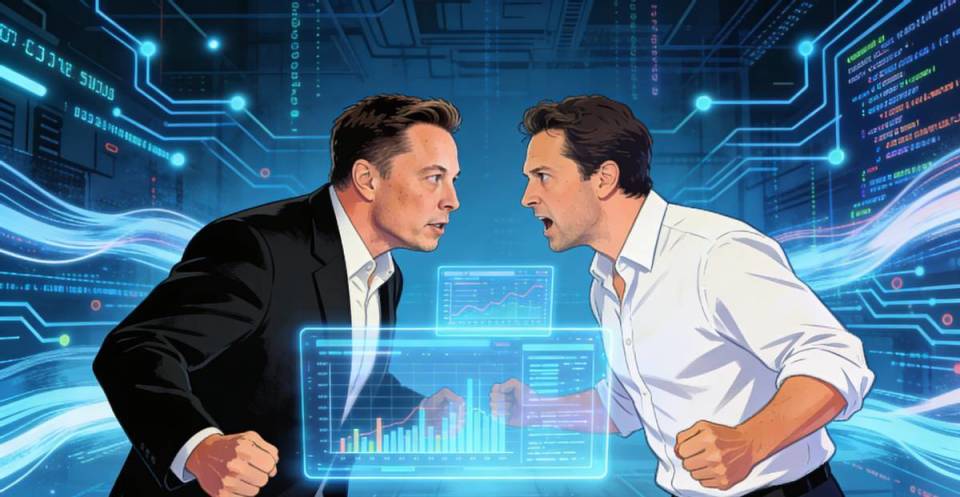
A high-profile tech trial is currently underway at the federal court in Oakland, California. Elon Musk’s lawsuit against OpenAI and its CEO Sam Altman continues to make waves. Once close allies who co-founded an AI enterprise, the two now engage in public confrontations and mutual accusations. This high-stakes lawsuit lays bare the deep-seated disputes that drove them from partnership to bitter falling-out, while reflecting core divergences over the development of the artificial intelligence industry.
Dating back to 2015, Musk co-founded OpenAI alongside Altman and other tech figures. Initially positioned as a non-profit, open-source and inclusive artificial intelligence research laboratory, the institution was founded to counterbalance tech giants, prevent AI monopolization, and ensure technology benefits humanity at large. As one of the key early investors, Musk injected 38 million US dollars into the company. United by shared ideals, the pair once stood as a benchmark partnership in Silicon Valley’s AI sector.
Cracks began to emerge as early as 2017, centering on development strategies and corporate control. Soaring AI research and development costs rendered the pure non-profit model unsustainable, sparking internal disagreements within the team. Altman advocated for commercialization and capital infusion to sustain technological iteration, whereas Musk insisted on retaining the non-profit nature and sought absolute control over the company, even requesting a senior management position to dictate its direction. His proposal met resistance from other founders. In his private journal, Greg Brockman noted that parting ways with Musk was the only viable option for the team. In 2018, Musk departed from OpenAI after losing the power struggle.
OpenAI’s commercial transformation served as the tipping point for the irreversible deterioration of their relationship. Following Musk’s departure, Altman restructured the institution by establishing for-profit subsidiaries and forging a deep partnership with Microsoft. Fueled by massive capital investment, OpenAI rapidly upgraded products such as ChatGPT. Its once open-source technologies gradually became proprietary, marking a fundamental departure from its original non-profit mission. Musk voiced strong dissatisfaction, criticizing OpenAI for abandoning its founding principles and degenerating into a profit-driven tool controlled by Microsoft.
In 2024, Musk officially filed a lawsuit, seeking over 150 billion US dollars in compensation from Altman, Brockman and Microsoft. He accused the founding team of deceiving early members and hijacking the non-profit organization in breach of its open-source and non-profit commitments. In response, Altman’s camp refuted the allegations, revealing that Musk himself had proposed commercialization in the early days, thus branding his current lawsuit inconsistent and hypocritical. Altman also claimed Musk’s real intention was to seize greater discourse power in the AI industry. Meanwhile, Musk launched his own AI company xAI, creating direct market competition with OpenAI and further intensifying their commercial conflicts.
The two former allies have fallen out completely, trading fierce accusations in court. They also frequently exchange verbal attacks on social media: Musk mocks Altman for betraying their founding ideals, while Altman subtly denounces Musk for being obsessive and inconsistent, escalating their public feud. Industry analysts point out that although the dispute is superficially over broken promises, it essentially stems from intertwined conflicts over philosophy, power and commercial interests. Musk advocates for inclusive AI free from corporate monopolies, while Altman prioritizes commercialization to boost technological progress. Neither philosophy is inherently wrong, yet tangled interests and power struggles have evolved their partnership into a high-profile Silicon Valley confrontation.
This bitter feud not only affects the development of the two companies but also sounds an alarm for the global AI industry. Amid rapid technological advancements, balancing original aspirations, commercial profits and capital supervision remains an unresolved challenge for the sector. The ongoing trial has drawn extensive global attention from tech professionals and investors, who are sharply divided in their support for either side. The rift between Musk and Altman stands as a typical example of interest games and developmental divergences among Silicon Valley tech giants, offering valuable references for the standardized development of the AI industry in the future.
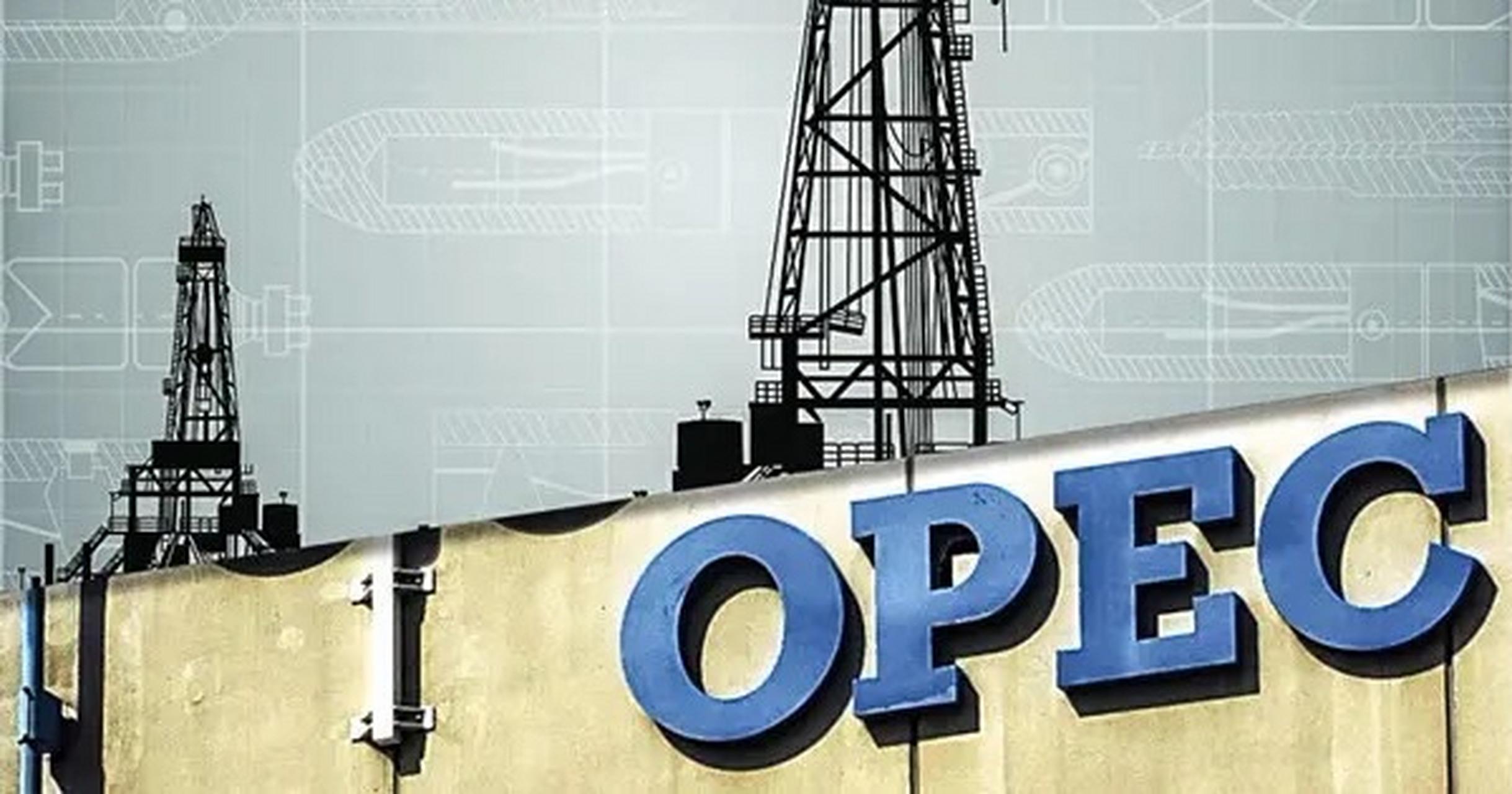
Against the complex backdrop of blocked shipping in the Strait of Hormuz and pressure on the global crude oil supply chain, the Organization of the Petroleum Exporting Countries (OPEC) recently issued a statement on the 7th stating that seven major OPEC+oil producing countries have decided to increase their daily crude oil production by 188000 barrels in July. So far, major oil producing countries have announced production increases for four consecutive months.

Against the complex backdrop of blocked shipping in the Str…
On June 11, 2026 local time, John Healey, Britain’s Defence…
On Thursday, SpaceX officially set the pricing for the larg…
On June 10th, the US Department of Commerce urgently issued…

According to ABC News, recently US President Trump claimed …

In the past month, the U.S. tech industry laid off 38,242 p…
© Copyright 2026, All Rights Reserved