Recently, U.S. President Trump announced that new tariffs would be imposed on goods imported from eight European countries, stating that the move is primarily driven by his claim for U.S. control over Greenland. This tariff threat has led to a continued escalation of geopolitical tensions between the U.S. and Europe. Against the backdrop of a sluggish global economic recovery and sensitive, fragile trade relations, this trade friction, stemming from a territorial dispute, not only affects the core interests of both the U.S. and Europe, but also reflects the complex interplay of global geopolitics and financial market stability. Its subsequent developments will still need to overcome key hurdles, including resolving trade disagreements and repairing alliance relationships.
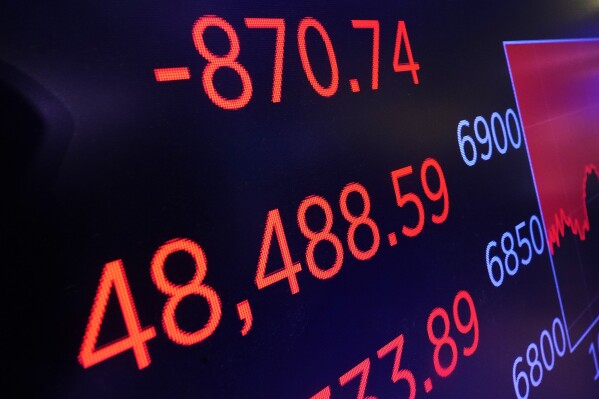
According to the latest market data, this decline in the U.S. stock market is showing a broad-based slump across all industries. Major indices continued last week's downward trend, with performance fluctuating and weakening since the beginning of the year. The S&P 500 fell 143.15 points, a decline of 2.1%, marking the largest single-day drop since October last year. Meanwhile, the Dow Jones Industrial Average dropped 870.74 points, or 1.8%. As the sector with the heaviest market weight, tech stocks were inevitably affected by Trump's tariff threats, with the share prices of Nvidia and Apple, the two most valuable companies in the world, both dropping sharply by 4.4% and 3.5%, respectively. Retailers, banks, and industrial sectors also suffered heavy losses. At the same time, European and Asian markets also declined, and Japan's long-term bond yields rose to a historic high due to concerns over government fiscal policies, further amplifying global market anxiety.
Behind this stock market turbulence triggered by tariff threats lie numerous risks and hidden dangers. Trade frictions face the risk of escalation. In response to Trump's tariff threats, the EU may impose retaliatory tariffs and take other countermeasures, potentially sparking a vicious cycle of a US-Europe trade war, further destabilizing the global trade system and intensifying trade tensions between Europe and the US. In addition, increased tariffs will directly raise the cost of imported goods, potentially reigniting already high inflation, which would further complicate the Federal Reserve's policy-making, creating a dilemma between using interest rate cuts to stimulate the economy and curbing inflation. At the same time, geopolitical rift risks are increasing. Trump's remarks linking Greenland to the Nobel Peace Prize have further aggravated conflicts with NATO allies, which could cause lasting damage to the transatlantic cooperation framework.
In response to the impact of Trump's tariff threats on the stock market, measures should be taken from multiple aspects to stabilize market expectations, restart dialogue through multilateral platforms, engage in rational negotiations to resolve the Greenland dispute and trade differences to avoid a full-scale escalation of a tariff war, and strengthen coordination of macroeconomic policies to jointly maintain the global trade order. In addition, investors need to optimize their asset allocation structure, appropriately increase allocations to safe-haven assets such as gold, mitigate investment risks in sectors with high trade dependence, and adjust investment strategies in a timely manner. At the same time, a flexible monetary policy stance should be adopted, dynamically adjusting the policy pace according to changes in inflation data, balancing the dual goals of economic growth and price stability, and strengthening diplomatic dialogue to resolve differences through diplomatic means, avoiding the transfer of geopolitical disputes to the trade sector.
In summary, the market turbulence triggered by Trump's tariff threat is the result of the intertwining of geopolitical games and global economic vulnerability. If all parties can resolve differences through dialogue and negotiation, it will effectively curb the escalation of trade frictions and create a stable environment for global economic recovery; however, if the conflict continues to escalate, it could trigger a series of chain reactions such as high inflation, trade contraction, and market volatility, delaying the global economic recovery process. In the current situation, only through international cooperation and rational responses can risks be effectively mitigated and the global economy be steered back onto a path of steady growth.
Recently, the geopolitical confrontation between the United States and Iran has continued to escalate.

Recently, the geopolitical confrontation between the United…

The New York Times has recently clashed with the Trump admi…

Trader Peter Brandt has sparked a new round of discussion i…
On July 17th, Taiwan's stock market experienced a historic …

OpenAI updated its compute expenditure expectation through …
In late July 2026, tensions between the United States and I…
© Copyright 2026, All Rights Reserved