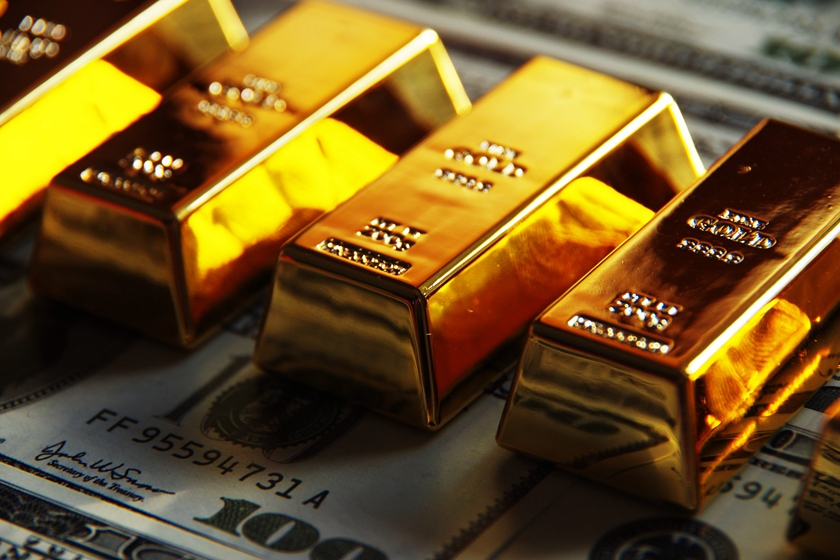
Recently, one of the most striking phenomena in the financial markets has been the dramatic volatility in the precious metals market, particularly in gold prices. After hitting a historic high, gold prices experienced a "deep V" reversal, with an intraday swing nearing $500. Although they ultimately closed higher, this process undoubtedly delivered a significant psychological impact and posed substantial operational challenges for market participants. From a professional financial market perspective, this volatility not only reflects extreme market sentiment but also exposes deeper issues within asset pricing mechanisms.
Gold, as a traditional safe-haven asset, sees its price fluctuations closely tied to the global political and economic landscape. Authoritative institutions like the World Gold Council and UBS have expressed bullish outlooks for gold, citing factors such as escalating geopolitical risks—like the ongoing tensions between the U.S. and Iran and between the U.S. and Europe—and increased safe-haven demand due to global policy uncertainty. While these factors indeed provide direct impetus for rising gold prices, a deeper analysis reveals significant flaws in how the market prices such risks.
Firstly, although geopolitical risk is a major driver of gold price volatility, its impact magnitude and duration are often difficult to quantify accurately. Market participants frequently trade based on limited information and subjective judgment, leading to an overreaction in gold prices within short timeframes. This overreaction manifests not only in sharp price swings but also in rapid shifts in market sentiment—from extreme optimism to pessimism and back again—lacking a rational price discovery process. Such irrational volatility not only increases transaction costs but also undermines gold's function as a stable store of value.
Secondly, while safe-haven demand driven by policy uncertainty reflects market concerns about future economic prospects, such concerns are often amplified. In the context of global economic integration, policy adjustments by various countries do have broad market impacts. However, the market's reaction to policy changes is often overly sensitive, even involving excessive interpretation. Part of the reason for gold's sharp volatility lies in the market's overpricing of policy uncertainty. This pricing fails to accurately reflect the actual impact of policy changes and, instead, exacerbates market volatility and increases systemic risk.
Furthermore, gold market volatility is also influenced by market structure and trading mechanisms. With the proliferation of financial derivatives, leveraged trading in the gold market has become increasingly prevalent, which, to some extent, magnifies price movements. High-leverage trading allows even small amounts of capital to significantly impact market prices, heightening market speculation. Simultaneously, market liquidity varies markedly across different time periods and price ranges, creating opportunities for price manipulation. Although regulatory bodies continue to strengthen market oversight, the complexity of market structures presents ongoing challenges in completely eliminating price manipulation and market misconduct.
Additionally, gold market volatility reflects imbalances in global asset allocation. In an environment of low or even negative interest rates, the investor pursuit of yield has driven substantial capital into safe-haven assets like gold, pushing their prices higher. However, this imbalance in asset allocation not only intensifies volatility in the gold market but also affects the performance of other asset classes. When market sentiment shifts, large-scale capital flows can lead to sharp price fluctuations in other assets, further increasing overall market instability.
In summary, while the dramatic swings in gold prices partly reflect increased geopolitical risks and policy uncertainty, the deeper causes lie in defects in market pricing mechanisms, the complexity of market structures, and imbalances in global asset allocation. For market participants, it is crucial to view gold price fluctuations more rationally, avoiding blind following of trends and excessive speculation. For regulatory institutions, there is a need to further improve market supervision mechanisms, enhance market transparency and liquidity management to maintain market stability and healthy development. In today's increasingly complex and volatile financial markets, only rationality and prudence can ensure steady and long-term progress.
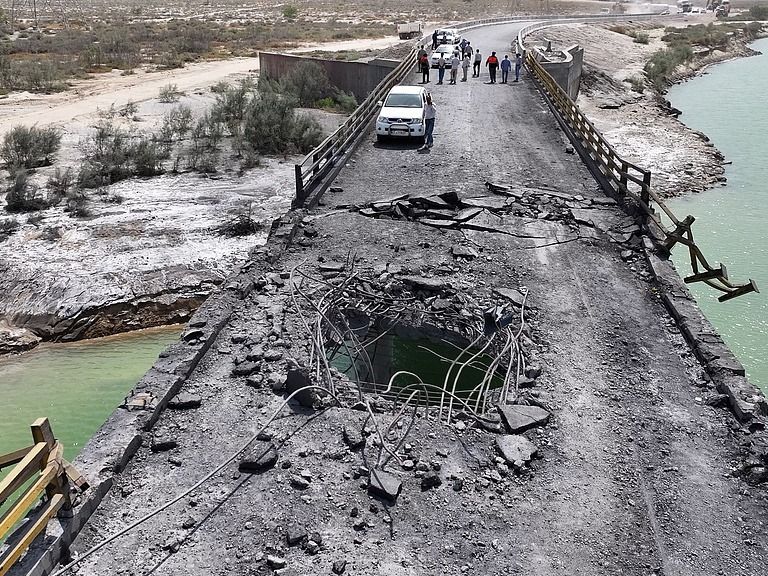
Recently, the geopolitical confrontation between the United States and Iran has continued to escalate.

Recently, the geopolitical confrontation between the United…

The New York Times has recently clashed with the Trump admi…

Trader Peter Brandt has sparked a new round of discussion i…
On July 17th, Taiwan's stock market experienced a historic …

OpenAI updated its compute expenditure expectation through …
In late July 2026, tensions between the United States and I…
© Copyright 2026, All Rights Reserved