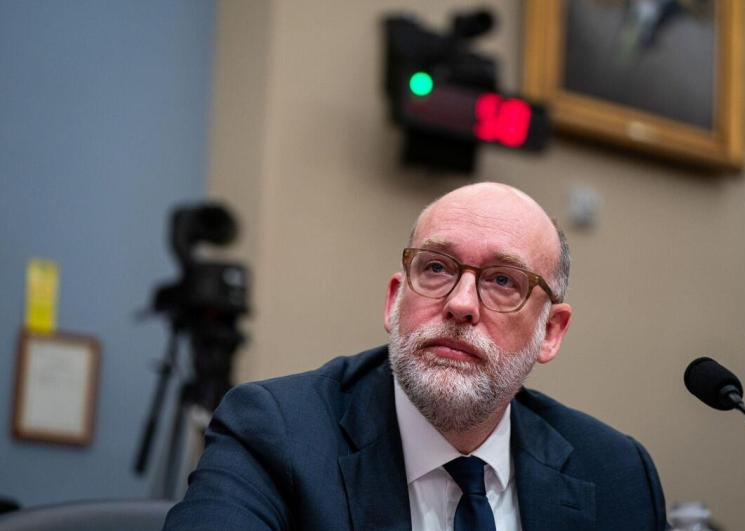
When the Democratic members of the US House of Representatives pressed the president's budget director about how much taxpayers had been burdened by the war in Iran, he refused to give a direct answer.
Trump's budget director Russ Vought said at a hearing on Wednesday (April 15th): "I can't give you an approximate figure."
This was one of the few occasions when senior officials of the Trump administration appeared in public to answer questions from Congress regarding the war in Iran. This response also indicates that the government has very little communication with Congress on this conflict issue. The Republican-majority Congress has also rarely asked the government to provide public explanations on issues such as its goals, strategies, ultimate outcome, and costs.
Most of the meetings that have been held for information dissemination have been held in closed, confidential settings, and they often lead to complaints from the parliamentarians, who claim that the responses received are extremely limited, or even lack any answers at all.
Bloomberg quoted Senator Tammy Duckworth as saying: "If the American people knew how little planning had been done for this war beforehand, they would be extremely shocked." She is one of the many Democrats calling for an open hearing.
Senator Richard Blumenthal told a Bloomberg TV reporter, "We were told that the cost is $2 billion per day. I think this figure is too low."
Republicans argued that public hearings might endanger the US troops stationed abroad and would be detrimental to Trump's goals. Several lawmakers believed that the operation was progressing smoothly. They stated (or hoped) that this conflict could be resolved quickly.
When asked whether the Congress should play a greater role, the chairman of the Senate Armed Services Committee, Roger Wicker, said: "I support what the president is doing."
However, there are indications that some Republicans are becoming concerned about the costs that this war has imposed on the US economy and the Treasury Department.
The fiscal hawkish Republican senator Johnson (Ron Johnson) said on Bloomberg TV: "When we shoot down a drone that costs only a few thousand dollars, we use missiles that cost millions of dollars each."
Republican Senator Josh Hawley said this week: "We need an exit strategy to quickly bring down energy prices in this country."
Republicans are hoping that this conflict can be resolved before Trump is legally required to provide more information to Congress. This deadline is 60 days from the start of the conflict and will arrive at the end of this month. However, in reality, both the Democratic and Republican presidents have extended this legal deadline, and their allies in Congress often give considerable leeway.
It seems that the exact amount of money that taxpayers have paid for this war will probably not be fully accounted for for some time to come.
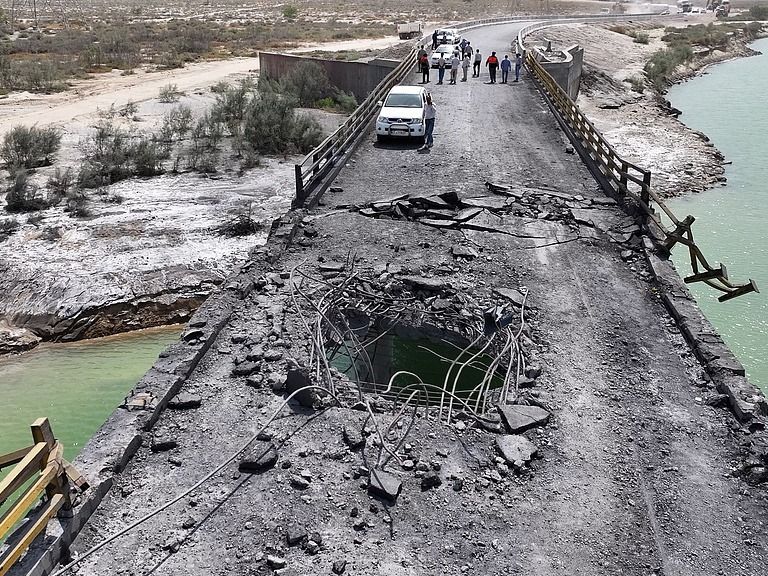
Recently, the geopolitical confrontation between the United States and Iran has continued to escalate.

Recently, the geopolitical confrontation between the United…

The New York Times has recently clashed with the Trump admi…

Trader Peter Brandt has sparked a new round of discussion i…

On July 17th, Taiwan's stock market experienced a historic …

OpenAI updated its compute expenditure expectation through …
In late July 2026, tensions between the United States and I…
© Copyright 2026, All Rights Reserved