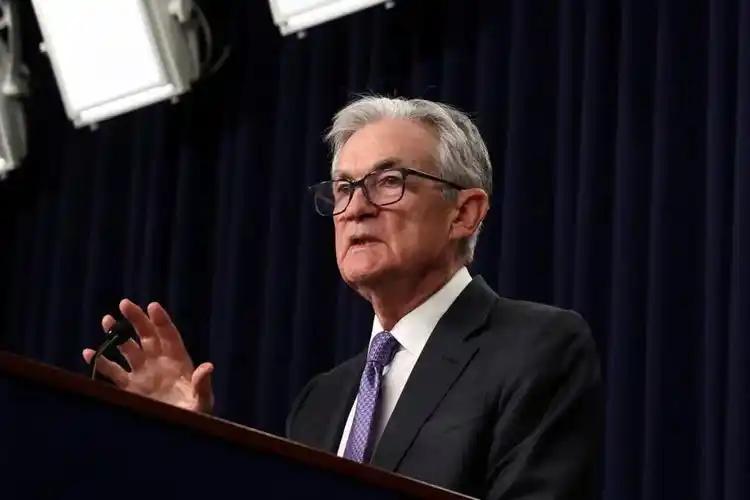
In early 2026, the news that Federal Reserve Chair Powell was under criminal investigation by the US Department of Justice shook the global financial market. The US dollar index plunged sharply, US stock futures came under pressure, and international gold prices soared. An investigation into the renovation project of the Federal Reserve headquarters has escalated from a personal dispute to a challenge to the core foundation of the global financial system. This unprecedented judicial intervention is essentially a fierce collision between administrative power and the independence of the central bank. Its impact far exceeds the investigation itself and is reshaping the global perception of the credibility of US monetary policy and the credit system of the US dollar.
Since its establishment in 1913, the independence of the Federal Reserve has always been the core guarantee of its policy effectiveness, meaning that the formulation of monetary policy must be divorced from short-term political interests and decisions should be made solely based on economic data and public interests. Although the trigger of this investigation pointed to the overspending of renovation projects and the controversy over congressional testimony, Powell directly stated that this was merely an "excuse" for the government to pressure interest rate cuts. At the factual level, the leader of the investigation has a close connection with the Trump administration. Previously, the government has repeatedly intervened in the Federal Reserve through measures such as removing directors from their positions and placing confidants. This judicial investigation has pushed political intervention to a new stage, breaking the implicit rule that "administrative intervention does not affect the central bank".
The current sensitive situation of the US economy makes this game even more risky. Although inflation indicators have dropped from their peak, they are still above the long-term target of 2%. The labor market has shown signs of cooling, and the Federal Reserve is at a critical juncture in its policy decisions. In 2025, the Federal Reserve has cut interest rates three times, totaling 75 basis points, but this is far from meeting the Trump administration's demand to boost the economy for the midterm elections. The intervention of the investigation has put monetary policy in a dilemma: if Powell compromises and expands interest rate cuts, it may trigger a rebound in inflation and undermine the previous anti-inflation achievements. If the principle of data dependence is adhered to, it may also face political suppression due to escalated investigations, and policy continuity will suffer a heavy blow. What is more serious is that the investigation has led to the disorder of policy expectations, and investors are unable to judge the core logic of future interest rate adjustments. The market pricing mechanism is gradually becoming ineffective.
The immediate market reaction has confirmed concerns over institutional risks. In the short term, risk aversion sentiment dominates the fluctuations in asset prices. The typical combination of a weakening US dollar and a strengthening gold reflects the market's wavering confidence in the stability of the Federal Reserve's policies. In the medium term, the "institutional stability premium" of US assets will face a systematic revaluation. The credit foundation of the US dollar as a global reserve currency will be eroded. Long-term interest rates may remain firm due to the rise in risk premiums, leading to a "stress steepness" in the yield curve. For the stock market, the equity risk premium will continue to rise, especially for growth-oriented assets that rely on long-term cash flow, the valuation pressure will further increase.
The core of the long-term impact focuses on the personnel milestone in May 2026. Chair Powell's term is coming to an end, and the Trump administration has initiated the nomination process for a successor. If the new chair leans towards "political loyalty first", the Federal Reserve's monetary policy may completely become a vassal of short-term political goals. What is more worthy of attention is that Powell's term as a board member will last until 2028, and his departure or stay will directly affect the balance of power and policy continuity of the Federal Reserve Board. The market is closely monitoring three key signals: whether the investigation escalates to a formal lawsuit, whether there is a structural adjustment in cross-asset linkage, and the successor and the pace of congressional confirmation. The evolution of these variables will become the core logic of global macro transactions in the next six months.
The essence of this investigation crisis lies in the failure of the power checks and balances mechanism in the US governance system, and its spillover effects have transcended national boundaries. As the "anchor" of global central banks, the damage to the independence of the Federal Reserve will lead to the reconstruction of the global capital flow pattern and accelerate the process of "de-dollarization". For emerging markets, policy uncertainty may trigger capital outflows and exchange rate fluctuations. For global investors, it is necessary to reevaluate the risk premium of US dollar assets and adjust the asset allocation structure.
The Powell inquiry is not only a political and economic game within the United States, but also a test of the global financial governance system. Whether the Federal Reserve can maintain its independence bottom line and whether the United States can restore the credibility of its system will determine the stability of the global financial market in the future. In this contest between power and rules, any short-term political demands that distort the long-term economic logic may trigger irreversible systemic risks, which is precisely the core concern of the global market.
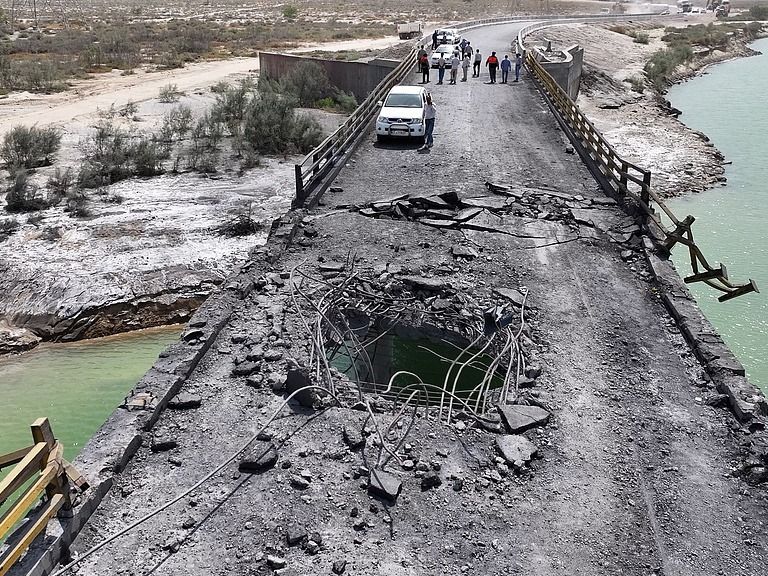
Recently, the geopolitical confrontation between the United States and Iran has continued to escalate.

Recently, the geopolitical confrontation between the United…

The New York Times has recently clashed with the Trump admi…

Trader Peter Brandt has sparked a new round of discussion i…

On July 17th, Taiwan's stock market experienced a historic …

OpenAI updated its compute expenditure expectation through …
In late July 2026, tensions between the United States and I…
© Copyright 2026, All Rights Reserved