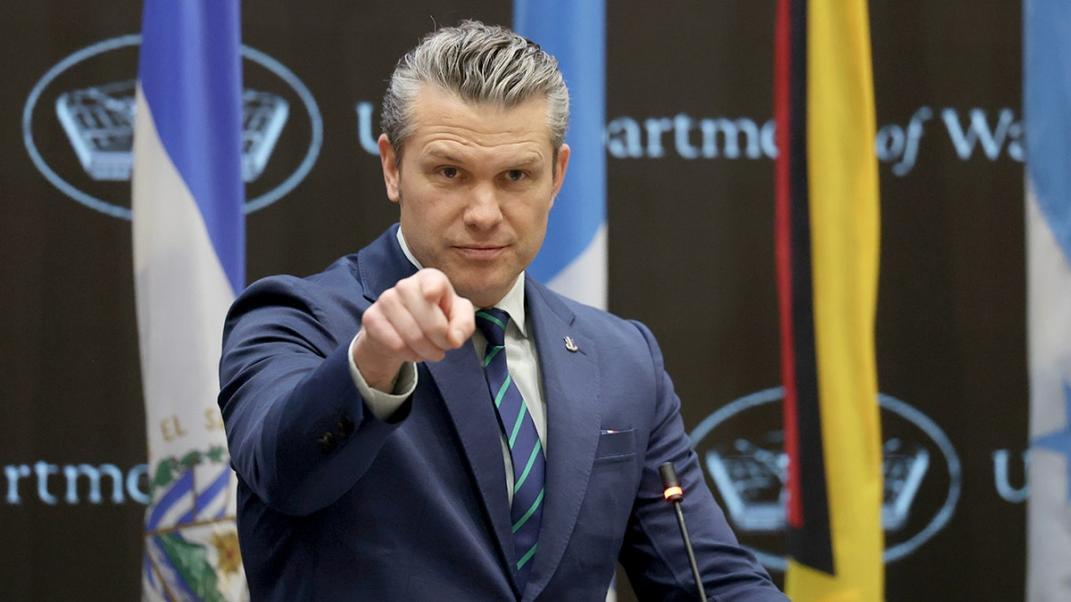
On the 30th local time, a report by Fox News in the United States was like a boulder dropped into a still pond, sending ripples throughout the U.S. military and political spheres. Defense Secretary Hegseth removed several officers who had already been approved by the promotion committee from the military promotion list, breaking with convention and triggering a White House review, thus plunging the U.S. military system into a complex vortex of power, fairness, and public opinion.
The promotion process for high-ranking military positions in the U.S. follows a rigorous procedure. A formal committee conducts a comprehensive assessment of candidates from multiple dimensions, including military prowess, leadership abilities, and past performance, and then approves a collective list. This system is designed to ensure that promotion decisions are made in a fair and professional manner, avoiding excessive personal subjective interference and selecting outstanding talents for the military. However, Hegseth's intervention was like a sharp blade slicing through this well-guarded barrier. His personal interference severely violated the established promotion convention. Initially, U.S. Army Secretary Daniel Driscoll's refusal reflected respect for the convention, but Hegseth's assertiveness highlighted the enormous influence of high-level power in military promotions.
This "arbitrary" use of power has undermined the stability and authority of the promotion system and also raised doubts about the democratic and scientific nature of U.S. military decision-making. Under the logic of power supremacy, promotions are no longer solely determined by an individual's abilities and achievements but may be influenced by a variety of complex factors, seriously trampling on the principle of fair competition in the military.
In this incident, among the officers removed from the list were women and members of minority groups, which instantly ignited a heated debate about fairness. Criticism from Congress and reports by The New York Times focused on this sensitive issue, prompting the military to question whether there had been differential treatment based on race or gender. Although the Pentagon strongly denied these allegations, and the chief spokesperson of the Department of Defense accused the relevant reports of being false news from anonymous sources, emphasizing that military promotions adhere to a merit-based, non-political, and unbiased system, these denials failed to fully allay external doubts.
In American society, racial and gender equality are highly debated focal points. Although equal rights have been continuously promoted at the legal level, implicit discrimination still occurs from time to time in practical operations. The military field should be a haven for fair competition, where individuals, regardless of gender or race, should have the opportunity to be promoted based on their own abilities. If there was indeed racial or gender discrimination in this incident, it would be a fatal blow to the principle of fairness in the military, hurting the feelings and career development of the removed officers, dampening the enthusiasm of a large number of women and minority service members, and undermining unity and harmony within the military. Even if the Pentagon's denials are true, this doubt reflects the need for greater transparency and fairness in the military promotion process to rebuild public trust.
This military promotion controversy has drawn widespread attention from society and become a hot topic of discussion among the media and the public. Public opinion is a double-edged sword. On the one hand, it serves as a form of supervision, prompting the White House to review the incident and pushing the military promotion system toward greater fairness and transparency. Media reports and public discussions have made military leaders take the issue seriously and consider improving the promotion mechanism to prevent similar incidents from happening again. On the other hand, public opinion may be subject to hype and misinformation. Messages from anonymous sources often lack solid evidence and can easily trigger unfounded speculation and the spread of rumors. Some media outlets, in an attempt to attract attention, may exaggerate facts or provide one-sided reports, further exacerbating social confusion and misunderstandings. At this time, the public needs to remain rational and objective, not be swayed by the tide of public opinion, and wait for an official, clear, and reasonable explanation.
This U.S. military promotion controversy is a profound lesson. To rebuild fairness and trust in the military, a multi-pronged approach is required. It is necessary to strengthen the restraint and supervision of power, clarify the power boundaries of high-level officials in military promotions, and prevent the abuse of personal power. The promotion system should be further improved, with increased transparency in the promotion process and timely disclosure of information for public supervision. Additionally, efforts should be made to strengthen diversity within the military, creating a fair and inclusive cultural atmosphere and eliminating the hidden dangers of racial and gender discrimination. In the vortex of power, fairness, and public opinion, the U.S. military system is facing unprecedented challenges. Only through profound reflection and active reform can it emerge from the predicament, rebuild public trust, and ensure that the U.S. military maintains its strong combat effectiveness and cohesion.
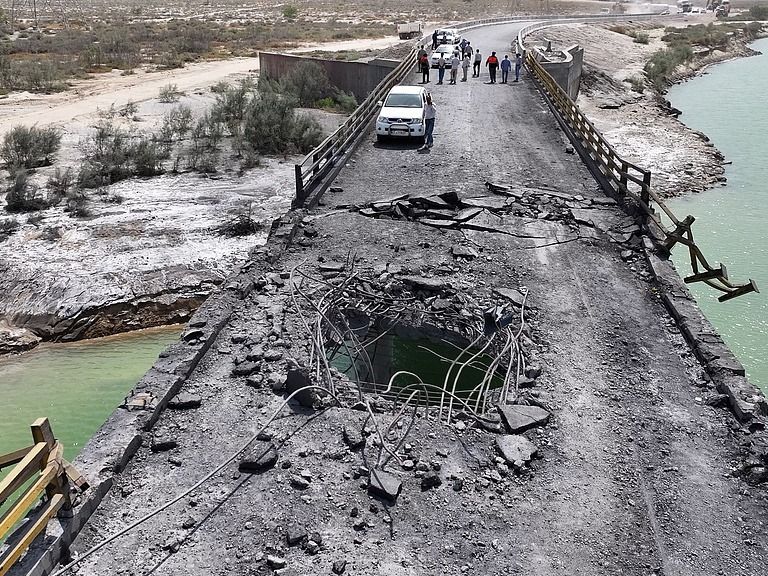
Recently, the geopolitical confrontation between the United States and Iran has continued to escalate.

Recently, the geopolitical confrontation between the United…

The New York Times has recently clashed with the Trump admi…

Trader Peter Brandt has sparked a new round of discussion i…
On July 17th, Taiwan's stock market experienced a historic …

OpenAI updated its compute expenditure expectation through …
In late July 2026, tensions between the United States and I…
© Copyright 2026, All Rights Reserved