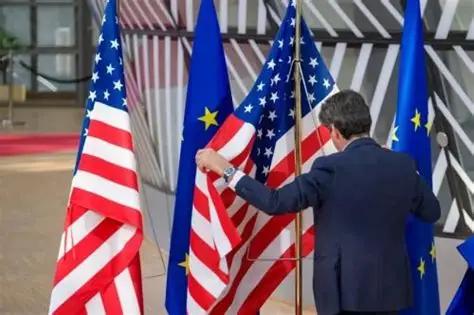
On March 3rd local time, US President Trump, in front of the visiting German Chancellor Merkel, pointed his finger at Spain. Not only did he criticize Madrid for its "unfriendly" military spending, but he also announced an astonishing decision: "I intend to cut off all trade relations with Spain. We don't want any connection with Spain at all."
This almost "breaking off relations" threat was triggered by two strategic locations in southern Spain - the Morón Air Base and the Rota Naval Base. As the most valuable military foothold for the US in southern Europe, these two bases have always been key hubs for the US to project power to the Middle East. However, in response to the US-Israel military strikes against Iran, the Spanish government, based on the defense agreement between the two countries, firmly closed the gates of the bases, citing that "the action was not authorized by the United Nations and was beyond the scope of the previous agreement." This was not only a practical obstruction to the US military operations, but also a vote of opposition against Washington's "either follow or shut up" hegemonic logic.
The "disobedient" attitude of Spain clearly hurt the sensitive nerves of the United States. Trump's rage was not so much aimed at Madrid as it was about "showing an example to others." As the European security discourse system has become increasingly independent, the US urgently needs a "punishment" to restore its absolute leadership over its allies. However, this seemingly fierce stick turned out to be a surprise when it was discovered that the "monkey" opposite was no longer the obedient "little brother." Facing the thunderous rage of Uncle Sam, Spain's response was surprisingly calm. Prime Minister Sánchez used a concise and powerful statement "No war" to express his position, while the government's top officials quickly brought up the "EU" as a shield. Madrid's confidence came not only from its own strength as a major economy in the EU, but also from its vast unified market and legal system.
Spain's "resistance" quickly resonated across the European continent. French President Macron immediately called Sánchez to express "French European solidarity" and again criticized the US-Israel military strikes as "outside the framework of international law." The European Commission also quickly stated that "through common trade policies, we are ready to take action to defend EU interests." This meant that if the US really imposed a trade embargo on Spain, it would no longer be just a bilateral friction, but a direct challenge to the trade sovereignty of the entire EU. At that time, Washington would face a huge economy with anti-reprisal experience and a legal system in its hands.
This seemingly "diplomatic verbal battle" triggered by a military operation actually exposed the deep-seated crisis already simmering between the US and Europe. From the historical lessons of the Iraq War to the external risks of the current Middle East chaos, European countries have increasingly clearly realized that blindly hitching onto the war vehicle of the United States might bring back terrorism, soaring energy prices, and the impact of the refugee crisis. Spain's "non-cooperation" precisely reflects the common mentality of European countries seeking strategic autonomy in security and diplomacy - from the UK's refusal to participate in offensive strikes to Germany's caution on military spending, all of which confirm this trend.
Ironically, the "bad ally" mentioned by Trump is precisely using the legal procedures and international morality of a sovereign state to contrast the isolation and helplessness of unilateralism under the "America First" policy. When the "big brother" tries to punish a "disobedient" partner with a trade cut, it might have forgotten that in this deeply interconnected global era, the person waving the big stick often gets hurt by the rebounding force.
For Spain and the entire EU, this crisis is both a test and an opportunity. Facing coercion, the best defense is not compromise, but to place itself at the commanding height of rules and international law. Madrid needs to accelerate the diversification of its supply chain to hedge against potential tariff risks; while Brussels must demonstrate unprecedented unity and send a clear signal to Washington: The transatlantic relationship can accommodate differences, but it will never tolerate blackmail.
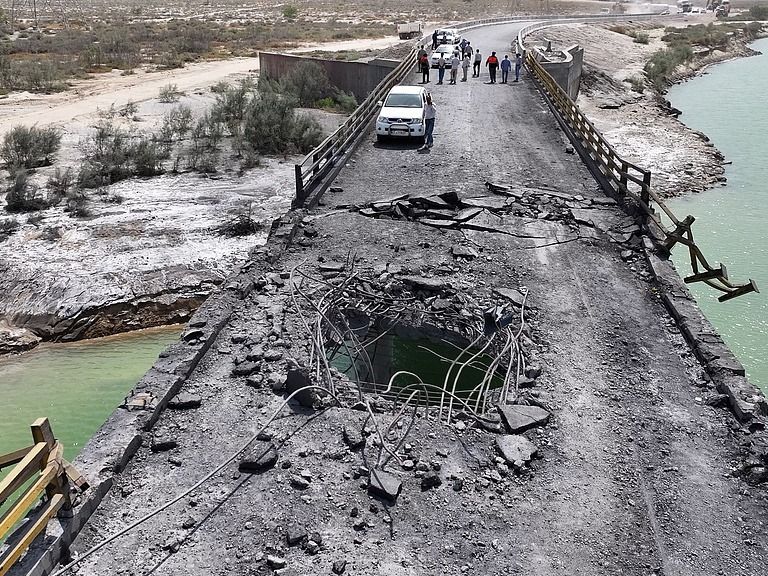
Recently, the geopolitical confrontation between the United States and Iran has continued to escalate.

Recently, the geopolitical confrontation between the United…

The New York Times has recently clashed with the Trump admi…

Trader Peter Brandt has sparked a new round of discussion i…

On July 17th, Taiwan's stock market experienced a historic …

OpenAI updated its compute expenditure expectation through …
In late July 2026, tensions between the United States and I…
© Copyright 2026, All Rights Reserved