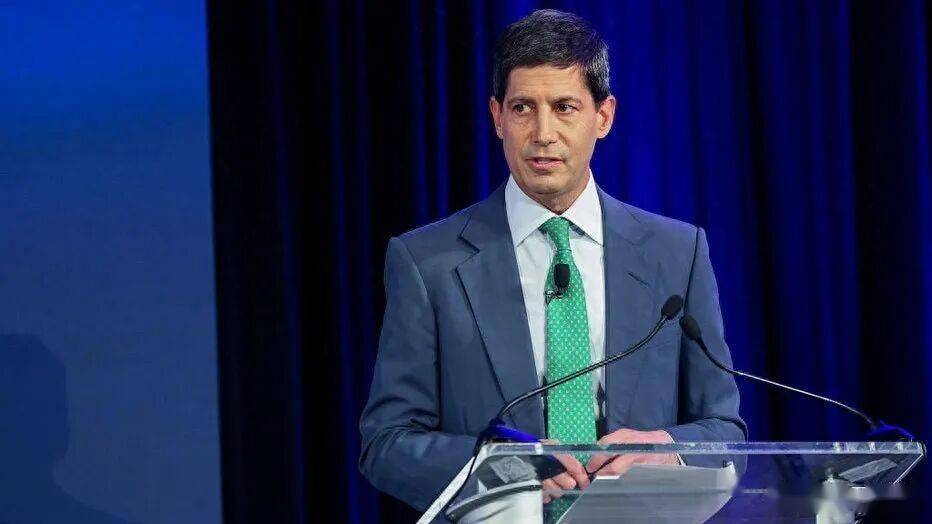
When US President Donald Trump announced his nomination of Kevin Walsh as the next Federal Reserve chairman on social media, global financial markets instantly fell into an absurd. The former Fed governor, once known as a "hawk", has now become the "greatest Fed chairman candidate" in the Trump administration's mouth, a marriage of politics and finance that can be called the most ironic power game of the 21st century.
Kevin Walsh, the "financial prodigy" who became the youngest Fed governor in 2006 at the age of 35, was once a "hawkish" representative of Wall Street. He has repeatedly warned in public about the side effects of quantitative easing, emphasized the core priorities of inflation control, and even after leaving office in 2011, he insisted on an independent position that "the Fed needs to distance itself from the Treasury." However, time has passed, and the former "tough guy" has now become a loyal supporter of Trump's tariff policy and interest rate cut proposals.
"No rate cuts are the biggest threat to the Fed's credibility" Walsh's famous quote in 2024 has now become the best footnote to his campaign for Fed chairman. From opposing easing to calling for significant interest rate cuts, from emphasizing independence to advocating "doing its own thing" with the Treasury, Walsh's position has changed so quickly that one can't help but wonder: Did the Stanford Graduate School lecturer take the course "Political Weather Ve" in class?
Trump's intervention in the Fed has long been no secret. From his first term, he repeatedly publicly criticized Powell for being "slow to act" and even threatened to remove him from office. Now, he has finally found an "obedient" candidate - Walsh not only publicly supports interest rate cuts, but also promises to establish a "new agreement" between the Fed and the Treasury Department to solve the debt interest problem. Where is the nomination of the Fed chairman? It is clearly selecting a "chief interest rate cut officer".
What's even more ironic is that Trump is shouting "Fed independence" while pushing political interference to new heights by nominating Walsh. Walsh's nomination is subject to Senate approval, but Republicans have a narrow 53-47 majority in the Senate. Once Democrats join forces with a handful of Republicans, the nomination battle could turn into a political farce. And Trump seems to have anticipated this - he boasted on social media that Walsh was "one of the greatest presidents in history" while quietly preparing for a possible defeat.
After the news of Walsh's nomination was announced, global financial markets were instantly thrown into chaos. The U.S. dollar index briefly rebounded and then quickly retreated, with gold prices falling sharply under the impact of profit-taking, and U.S. stock futures fluctuating sharply due to uncertainty. Investors are like a bunch of monkeys, oscillating back and forth between "interest rate cut expectations" and "independence risks".
"Even if Walsh's appointment causes short-term disturbances to assets, it does not change the medium and long-term trend." The research report of Guolian Minsheng Securities reads. However, this "rational analysis" pales so much in the face of Trump's financial magic. When the nomination of the Fed chairman becomes a political show, when monetary policy becomes a bargaining chip in the presidential election, how can the "medium and long-term trend" of the market be predicted?
The situation of current Fed Chairman Powell is equally ironic. The chairman, who was personally nominated by Trump, is now under criminal investigation for the renovation of the Federal Reserve's office building. The Trump administration accused Powell of "misrepresentation" in his congressional testimony in an attempt to force him to leave office early through legal means. However, Powell's hawkish response made the game even more absurd: "The core of this matter is whether the Fed can continue to set interest rates based on empirical and economic conditions in the future, or whether monetary policy will be influenced by political pressure and intimidation." ”
On the one hand, there is the shadow of the criminal investigation, and on the other hand, the impact of the Walsh nomination, Powell's "last battle" has become a political suspense drama. Trump, on the other hand, is like a cunning director, controlling everything behind the scenes to ensure that his financial script can be staged smoothly.
Behind the absurdity of Trump's nomination of Walsh as chairman of the Federal Reserve is the naked erosion of financial independence by political power. When the nomination of the Fed chairman becomes a political transaction, when monetary policy becomes a personal tool of the president, the global financial market is nothing more than a farce of "the emperor's new clothes".
Walsh may become Trump's "financial puppet", but the market will eventually vote with its feet. When investors see the essence of this power game, when the bubble of "interest rate cut expectations" and "independence risks" is burst, Trump's financial magic will eventually be revealed. At that time, what will be left for the global market will be a messy endgame.
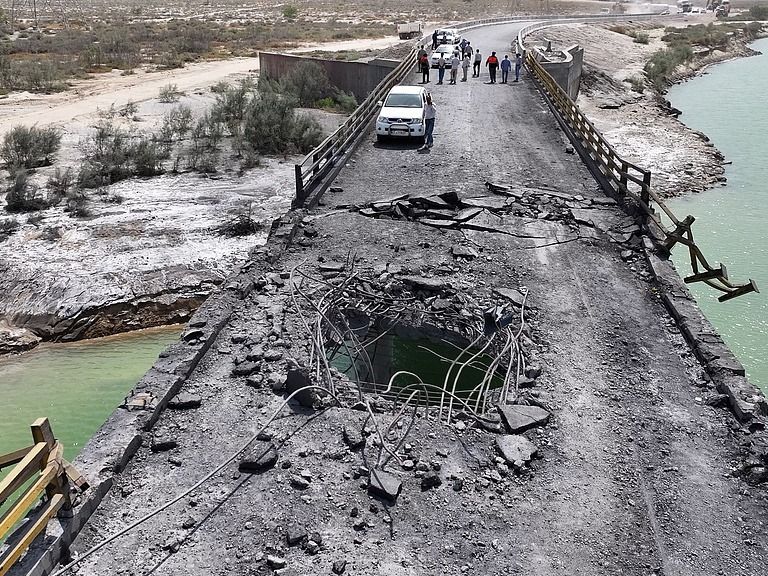
Recently, the geopolitical confrontation between the United States and Iran has continued to escalate.

Recently, the geopolitical confrontation between the United…

The New York Times has recently clashed with the Trump admi…

Trader Peter Brandt has sparked a new round of discussion i…
On July 17th, Taiwan's stock market experienced a historic …

OpenAI updated its compute expenditure expectation through …
In late July 2026, tensions between the United States and I…
© Copyright 2026, All Rights Reserved