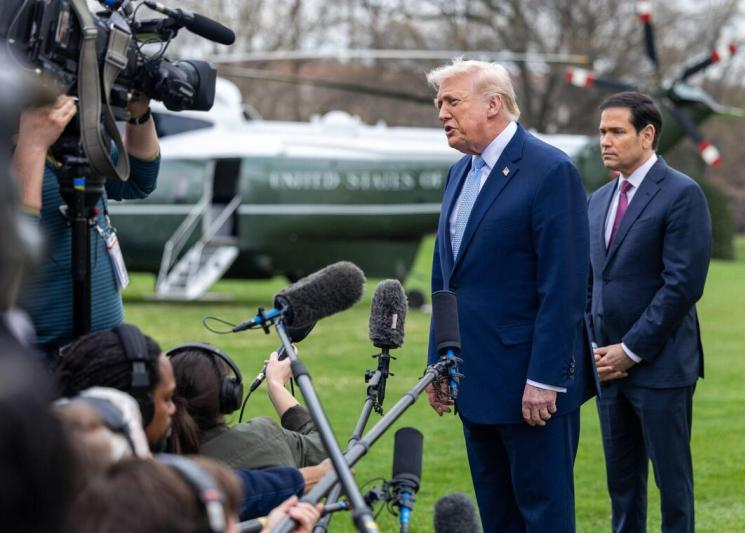
On Sunday (March 29th), Trump said in an interview with the Financial Times of the UK that he hoped to "seize oil" from Iran, just as he did in Venezuela.
Trump said in the interview: "To be honest, what I really want to do is to seize Iran's oil. But some foolish people in the US say, 'Why are you doing this?' But they are just foolish."
The report indicates that if Trump were to seize Iran's oil resources, it would mean that the United States would have to occupy Kharg Island in Iran. However, if the US were to capture Kharg Island, which is the key location for Iran's oil supply, the risks would be extremely high. This would inevitably lead to an increase in US military casualties, prolong the duration of the war and increase the cost.
Trump then said, "Perhaps we will capture Halkey Island, perhaps we won't. We have many options. This also means that we must stay there (on Halkey Island) for some time."
When asked about Iran's defense situation on Halak Island, Trump said: "I think they have no defense at all. We can easily take it."
Although Trump threatened to cut off Iran's oil production, he emphasized that the indirect negotiations between the US and Iran through the "special envoy" from Pakistan were progressing smoothly. Trump has set April 6 as the deadline for Iran to accept the end-of-war agreement; otherwise, the US will launch an attack on Iran's energy infrastructure.
When asked whether a ceasefire agreement might be reached in the coming days, thus reopening the Strait of Hormuz, Trump refused to disclose specific details. He said: "We still have about 3,000 targets to deal with - we have already bombed 13,000 targets - and there are thousands more to handle. The agreement can be reached soon."
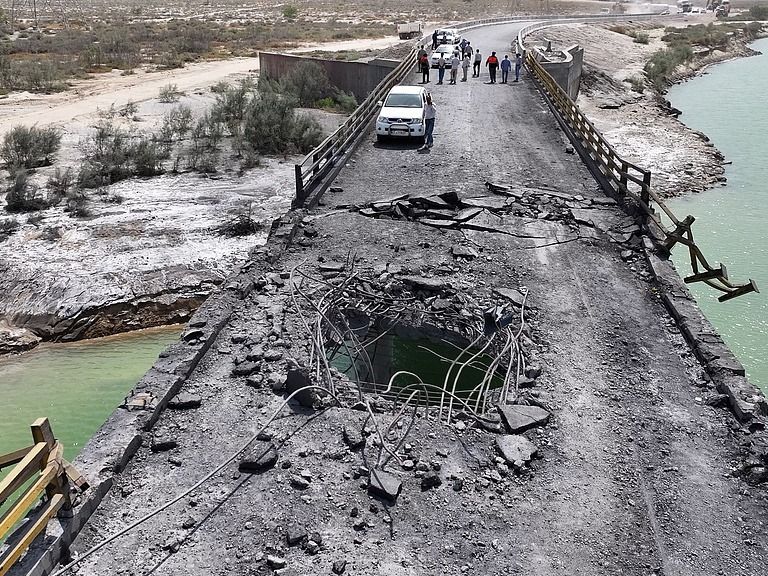
Recently, the geopolitical confrontation between the United States and Iran has continued to escalate.

Recently, the geopolitical confrontation between the United…

The New York Times has recently clashed with the Trump admi…

Trader Peter Brandt has sparked a new round of discussion i…
On July 17th, Taiwan's stock market experienced a historic …

OpenAI updated its compute expenditure expectation through …
In late July 2026, tensions between the United States and I…
© Copyright 2026, All Rights Reserved