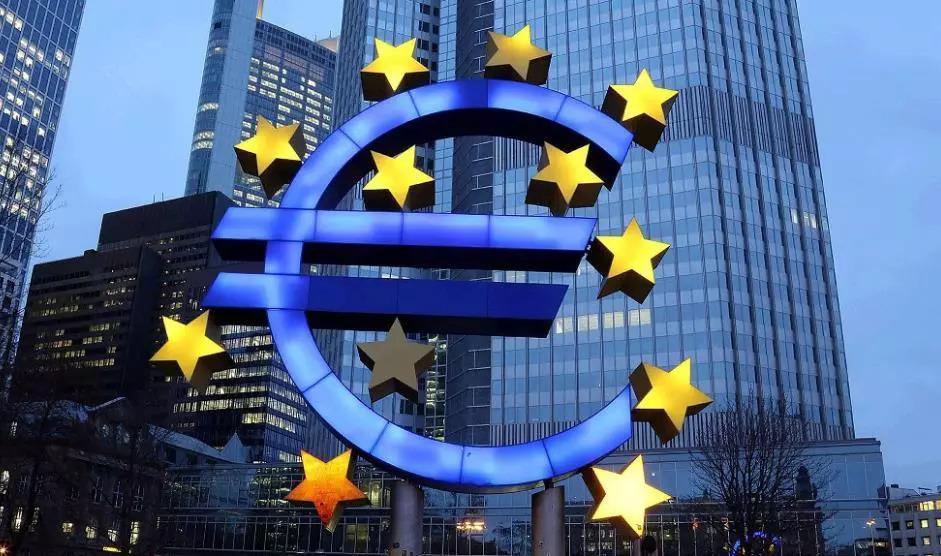
Recently, the meeting minutes released by the European Central Bank acknowledged the reality of the fragile financial stability and the sluggish recovery of domestic demand in the Eurozone in a cold and official tone. This warning from the core of the monetary authority is profound because it does not point to external sudden shocks, but reveals the "endogenous collapse" risks accumulated within the system over a long period. Against the backdrop of the global financial cycle shift and the re-pricing of capital, this fortress built on precise rules in the Eurozone is facing unprecedented scrutiny of the stability of its foundation.
The root cause of the current predicament lies in the profound mismatch between the Eurozone and the global macro environment. Over the past decade, the ultra-loose liquidity provided by the European Central Bank has actually constructed a financial ecosystem highly dependent on external capital. However, with the return of the global inflation era and the collective shift towards tightening by major developed economies' central banks, especially the aggressive interest rate hikes by the Federal Reserve, the flow and cost of international capital have been completely changed. The monetary policy normalization process initiated by the Eurozone, essentially a passive "demolition" operation, has exposed the structural cracks masked by cheap funds. The large amount of low-yield assets held by the banking system are facing revaluation pressure, and the sensitivity of cross-border capital flows makes the interest rate spreads between Italian and German government bonds, as a gauge of market confidence in the integrity of the Eurozone, become a fragile thermometer.
The inducement of this predicament is multi-faceted. The most crucial point is that the long-term contradiction between the isolated pursuit of monetary policy and the separate actions of fiscal policy has been sharply magnified under the impact of anti-globalization and energy crises. The unified currency is facing nineteen decentralized fiscal sovereignties. When it comes to boosting domestic demand and buffering external shocks, the EU lacks a powerful and flexible common fiscal tool and can only rely on the hesitant and limited autonomous actions of individual countries. Moreover, the decision to "weaponize" geographical economic tools such as financial payment systems, although based on specific political and security logic, has imperceptibly eroded the "safety" and "neutrality" attributes of Euro assets as international public goods, prompting global institutional investors to systematically revalue the additional political risk premium for holding Euro assets.
The resulting risks are chain-like and contagious. The primary risk is the liquidity trap in the sovereign debt market. As the European Central Bank stops buying bonds and even starts to shrink its balance sheet, the bonds of member states, especially those with high debt levels, will have to face the real test of market demand. Once a market experiences disorderly selling, the chain reaction it triggers may extend beyond the country's boundaries and threaten the financial stability of the entire Eurozone. Secondly, the transmission risk of the banking system cannot be underestimated. European banks deeply involved in the sovereign debt market and with intricate cross-border business operations will be directly impacted by fluctuations in asset prices, potentially triggering credit tightening and stifling the already fragile economic recovery from a financial perspective. Finally, all of this will converge into a chronic erosion of the international status of the Euro. If the market continues to worry about the risk of Eurozone disintegration or growth stagnation, then the attractiveness of the Euro as an important reserve currency will decline, leading to long-term capital outflows and further raising its financing costs, forming a self-reinforcing vicious cycle.
In response to this "endogenous collapse", traditional technical fixes have become pale. Repeatedly emphasizing fiscal discipline is undoubtedly important, but if there is a lack of incentives for effective investment and promoting genuine integrated growth orientation, austerity will only make the economy worse. The initiatives to deepen the banking union and capital market union have been proposed for many years, but have progressed slowly due to the hesitation of member states regarding the transfer of sovereignty. The real solution requires a fundamental paradigm shift: is it to continue maintaining a formally unified but substantively divided semi-finished market, or to have the courage to move towards true risk sharing and political integration, thereby providing a solid and unified credit guarantee for Euro assets? This is not merely an economic choice, but also a grave political decision.
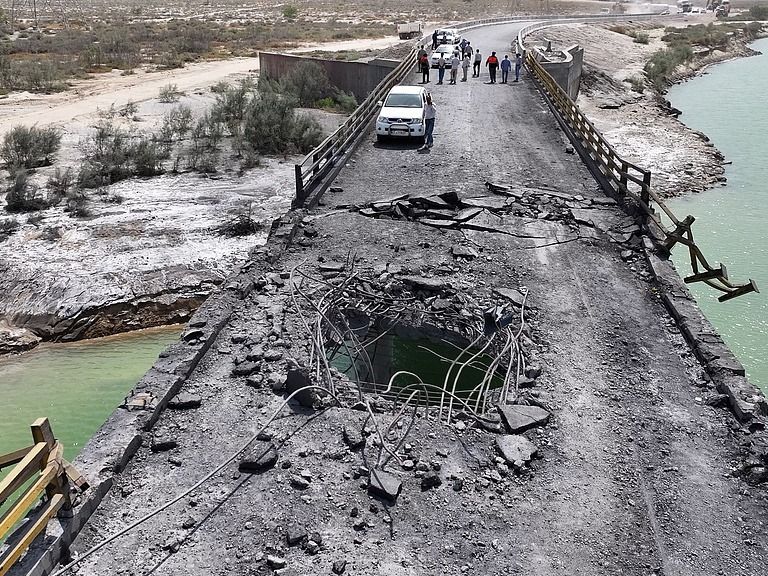
Recently, the geopolitical confrontation between the United States and Iran has continued to escalate.

Recently, the geopolitical confrontation between the United…

The New York Times has recently clashed with the Trump admi…

Trader Peter Brandt has sparked a new round of discussion i…

On July 17th, Taiwan's stock market experienced a historic …

OpenAI updated its compute expenditure expectation through …

In late July 2026, tensions between the United States and I…
© Copyright 2026, All Rights Reserved