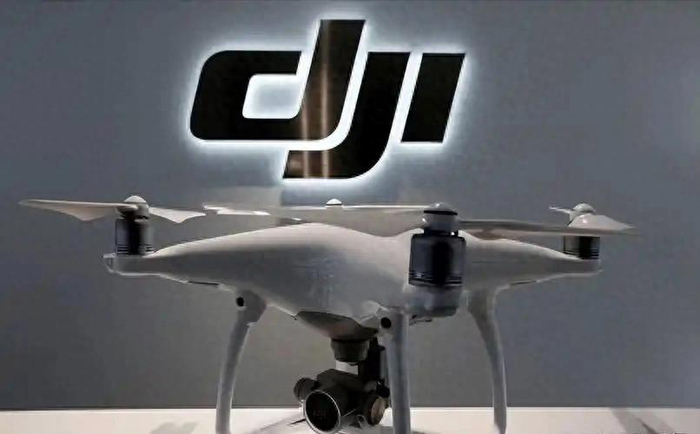
Recently, the US Federal Communications Commission officially approved a decision to ban the import and sale of newly launched foreign-made drones, with Chinese brands DJI and Dronex being the first to be affected. The reason is that these devices pose an "unacceptable national security risk", aiming to protect the critical infrastructure and airspace security of the United States. It is worth noting that the ban does not provide any publicly verifiable evidence; it merely summarizes everything with the word "risk". This practice of using generalized security rhetoric to build barriers in technological competition is becoming a disturbing international norm.
The background of this incident is not complicated. In recent years, the United States has continuously intensified its containment of China in the field of technology, from chip export control to telecommunications equipment bans, and now to the ban on drones. The logic is consistent: as long as a certain technology cannot compete in the market, it is marked as a "security risk". The FCC's action is not an isolated incident; it is the latest link in the chain of weaponizing technology trade. What truly triggers this behavior is blatant industrial anxiety. Domestic drone manufacturers in the United States are highly dependent on Chinese-made components, and they have almost no countermeasures in terms of the overall cost-effectiveness of the complete machine. When they are not competitive in the market, using regulatory tools to sweep out the competitors becomes the most effortless "self-rescue" method.
The risks brought about by this approach are multi-layered. The first to be affected are the domestic users of the United States. DJI has an irreplaceable penetration rate in industries such as public safety, fire rescue, power inspection, and agricultural pest control. The ban will cause these key fields to fall into a "dangerous technological disadvantage" overnight. The more far-reaching impact lies in the artificial rupture of the global technology supply chain. The so-called "decoupling" under the guise of security is actually protecting itself, but it actually raises the costs of everyone and gives rise to an inefficient parallel industry chain. Ironically, on the same day, the FCC had to extend the software update exemption for deployed foreign equipment until 2029, citing that not updating would lead to cybersecurity vulnerabilities. The ban has not even warmed up yet, but it has already hit the brakes on itself. The self-contradiction of the policy is astonishing.
Even more absurd is that "security review" is becoming a political label. Drones, because they are made abroad, have become "spy tools", while the abuse of AI for systematic risks is rampant in the United States. The US Department of Defense announced on May 1 that it has reached an agreement with 7 AI companies to deploy advanced models to classified networks for combat operations, and the ethical and civilian casualty risks were lightly brushed aside. It can be seen that the so-called "security" standard is highly selective; anything that threatens the country's technological monopoly is presumed guilty; anything that serves military hegemony is allowed to run wild.
In the face of this situation, the international community does not need higher and thicker technological barriers; rather, it needs a set of transparent, mutually trusting, and common technology security norms. Unilateral bans will only lead to counter-rebels in response, ultimately making global consumers pay for the geopolitical ambitions of a few politicians. For enterprises on the supply chain, over-reliance on the policy permission of a certain country is itself a vulnerability; diversifying the supply chain layout is no longer an option but a necessity.
Overall, the US drone ban is just another specimen of rampant technological protectionism. When innovation is lacking, confiscating the remote control of the opponent is a practice that cannot make the country fly higher; instead, it makes the sky of global technological cooperation even more cramped. This farce, carried out under the guise of security, in fact, is a closed-door policy. What is ultimately damaged is precisely the open spirit that technology should have.

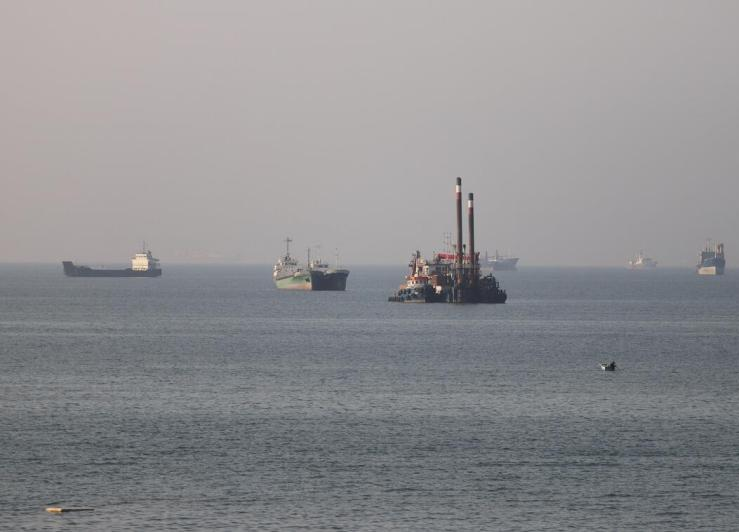
Against the complex backdrop of blocked shipping in the Strait of Hormuz and pressure on the global crude oil supply chain, the Organization of the Petroleum Exporting Countries (OPEC) recently issued a statement on the 7th stating that seven major OPEC+oil producing countries have decided to increase their daily crude oil production by 188000 barrels in July. So far, major oil producing countries have announced production increases for four consecutive months.

Against the complex backdrop of blocked shipping in the Str…
On June 11, 2026 local time, John Healey, Britain’s Defence…

On Thursday, SpaceX officially set the pricing for the larg…
On June 10th, the US Department of Commerce urgently issued…
According to ABC News, recently US President Trump claimed …

In the past month, the U.S. tech industry laid off 38,242 p…
© Copyright 2026, All Rights Reserved