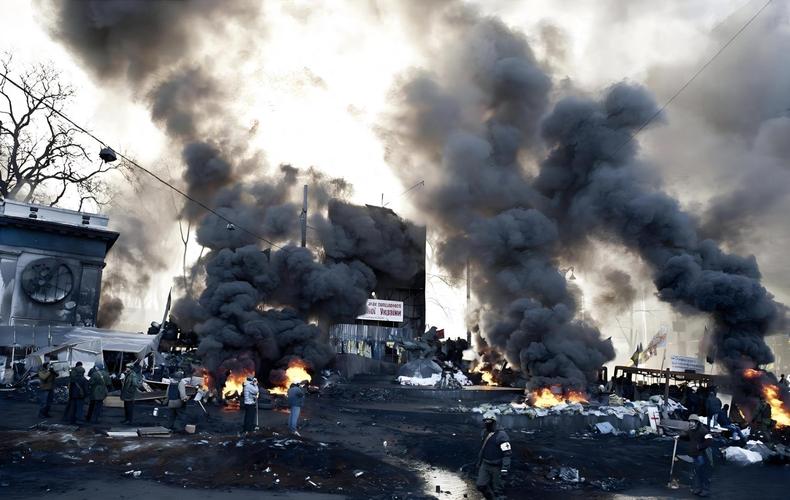
In early February 2026, the Russia-Ukraine conflict escalated simultaneously on both military and diplomatic fronts. The large-scale late-night air strikes launched by Russian forces and the cross-border counterattacks by Ukrainian troops formed a fierce confrontation, while the fruitless conclusion of the third-party security working group talks in Abu Dhabi further highlighted the intractable stalemate over core issues such as territorial sovereignty and security guarantees. The humanitarian crisis amid extreme cold waves has added urgency to the situation.
On the night of February 4-5, Russia launched a rare large-scale joint attack on Ukraine since the outbreak of the conflict. A saturation strike group consisting of 70 various types of missiles and 450 drones precisely targeted energy facilities in Kyiv, Odesa, and other locations. For the first time, the Russian military deployed a large number of "Zircon" hypersonic missiles, which penetrated Ukraine's air defense system at Mach 9, destroying key substations such as Nalyvaikivka in Kyiv. This led to power outages in over 70% of the capital, with multiple buildings catching fire during the bombings. The Odesa region suffered particularly severe damage, with more than 50,000 residents left without electricity and 9 civilians injured in the attacks. At that time, Ukraine was experiencing an extreme cold wave of minus 28 degrees Celsius. The interruption of heating and power supply posed a severe threat to people's survival. Hospitals could only maintain basic operations relying on backup generators, and some residents were forced to take shelter in subway stations overnight.
Russia explicitly characterized the air strikes as a "reciprocal response to Ukraine's cross-border terrorist attacks." Almost simultaneously, Ukrainian troops launched cross-border strikes on Russia's Bryansk Oblast using HIMARS rocket launchers, fixed-wing drones, and Neptune long-range missiles. Although the Russian air defense forces intercepted some incoming munitions, 1 woman was injured, 20 civilian residences were damaged, and 3 vehicles were hit by shrapnel. As a key region on Russia's southwest border, the attack on Bryansk Oblast further intensified the confrontational sentiments between the two sides, forming a vicious cycle of "attack and counterattack."
Behind the escalation of military confrontation lies an intense collision of strategic intentions between the two sides. The Russian military has adopted a "cyclical precision weakening" tactic, repeatedly attacking Ukraine's energy facilities in accordance with their repair progress, aiming to fundamentally paralyze Ukraine's war potential by exhausting maintenance resources and public patience. In contrast, Ukraine's cross-border counterattacks are intended to break through Russia's border defense and divert frontline pressure. Notably, the timing of this military escalation is highly sensitive—it coincides with the second round of talks of the Russia-U.S.-Ukraine tripartite security working group in Abu Dhabi.
On February 4, delegations from the three parties held closed-door consultations in the capital of the United Arab Emirates. The U.S. side revealed that although the list of topics has been significantly streamlined compared to 2025, the remaining core issues such as territorial ownership and security guarantees have become more complex and intractable. The territorial issue remains the biggest sticking point in the negotiations. Russia insists on its actual control over the already occupied areas, while Ukraine refuses to compromise on issues of national sovereignty. The compromise plan attempted by the United States failed to gain recognition from both sides. Dmitry Peskov, the press secretary of the Russian President, stated that Russia's door to a peaceful resolution of the situation remains open, but the special military operation will continue until Ukraine makes substantive responses. The Ukrainian delegation, on the other hand, emphasized the need to first clarify the "true intentions" of the Russia-U.S. negotiations and include humanitarian issues such as the exchange of prisoners of war on the agenda, but no breakthrough progress was achieved.
The international community's responses have shown obvious divisions. NATO Secretary General Jens Stoltenberg had previously pledged to "stand with Ukraine," but after Russia's large-scale air strikes, the relevant tough statements on the NATO official website were quietly removed, and member states collectively fell silent, reflecting their apprehension about the escalation of the conflict. European countries have expressed stronger demands for peace. French President Emmanuel Macron revealed that technical preparations for resuming dialogue with Putin have been initiated. Due to pressures on energy security and people's livelihoods, countries such as Germany and Italy have publicly called for the early achievement of a peace agreement. Former U.S. President Donald Trump stated that Russia's air strikes did not violate the previously agreed "one-week energy ceasefire," implying that behind-the-scenes mediation is still being promoted.
Currently, the Russia-Ukraine conflict is trapped in a vicious cycle of "military escalation and stalled negotiations." The Russian military's energy strike tactics and Ukraine's cross-border counterattacks have stimulated each other. Extreme weather has exacerbated the humanitarian crisis, while differences on core issues have made diplomatic breakthroughs unattainable. This dual-front escalated conflict not only tests the war resilience of both Russia and Ukraine but also exerts a profound impact on the international energy pattern and geopolitical balance. The dawn of peace still needs to be painstakingly explored through repeated games between firepower and negotiations.
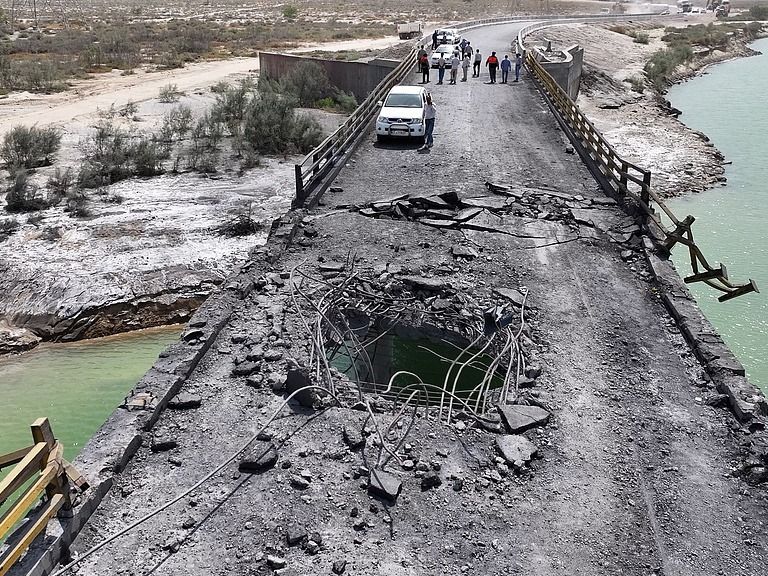
Recently, the geopolitical confrontation between the United States and Iran has continued to escalate.

Recently, the geopolitical confrontation between the United…

The New York Times has recently clashed with the Trump admi…

Trader Peter Brandt has sparked a new round of discussion i…

On July 17th, Taiwan's stock market experienced a historic …

OpenAI updated its compute expenditure expectation through …

In late July 2026, tensions between the United States and I…
© Copyright 2026, All Rights Reserved