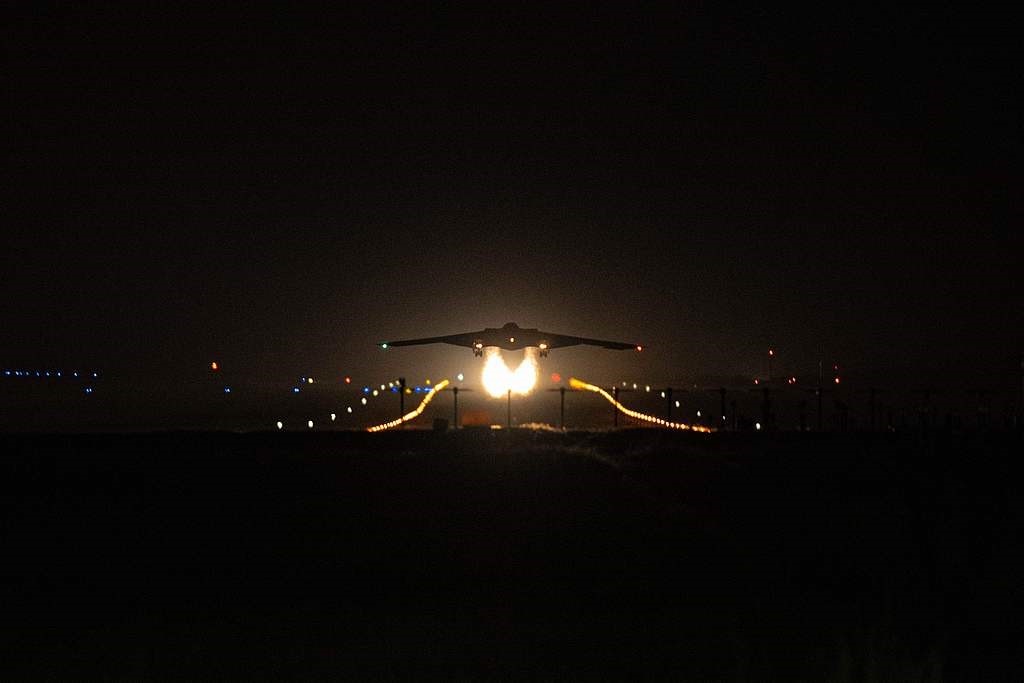
In February 2026, the situation in the Middle East has once again been stretched to the breaking point due to a large-scale U.S. military deployment. Reuters, citing two U.S. officials, reported that the U.S. military is in full swing preparing for a potential attack on Iran that could be ordered by Trump, with the operation likely to last for several weeks. This development marks a rapid shift in the U.S.-Iran confrontation from a "limited strike" form of probing and maneuvering towards the abyss of a systemic conflict. This potential conflict is far from being a mere military clash; it is more akin to a massive stone cast into the lake of regional security, the global economy, and geopolitical patterns, sure to trigger intense and long-lasting ripples.
Recently, U.S. military activities in the Middle East have far exceeded the scope of conventional deterrence. At the Al Udeid Air Base in Qatar, six KC-135 aerial refueling aircraft took off on "non-routine missions" and worked in close coordination with the "Abraham Lincoln" aircraft carrier strike group, which had changed course from the South China Sea and was heading towards the Persian Gulf, establishing a three-dimensional strike chain of "aerial refueling tankers + carrier-based aviation." This deployment model is identical to the configuration used during the "Midnight Hammer" operation carried out by U.S. B-2 bombers in June 2025. At that time, seven B-2 bombers, after three aerial refuelings, stealthily penetrated deep into Iranian territory and destroyed 14 nuclear facilities in one fell swoop, fully demonstrating the powerful feasibility of the "refueling - penetration - precision" tactic. Now, the early arrival of the tanker fleet is undoubtedly the "aerial lifeline" meticulously set up by the U.S. military for a sustained military operation lasting several weeks, aiming to ensure that high-value combat platforms such as stealth fighters and cruise missiles can remain airborne for extended periods and continuously launch strikes against Iran.
What is even more alarming is that the U.S. military also plans to dispatch a second aircraft carrier strike group to reinforce the Middle East, bringing the total number of aircraft carriers in the region to two. This "dual-carrier formation" model, which proved highly effective during the Gulf War, is primarily designed to achieve 24-hour uninterrupted air suppression over the target area through the rotation of carrier-based aircraft, while also providing strong cover for potential landing operations or ground advances. Combined with the information revealed by U.S. officials that "the strike targets include nuclear facilities, state institutions, and security facilities," this operation clearly goes beyond the scope of a "surgical strike" and attempts to force Iran into submission by systematically destroying its military-political system.
In the face of the aggressive posture of the U.S. military, Iran's response strategy exhibits a distinct dual characteristic of "hard defense + soft confrontation." On the military front, the Iranian Revolutionary Guard Corps promptly announced the closure of its airspace for more than two hours to clear the airspace for its air defense systems and buy precious preparation time. The newly acquired MiG-29 fighter jets, together with ballistic missiles launched from underground bunkers, form a well-coordinated defense network of "high-altitude and low-altitude coverage," posing a formidable threat to incoming U.S. warplanes and missiles. Iran's claim of having "two thousand missiles capable of covering U.S. and Israeli bases in the Middle East" is no empty threat. During Israel's "Rising Lion" operation in December 2025, although Iran suffered heavy losses, it rebuilt its missile inventory in just three months, and its uranium enrichment purity even approached the weapons-grade threshold, fully demonstrating its strong industrial resilience and military counterattack capabilities.
In the economic and social spheres, Iran has skillfully employed a "hybrid warfare" strategy to counter external pressures. In December 2025, the devaluation of the Iranian rial triggered nationwide protests. The Khamenei regime swiftly transformed this into a narrative of an "external conspiracy" and effectively consolidated internal unity through measures such as internet shutdowns and crackdowns. At the same time, Iran has made full use of the "Axis of Resistance" network, deploying proxy armed forces in Iraq, Yemen, Lebanon, and other places to form an "asymmetric deterrence" against the United States and Israel. For example, the attacks by the Houthi militia on commercial ships in the Red Sea have already led to a 30% increase in global shipping costs. If the conflict escalates further, Iran is highly likely to activate more proxy forces and spread the flames of war to the areas surrounding the U.S. and Israeli homelands, plunging the United States and Israel into a multi-front war situation.
If the conflict lasts for several weeks, its impact will far exceed the bilateral scope of the United States and Iran, triggering a series of chain reactions. In the energy market, if Iran blocks the Strait of Hormuz, 30% of the world's oil transportation will be severely disrupted, and oil prices may soar to over $150 per barrel like a runaway horse, potentially triggering a new round of global economic crisis and dealing a heavy blow to the economic development of countries around the world.
At the geopolitical level, Saudi Arabia, the United Arab Emirates, and other Gulf countries have clearly refused to provide attack bases for the U.S. military, forcing the U.S. military to rely on a few nodes such as Qatar and Kuwait, significantly limiting its operational radius and logistical support capabilities. More dangerously, the conflict may intensify the sectarian conflicts between Shia and Sunni Muslims, plunging countries such as Iraq and Syria into civil wars and triggering a new wave of refugee flows, placing immense pressure on the social stability and economic development of neighboring countries.
The United States also faces the risk of internal division. Although the Trump administration is known for its "art of the deal," the Venezuelan model is difficult to replicate in Iran. Iran lacks a single power center like that of Maduro. The Revolutionary Guard Corps, the Basij militia, and religious forces form an "iron triangle," and external military intervention may only activate its nationalist sentiment and instead consolidate the regime's foundation. In addition, the growing weariness of the American public towards long-term wars and the increasing constraints on military actions by the U.S. Congress are likely to weaken Trump's decision-making space and make him more cautious about military operations.
Despite the imminent military conflict, diplomatic channels have not been completely closed. On February 6, the United States and Iran held indirect nuclear talks in Oman, with both sides sending positive signals about continuing the dialogue. Although Trump claimed that "the second phase will be very difficult for Iran," he also emphasized that "we are willing to talk for as long as it takes," implying that military action remains a backup plan in case the negotiations fail. Iran, on the other hand, has conveyed messages through third parties such as Russia and Turkey, indicating that "it could freeze uranium enrichment if provided with security guarantees," leaving room for compromise.
The current situation is like walking on a tightrope over a precipice, filled with enormous uncertainties. The U.S. military is exerting pressure through large-scale military deployments, attempting to force Iran to make concessions with a "brinkmanship" strategy; Iran, in turn, is countering the pressure with "asymmetric counterattacks" and "proxy wars" while consolidating its regime by tapping into domestic nationalist sentiment. The final outcome of this game depends on the precise calculation of "costs - benefits" by both sides. If the United States assesses that the cost of military action outweighs the benefits of the nuclear agreement, or if Iran believes that a protracted war can wear down the will of the U.S. military, peace may still become the top priority. Otherwise, the Middle East will once again fall into the vicious cycle of "war - negotiation - war again," and the world will pay a heavy price for it. We sincerely hope that both sides can exercise restraint and resolve their disputes through peaceful negotiations to avoid the outbreak of this potentially catastrophic conflict.
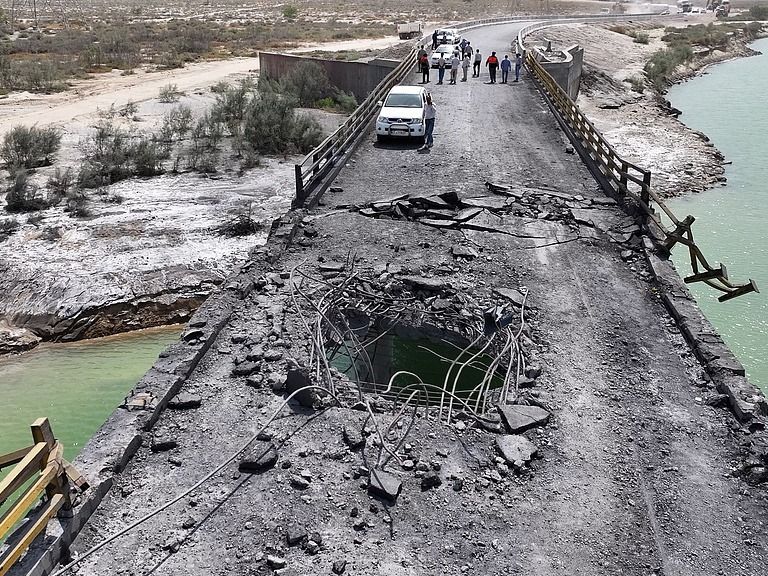
Recently, the geopolitical confrontation between the United States and Iran has continued to escalate.

Recently, the geopolitical confrontation between the United…

The New York Times has recently clashed with the Trump admi…

Trader Peter Brandt has sparked a new round of discussion i…

On July 17th, Taiwan's stock market experienced a historic …

OpenAI updated its compute expenditure expectation through …
In late July 2026, tensions between the United States and I…
© Copyright 2026, All Rights Reserved