In the early hours of January 3, 2026, flames in the Caribbean Sea pierced the dawn, and the U.S. military operation against Venezuela sent shockwaves around the world. Shortly afterward, former President Donald Trump announced that he would "take over Venezuelan affairs," promising to lead a multibillion-dollar effort by major U.S. oil companies to rebuild the country’s collapsed energy infrastructure, in an attempt to revitalize this once-great oil power.
This geopolitical surprise attack should have been the trigger for a global crude oil market meltdown, yet the market reaction was surprisingly calm—Brent crude prices hovered consistently around $60 per barrel, failing to register the expected panic-driven surge. This anomalous phenomenon of "conflict arriving without a corresponding oil price spike" has laid bare the profound transformations reshaping the global energy landscape in the post-crisis era: Venezuela’s potential "return" is never a simple matter of oil supply disruption and restoration, but a radical game theory experiment centered on oil discourse power, supply chain bloc division, and pricing logic.
The market’s equanimity stems from a harsh reality: today, Venezuela has long been reduced to a marginal "symbolic player" in the global oil supply map. Despite boasting proven oil reserves of 300 billion barrels—17% of the world’s total—its daily output has plummeted from a peak of 3 million barrels in the early 2000s to less than 1 million barrels, accounting for less than 1% of global supply. The U.S. sanctions and pressure campaigns prior to the military operation had already brought Venezuela’s oil exports to a near standstill, with some oil wells forced to shut down due to critical storage shortages. However, for a country that has long struggled to maintain production at the 1 million barrels per day mark, the sudden disappearance of its output does not constitute an irreplaceable gap in global supply. This also exposes the fatal disconnect between Venezuela’s oil reserves and its actual production capacity. Consequently, institutions like Goldman Sachs have explicitly stated in their analyses that the short-term impact of the incident on oil prices is "ambiguous," with the ultimate outcome hinging entirely on subsequent adjustments to sanctions policies rather than the event itself. The market’s indifference is, in essence, an objective assessment of the practical influence of this "paralyzed heavy crude giant."
The deeper silence stems from the market’s advance anticipation of long-term trends and its complex trade-offs. The Trump administration’s outlined "reconstruction blueprint"—which would see U.S. companies return to Venezuela and restore its oil production—immediately shifted market focus from fears of "supply disruption" to concerns over "long-term supply glut." Goldman Sachs’ analytical report points out that while local energy infrastructure is severely damaged and production recovery will inevitably be "slow and partial," Venezuela’s long-term oil production growth potential will exert significant downward pressure on global crude prices from 2027 onward. Some analysts even predict that if the situation returns to normal, Venezuela’s medium-term oil exports could soar to 3 million barrels per day. Thus, the current oil price of around $60 per barrel is less a premium for geopolitical conflict risks than a preemptive pricing-in of the impact of this future "production behemoth" that may re-enter the market. The tug-of-war between limited short-term shocks and expectations of long-term supply surplus has ultimately suppressed immediate market volatility.
Yet Venezuela’s path to oil "return" is by no means smooth, entangled as it is in multiple obstacles spanning finance, technology, and geopolitics. The primary challenge is the enormous capital gap. Analyses estimate that restoring Venezuela’s oil production capacity to its historical peak could require investment of up to $58 billion. However, against a backdrop of sluggish global economic growth, dim energy demand prospects, and oil prices lingering in the mid-to-low range—with U.S. West Texas Intermediate (WTI) crude fluctuating between $52 and $57 per barrel—profit-driven capital faces a stark choice: invest in Venezuela’s high-risk, infrastructure-ravaged heavy oil regions, or allocate funds to the mature, stable shale oil blocks in the United States? Oil companies are widely cautious, with core concerns centering on uncertain political developments, unassessable infrastructure damage, inadequate safety guarantees for personnel and equipment, and ambiguous investment return prospects. An industry official bluntly stated that this U.S.-led reconstruction is "more like a disorganized, hastily launched gamble," a remark that lays bare the vast chasm between America’s grand plans and commercial realities.
Secondly, the unique properties of Venezuela’s oil will precisely disrupt the existing structure of global oil trade. The country primarily produces high-sulfur heavy crude, which is the optimal feedstock for many traditional refineries along the U.S. Gulf Coast and West Coast. In recent years, the U.S. shale revolution has generated massive volumes of light crude, but these refineries lack the capacity to process it efficiently—meaning that even as the United States has become a major crude exporter, it still relies heavily on imports of heavy oil. Therefore, regaining access to Venezuelan heavy oil supplies would significantly improve the profitability of these U.S. refiners. However, this also implies that as Venezuela’s production recovers, its export focus will likely shift from traditional markets such as Asia to the United States, forcing existing refineries in Asia and Europe to seek more expensive heavy oil alternatives from West Africa or the Middle East. This will drive up prices in regional markets while reshaping global crude oil trade flows. The impact of this structural adjustment is far more profound than mere changes in total supply.
In summary, the prospect of Venezuela’s crude oil "return" remains hanging in the balance. When and how it materializes depends not only on whether damaged oil wells can be repaired through capital and technology, but also on the trajectory of great power competition, the flow of global capital, and the pace of energy transition. We are witnessing the accelerated formation of a global energy system characterized by a lack of mutual trust, fragile rules, and exacerbated security dilemmas. In this new landscape, where zero-sum game dynamics are becoming increasingly pronounced, every participant must re-examine its position and strategize for survival. For financial market observers, understanding the in-depth games behind this silence is far more valuable than chasing short-term oil price fluctuations.
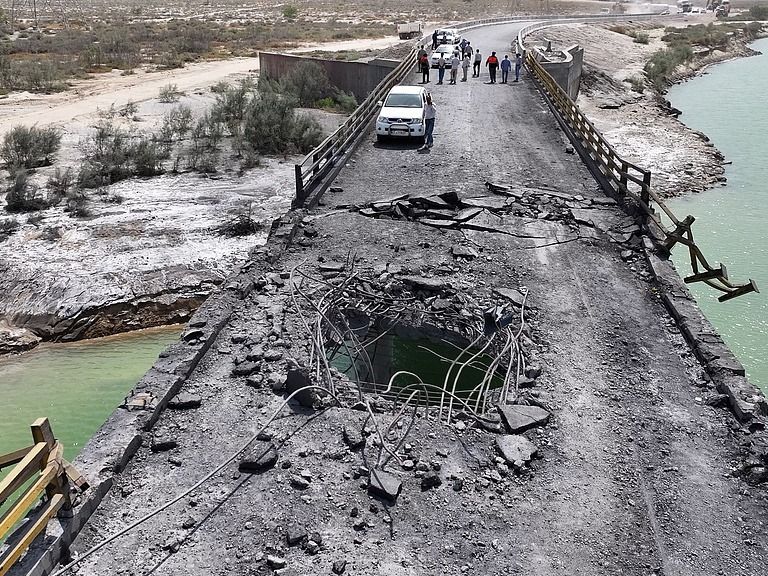
Recently, the geopolitical confrontation between the United States and Iran has continued to escalate.

Recently, the geopolitical confrontation between the United…

The New York Times has recently clashed with the Trump admi…

Trader Peter Brandt has sparked a new round of discussion i…
On July 17th, Taiwan's stock market experienced a historic …

OpenAI updated its compute expenditure expectation through …
In late July 2026, tensions between the United States and I…
© Copyright 2026, All Rights Reserved