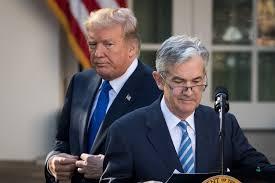
At the beginning of 2026, the US financial market was continuously disturbed by the succession drama of the Fed chair. Trump's ambiguous statement that "only one candidate remains" gave Rick Rieder, an executive of BlackRock, a 54% chance of winning the election, leading him to top the candidate list. This personnel change has raised concerns about the independence of the Fed's policies, which is continuously dragging down the US dollar index and triggering a deep rebalancing of the global asset pricing system.
The suspense over the selection of the Fed chair has persisted since the end of 2025. With Trump completing the interviews of all candidates and revealing that he has already made his decision, the market's focus has entirely shifted to Riddell, a seasoned Wall Street professional. As the global chief investment officer of BlackRock, Riddell manages a $2.4 trillion asset portfolio. His "outsider" status without a background in the Fed's operations precisely aligns with Trump's demand for a "major transformation" of the Fed. More crucially, he publicly advocated reducing the benchmark interest rate from the current range of 3.5%-3.75% to 3%, suggesting that the number of interest rate cuts in 2026 would exceed the Fed's dot plot expectations. This is highly consistent with Trump's policy demand of cutting interest rates to alleviate the pressure on people's livelihoods. Judging from the market reaction, Riddell's popularity has driven increased volatility in interest rate-sensitive assets. Since January, the US Treasury yield curve has continued to steepen, and the 30-year US Treasury yield once approached 5%.
However, the controversy over the policy independence behind the selection is the core variable that is shaking the market. The Trump administration's intervention in the Federal Reserve has reached an all-time high. Not only did it attempt to fire Federal Reserve Governor Lisa Cook on the basis of unverified accusations, but it also launched a criminal investigation against the current chairperson, Jerome Powell, through the Department of Justice. All these actions were interpreted as political retaliation against the Fed's refusal to cut interest rates quickly. Although Riddell received dual recognition from Wall Street and the White House, the market remained concerned about whether he could withstand political pressure after taking office. This uncertainty is directly reflected in the trend of the US dollar index. From January 19th to 28th, the US dollar index fell continuously from its high of 99.30, with a cumulative decline of 3.16%. On January 27th, it plunged by 1.28% in a single day, marking the largest single-day decline in recent times. Deutsche Bank analysis pointed out that the damage to the policy independence of the Federal Reserve will weaken the global reserve currency credit of the US dollar, which is the core logic behind the current weakening of the US dollar.
The global asset pricing system is accelerating its reconfiguration around this core contradiction. Driven by the dual forces of risk aversion and expectations of policy easing, precious metals have emerged as the biggest winners. The gold price has broken through the $5,000 per ounce mark, and the silver price has soared by 14% in a single day, marking the largest increase since 1985. The equity market has shown a structural divergence. Growth stocks and financial stocks that benefit from the expectation of interest rate cuts have fared relatively better, while technology stocks, which are sensitive to interest rates, have experienced a correction due to long-term valuation pressure. The Nasdaq index saw a single-day decline of over 2% in late January. For emerging markets, the weakening of the US dollar has provided a breathing space, and cross-border capital inflows have marginally improved. However, the uncertainty of the Federal Reserve's policy path still limits the rebound space.
In the long run, the underlying issue exposed by this personnel battle is the crack in the US monetary policy framework. The core competitiveness of the Federal Reserve over the past century lies in its relative independence. However, the current deep intervention of political forces in monetary policy may disrupt the policy anchor of "inflation targeting". If Riddell is elected and is forced to implement loose policies that do not align with the economic fundamentals, it may stimulate economic growth in the short term, but in the long run, it will lead to an inflation rebound and the accumulation of debt risks. According to Goldman Sachs' calculations, if the Federal Reserve excessively cuts interest rates, the core PCE inflation in the United States may rise above 3.5% by the end of 2026, far exceeding the 2% policy target.
Looking ahead, the final candidate to be announced by Trump next week will serve as a "barometer" for the market. If Riddell is officially nominated, it is likely to further strengthen the expectation of interest rate cuts in the short term, driving risk assets to stage a temporary rally. However, the concern over policy independence will continue to suppress the US dollar. If a dark horse candidate emerges, it may trigger a reversal in market expectations, leading to significant fluctuations in asset prices. For global investors, the most rational strategy at present is to reduce the duration exposure to US dollar assets, increase the allocation to precious metals and non-US currency assets, and closely monitor the speeches of Federal Reserve officials and US inflation data to capture signals of policy shifts.
This battle over the selection of the Fed chairperson is essentially a contest over the core rules of the global financial system. In the confrontation between political intervention and market laws, the volatility of global asset pricing may remain high. Whether the Fed can maintain its policy independence will determine the stability foundation of the global financial market in the coming years.

Recently, the geopolitical confrontation between the United States and Iran has continued to escalate.

Recently, the geopolitical confrontation between the United…

The New York Times has recently clashed with the Trump admi…

Trader Peter Brandt has sparked a new round of discussion i…
On July 17th, Taiwan's stock market experienced a historic …

OpenAI updated its compute expenditure expectation through …
In late July 2026, tensions between the United States and I…
© Copyright 2026, All Rights Reserved