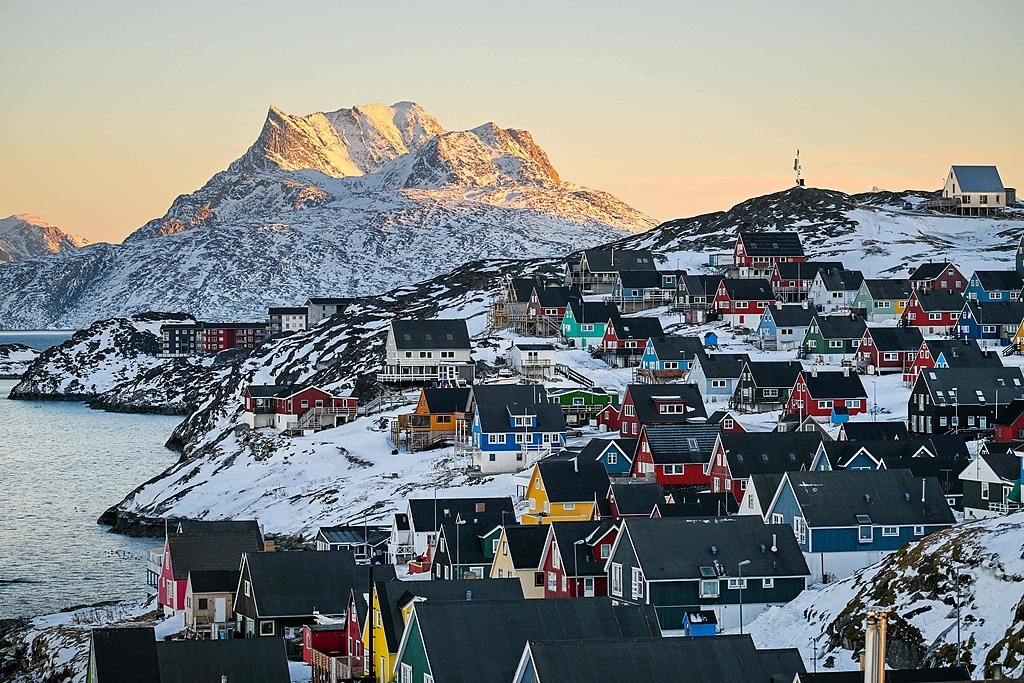
Recently, U.S. President Trump has once again thrust the Greenland issue into the spotlight of international public opinion. Not only has he reiterated his intention to annex the island, but he has also taken this opportunity to express strong dissatisfaction with NATO, even going so far as to label NATO a "paper tiger." This series of moves, like a series of powerful bombs, have sent shockwaves across the international political stage, profoundly reflecting the severe challenges facing the international order under the sway of U.S. hegemonic thinking.
Trump's covetousness of Greenland has a long history and verges on obsession. Since returning to the White House last year, he has repeatedly sought to incorporate this autonomous territory belonging to Denmark into the United States. Earlier this year, he first exerted pressure on European allies through veiled military threats and tariff measures, and then claimed to have reached a "framework agreement" regarding the island, completely disregarding the fact that such tough and unreasonable actions have severely damaged relations between the United States and its European allies. Now, he has bluntly stated, "We want Greenland. They don't want to give it to us. Then I said, 'See you.'" This straightforward and overbearing statement fully exposes the United States' wild ambition to acquire the territory of other countries through hegemonic means.
The escalation of the U.S.'s strategic maneuvers around Greenland has further intensified regional tensions. According to Britain's The Independent, the U.S. military plans to gain new military access rights to three locations on the island, including two previously abandoned bases, with the aim of strengthening its deployment capabilities in the Arctic region. U.S. Northern Command Commander Gen. Glen VanHerck also emphasized at a U.S. Congress hearing that in view of the "rising threats" and the increasingly prominent strategic importance of Greenland, the U.S. military hopes to obtain more base access rights and promote the development of more ports and airports. However, these series of military moves have been met with opposition from many residents of Greenland. They are well aware that U.S. military intervention may bring about the destruction of the local ecology, changes in lifestyle, and further erosion of sovereignty.
Denmark and its allies are highly vigilant about U.S. intentions. Danish Public Broadcasting reported that due to concerns about a potential U.S. invasion of Greenland, Denmark and its allies increased military deployments to the area in January and even planned to destroy airport runways in extreme cases to prevent U.S. military aircraft from landing. This series of defensive measures fully demonstrates the resistance of Denmark and other countries to U.S. hegemonic actions and also highlights the trust crisis triggered by U.S. unilateralism in the international community.
Trump has not only made a big fuss about the Greenland issue but has also taken the opportunity to lash out at NATO. In his remarks, he claimed that NATO member countries deliberately did not provide assistance in the current Middle East conflict and again referred to NATO as a "paper tiger." This accusation is a complete inversion of the truth. As a military alliance, NATO's actions are based on the common will and consensus of its member states. The U.S. military actions in the Middle East are not endorsed and supported by all NATO member countries. Each country has the right to make independent judgments based on its own interests and international law. Trump's disparagement of NATO as a "paper tiger" is actually an attempt to shift domestic contradictions, cover up his mishandling of international affairs, and further exert pressure on NATO member countries to force them to follow U.S. commands in more matters.
In addition, Trump also criticized South Korea, Australia, and Japan, accusing them of not providing assistance in this Middle East conflict. This groundless accusation once again exposes the U.S. hegemonic logic, which demands that its allies unconditionally obey its strategic arrangements and foot the bill for U.S. interests. However, such hegemonic actions are increasingly unpopular. In today's era of globalization, all countries pursue an independent and self-reliant development path and are unwilling to become vassals of U.S. hegemony.
Trump's various actions have undoubtedly brought greater uncertainty to an already fragile international order. Relying on its powerful military and economic strength, the United States has acted willfully in international affairs, not only undermining regional peace and stability but also damaging the fairness and justice of international relations. The international community should be clearly aware of the dangers of U.S. hegemony, strengthen unity and cooperation, jointly safeguard the international system centered on the United Nations and the international order based on international law, and promote the building of a community with a shared future for mankind, so that the world can stay away from the haze of hegemony and move towards a bright future of peace and development.
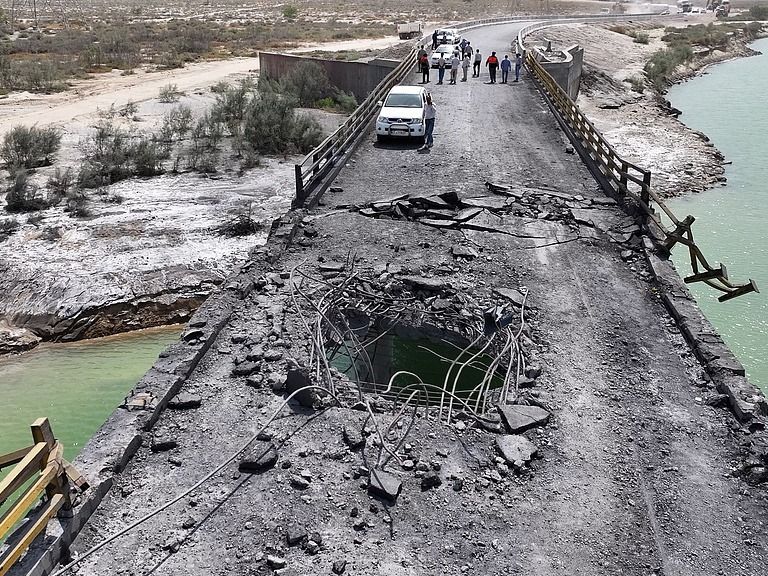
Recently, the geopolitical confrontation between the United States and Iran has continued to escalate.

Recently, the geopolitical confrontation between the United…

The New York Times has recently clashed with the Trump admi…

Trader Peter Brandt has sparked a new round of discussion i…

On July 17th, Taiwan's stock market experienced a historic …

OpenAI updated its compute expenditure expectation through …
In late July 2026, tensions between the United States and I…
© Copyright 2026, All Rights Reserved