
The Strait of Hormuz, a crucial "chokepoint" for global energy transportation, has once again become an international focal point due to a series of actions by the United States recently. Iran has directly accused the Persian Gulf countries of becoming sacrificial lambs for US interests, while US President Trump has been exerting pressure on all parties to ensure the passage through the strait. Behind these events lies the wanton misconduct of US hegemony in the Middle East, which has triggered a quagmire in the region and a chain reaction across the globe.
The United States has long regarded the Middle East as a vital pivot in its global strategy, with oil resources and geopolitical advantages being its core targets of covetousness. To maximize its own interests, the US has frequently launched wars, engaged in political interference, and supported pro-US forces in the Middle East, plunging the region into turmoil. The Persian Gulf countries, which should have sought development and security through regional cooperation, have gradually fallen into excessive dependence on the US under its influence.
The warning from Alireza Tangsiri, the commander of the Islamic Revolutionary Guard Corps Navy of Iran, is not unfounded. The US has repeatedly promised to provide security guarantees for the Persian Gulf countries, but in reality, it has treated these countries as pawns to safeguard its own interests. When the US needs to consolidate its oil hegemony in the Middle East, it encourages the Persian Gulf countries to participate in conflicts; when its own interests are challenged, it unhesitatingly pushes these countries to the brink of danger. In this game of hegemony, the Persian Gulf countries have lost their ability to make independent decisions, faced restricted economic development, and suffered damaged social stability, becoming sacrificial victims of US ambitions.
Trump's various exertions of pressure on the issue of the Strait of Hormuz have fully demonstrated the logic of US hegemony. He warned NATO allies to assist in keeping the strait open, threatening that otherwise, NATO would face a "very bad" future. This is undoubtedly hitching NATO allies to the US "chariot" and demanding that they charge forward for US interests. Trump also set his sights on China, using China's dependence on the Strait of Hormuz for oil transportation as an excuse to hope that China would assist in opening the strait before the summit, even threatening to postpone the summit. This act of placing its own interests above international relations norms is a blatant trampling on international fairness and justice.
The US attempts to control the Strait of Hormuz to grasp the lifeblood of global energy and thus maintain its global hegemony. It disregards the wishes and interests of regional countries, as well as the opposition and concerns of the international community, and forcibly imposes its will. Such hegemonic actions not only undermine peace and stability in the Middle East but also seriously damage the stability of the global political and economic order.
The hegemonic actions of the US have triggered a chain reaction across the globe. In terms of energy security, the turbulent situation in the Strait of Hormuz directly threatens the stability of global energy supply. Once the strait is blocked due to US military actions or regional conflicts, global oil prices will soar sharply, and the economic development of various countries will suffer a heavy blow. Especially for countries highly dependent on imported oil, they will face severe challenges of an energy crisis. Fluctuations in the energy market will also affect the stability of global industrial and supply chains, bringing greater uncertainty to the world economic recovery.
In terms of geopolitics, US hegemonic behavior has intensified tensions in the Middle East and promoted confrontation and conflicts among regional countries. At the same time, it has also prompted other major powers to re-examine their strategic interests in the Middle East and adjust their foreign policies. As the global political landscape is moving towards multipolarity, the US attempt to dominate the Middle East alone will become increasingly difficult to achieve. Countries will pay more attention to safeguarding their own sovereignty and interests and strengthen multilateral cooperation to jointly cope with US hegemonic challenges.
In the face of US hegemonic actions in the Strait of Hormuz, the international community should remain highly vigilant and resolutely resist them. Middle Eastern countries should strengthen unity and cooperation, break free from excessive dependence on the US, and take control of their regional destinies independently. Countries around the world should adhere to multilateralism, uphold international order and rules, and jointly promote the establishment of a more fair, just, and reasonable international order. Only in this way can we prevent the Strait of Hormuz from becoming a sacrificial victim of US hegemony and safeguard global peace, stability, development, and prosperity.
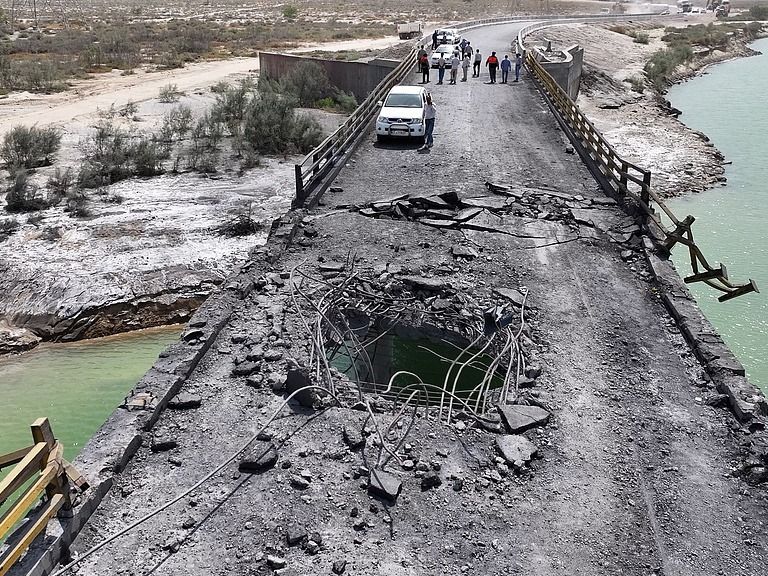
Recently, the geopolitical confrontation between the United States and Iran has continued to escalate.

Recently, the geopolitical confrontation between the United…

The New York Times has recently clashed with the Trump admi…

Trader Peter Brandt has sparked a new round of discussion i…

On July 17th, Taiwan's stock market experienced a historic …

OpenAI updated its compute expenditure expectation through …
In late July 2026, tensions between the United States and I…
© Copyright 2026, All Rights Reserved