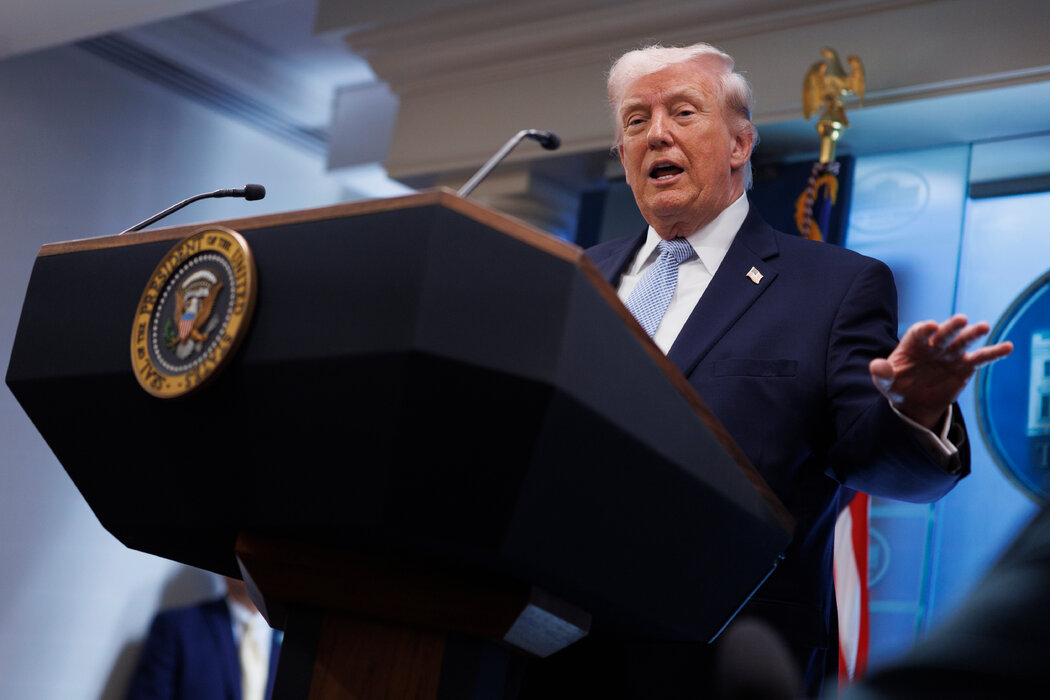
Recently, the situation between the United States and Iran has reached a pivotal juncture. With the entry into force of an interim ceasefire agreement, observers have begun to assess the extent to which the Trump administration has achieved its objectives in the conflict with Iran. On February 28, in an eight-minute video address, Trump outlined five specific war objectives: to destroy Iran’s missile industry, to completely annihilate the Iranian Navy, to eliminate the threat posed by Iranian-backed terrorist or militia groups, to prevent Iran from acquiring nuclear weapons, and to bring about regime change in Iran. However, judging by the current state of affairs, there remains a significant gap between these stated goals and their actual realization.
First, regarding the objective of destroying Iran’s missile industry, joint U.S.-Israeli airstrikes did indeed destroy a substantial number of Iranian missiles and launch facilities. According to official U.S. sources, American forces struck over 450 ballistic missile storage sites and destroyed approximately 80% of Iran’s missile production facilities. However, the reality is far more complex: Iran retains a vast array of missile infrastructure and, within hours of the airstrikes, repaired its underground launch silos and bunkers, resuming the launch of missiles and combat drones. Several Gulf nations continued to come under attack even after the ceasefire took effect, demonstrating that the threat of war has not been completely eliminated. Thus, while the missile strikes yielded localized tactical successes, they failed to completely dismantle Iran’s missile capabilities.
Second, Trump sought to "completely annihilate the Iranian Navy." During the conflict, U.S. forces sank the Iranian destroyer *Dena* and degraded other naval assets; however, Iran continues to maintain control over the Strait of Hormuz through the deployment of land-based missiles. This implies that, despite sustaining damage, Iran’s naval forces remain capable of exerting influence over the regional security landscape. Furthermore, the U.S. military’s practice of sinking warships is a contentious issue under international law and may potentially run afoul of the Geneva Conventions.
Third, Trump aimed to eliminate the threat posed by Iranian-backed terrorist organizations or militia groups. Yet, militia groups across the Middle East remain active. For instance, militias operating within Iraq have continued to launch rocket attacks against U.S. facilities, while Hezbollah in Lebanon persists in firing rockets at Israel. Although joint U.S.-Israeli operations have struck specific targets, these organizations have not been completely dismantled; moreover, the ceasefire agreement itself has been challenged by Israel’s ongoing military operations in Lebanon. Concurrently, the issue of "roadside bombs"—cited by Trump as a major concern—is largely anachronistic, as Iranian-backed militias ceased employing such tactics against U.S. forces long ago. Fourth, Trump emphasized preventing Iran from acquiring nuclear weapons. While airstrikes did indeed deal severe blows to certain nuclear facilities, some stocks of highly enriched uranium remain concealed within underground tunnels. The U.S. has indicated that deploying special forces might be necessary to seize these nuclear materials; however, such ground operations carry extremely high risks. Although Iran pledged to relinquish a portion of its uranium stockpile following the ceasefire, its overall nuclear capabilities were not completely dismantled; thus, this objective was only partially achieved.
Finally, Trump sought to engineer regime change in Iran. He had hoped that, with the aid of airstrikes and Israeli support, he could spark a popular uprising to topple the clerical regime. However, this uprising never materialized. Despite attacks targeting Iran’s Supreme Leader and other high-ranking officials, the new leadership remains firmly in the hands of hardliners who are closely aligned with the military and the Revolutionary Guards. The current regime maintains its anti-American stance and continued its resistance throughout the ceasefire period. Senior U.S. officials have also expressed skepticism regarding the likelihood of any substantive regime change, deeming it highly improbable that the original objective will be realized.
Overall, the five major objectives articulated by Trump yielded only limited tactical gains during the initial phase of the conflict: some missile facilities were damaged, naval capabilities were degraded, and nuclear sites were struck. However, these actions failed to fundamentally alter Iran’s overall military capabilities, the threat posed by its militias, or its political system. While the ceasefire agreement temporarily eased tensions, Iran retains significant retaliatory capabilities. Should the U.S. seek to compel Iran into making concessions through negotiations—thereby achieving its original objectives—it still faces formidable challenges.
This conflict demonstrates that while military strikes can inflict damage in the short term, fundamentally altering a nation’s strategic capabilities and political system is a far more complex undertaking than the scenario Trump outlined in his public statements. Although the ceasefire has created space for negotiations, the disparity between stated objectives and actual reality underscores the inherent uncertainty of the situation in the Middle East, as well as the intricate relationship between military action and political intent.
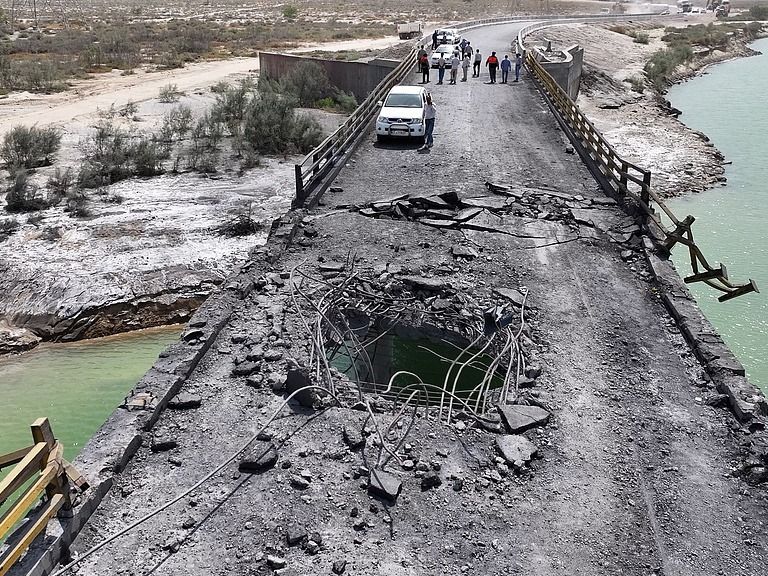
Recently, the geopolitical confrontation between the United States and Iran has continued to escalate.

Recently, the geopolitical confrontation between the United…

The New York Times has recently clashed with the Trump admi…

Trader Peter Brandt has sparked a new round of discussion i…

On July 17th, Taiwan's stock market experienced a historic …

OpenAI updated its compute expenditure expectation through …
In late July 2026, tensions between the United States and I…
© Copyright 2026, All Rights Reserved