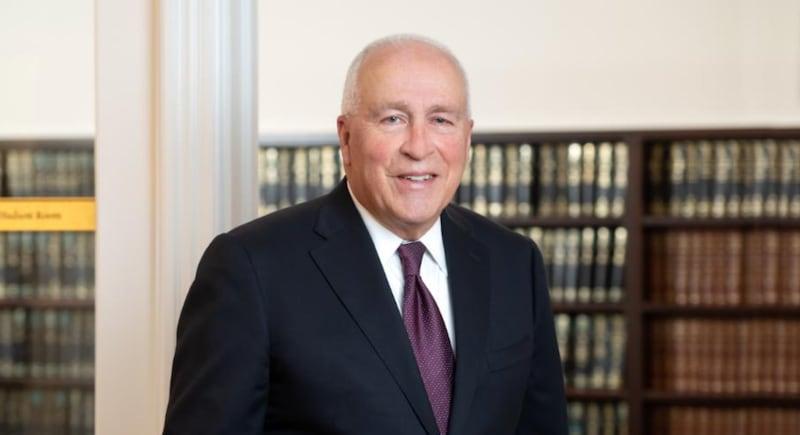
On February 11, 2026, Donald Kinsella, the newly appointed federal prosecutor for the Northern District of New York, received a dismissal email from the White House Office of Personnel Management just a few hours after his closed-door swearing-in ceremony, citing "presidential directive." This dramatic incident not only set a new record for the shortest tenure of a US federal prosecutor but also became the latest footnote to the conflict between the Trump administration and the judicial system. What appears to be an accidental "personnel farce" is, in fact, a concentrated outbreak of structural contradictions in the US political ecosystem, reflecting the profound crisis in the power-checking mechanism amid partisan polarization.
According to US law, federal prosecutors are typically nominated by the president and confirmed by the Senate. However, during vacancies, district courts have the authority to appoint interim prosecutors until the Senate completes the confirmation process. The federal district court for the Northern District of New York appointed Kinsella based on this provision to fill the vacancy left by the departure of former acting prosecutor John Salcone, who had left due to his failure to obtain Senate confirmation. Yet, the White House's forced dismissal of Kinsella on the day of his inauguration directly challenged the judicial branch's authority to make interim appointments. Todd Blanche, the Deputy Attorney General, claimed on social media that "judges have no right to select prosecutors." This assertion, which absolutizes the president's appointment power, is in essence a blatant violation of the principle of separation of powers.
This conflict is not an isolated case. In 2020, Trump attempted to dismiss Geoffrey Berman, the federal prosecutor for the Southern District of New York, who was leading an investigation into Trump's personal lawyer Rudy Giuliani. Although Trump denied direct involvement, the dismissal letter from Attorney General Barr explicitly mentioned "presidential approval," exposing the executive branch's infiltration into judicial independence. In the Kinsella incident, the White House did not even follow the conventional procedure of "presidential nomination—Senate confirmation" but intervened directly through an executive order, pushing institutional conflicts to a new height.
The direct trigger for Kinsella's dismissal was speculation that he might restart investigations related to the Trump administration. Salcone, the former acting prosecutor, had led multiple investigations into Democratic officials in New York State, but the legality of these investigations was highly questioned due to his lack of Senate confirmation. Kinsella's appointment was seen as an attempt by the judicial system to correct procedural flaws, while the White House's swift response revealed its fear of judicial supervision. Senate Democratic Leader Chuck Schumer bluntly stated, "Trump's only requirement for prosecutors is absolute political obedience." This logic of treating judicial positions as "political lackeys" is eroding the credibility of the US judicial system.
What is even more alarming is that such incidents have formed a vicious cycle. The Trump administration has gradually transformed the Department of Justice into a political tool by appointing loyalists, bypassing Senate confirmation, and dismissing dissenters. For example, the Department of Justice attempted to prosecute six Democratic congressmen who recorded a video titled "Resisting Illegal Orders," but the case failed as the jury found that the prosecution had not met the threshold for indictment. This use of judicial resources for political retaliation has further intensified the politicization of the judicial system.
The Kinsella incident has exposed the deep-seated crisis in the US power-checking mechanism. On the one hand, the executive branch has continuously expanded its power through executive orders and personnel appointments, eroding judicial independence. On the other hand, the judicial system has appeared powerless in responding to challenges from the executive branch. Although the district court cited legal provisions to defend Kinsella's appointment, the White House's forced dismissal demonstrated that the executive branch could bypass judicial review through "presidential directives." This "strong executive—weak judiciary" pattern is shaking the foundations of the US constitutional system.
More seriously, such conflicts may trigger a chain reaction. The Trump administration has repeatedly engaged in lawsuits with state governments and federal courts over immigration policies, tariff policies, etc., initiating over 300 lawsuits in 2025 alone. With conservative justices holding a majority in the Supreme Court, the executive branch may receive more judicial support, further exacerbating power imbalances. For instance, the Supreme Court once revoked a federal district court's injunction to terminate the temporary legal status of immigrants from four countries, allowing the Trump administration to proceed with its deportation plans, showing the judicial system's compromise with the executive branch.
The "one-day tour" of the federal prosecutor for the Northern District of New York serves as a wake-up call for democratic countries worldwide. It shows that even in a country like the United States with a mature constitutional system, the power-checking mechanism can fail due to partisan polarization and institutional loopholes. To repair this crisis, a multi-pronged approach is needed: first, strengthen judicial independence by legislating to clarify the legal effect of district courts' authority to make interim appointments and prevent executive interference; second, improve oversight mechanisms by restoring watchdog departments such as the Public Integrity Section of the Department of Justice to prevent the abuse of judicial resources; third, enhance political civilization by curbing the zero-sum mentality of "winner-takes-all" and promoting cross-party cooperation.
Kinsella's brief tenure is like a mirror, reflecting the deep-seated fissures in the US political ecosystem. When judicial positions become pawns in partisan struggles and power-checking becomes a mere formality, the foundations of democracy begin to shake. This "one-day prosecutor" farce will ultimately be recorded as a cautionary tale in the annals of US constitutional history.
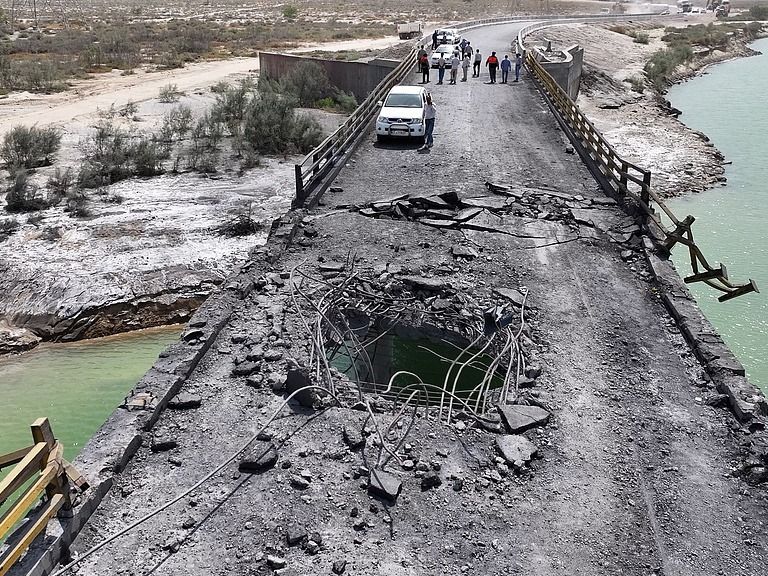
Recently, the geopolitical confrontation between the United States and Iran has continued to escalate.

Recently, the geopolitical confrontation between the United…

The New York Times has recently clashed with the Trump admi…

Trader Peter Brandt has sparked a new round of discussion i…

On July 17th, Taiwan's stock market experienced a historic …

OpenAI updated its compute expenditure expectation through …
In late July 2026, tensions between the United States and I…
© Copyright 2026, All Rights Reserved