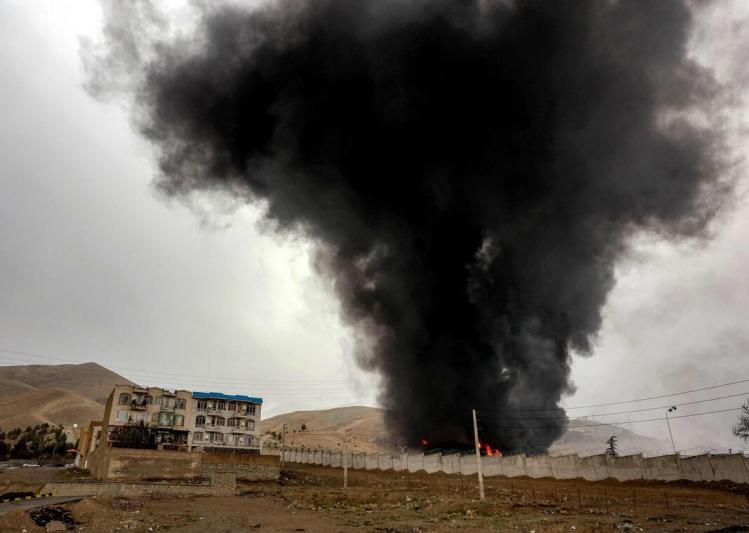
The US news website Axios reported on Sunday (March 8th) that the US is dissatisfied with the Israeli Defense Forces' attack on Iran's fuel storage facilities, believing that the scale of the attack was "far beyond what the US expected" and might have negative effects such as pushing up oil prices.
It is reported that this is "the first major disagreement" since the US and Israel launched military operations against Iran.
The report quoted US and Israeli officials as saying that the US was "surprised" by the wide scope of the Israeli military's strikes, "did not think it was a good idea", and even expressed dissatisfaction to the Israelis by saying "what the hell is going on?".
The US is concerned that the Israeli military's attack on Iran's civilian infrastructure "might have a counter-strategic effect", "encouraging Iranian society to unite and support the government", and "the burning of fuel storage facilities might disturb the oil market and further drive up energy prices".
One of President Trump's advisers told Axios: "The president doesn't like such an attack. He wants to preserve the oil and doesn't want it to be burned. This would make people think of higher oil prices."
The Israeli military issued a statement on the 7th evening, saying that they had attacked several fuel storage facilities in the Iranian capital, Tehran.
Affected by the situation in the Middle East, international oil prices continued to rise during the new week's trading in the United States on the evening of the 8th. The price of April-delivery light crude oil futures on the New York Mercantile Exchange once approached $120 per barrel, with an increase of more than 30%. Trump posted on social media on the 8th, saying that for "the safety and peace of the United States and the world", this was just a "very small price".
Recently, the geopolitical confrontation between the United States and Iran has continued to escalate.

Recently, the geopolitical confrontation between the United…

The New York Times has recently clashed with the Trump admi…

Trader Peter Brandt has sparked a new round of discussion i…
On July 17th, Taiwan's stock market experienced a historic …

OpenAI updated its compute expenditure expectation through …

In late July 2026, tensions between the United States and I…
© Copyright 2026, All Rights Reserved