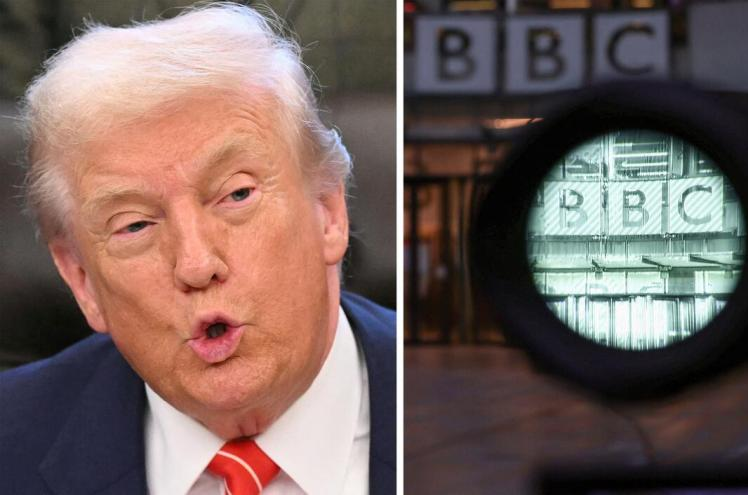
On Thursday (February 12th), a judge from the Southern District of Florida federal court in the United States rejected the request made by the BBC to suspend a pre-trial procedure in the case where US President Trump is suing the BBC for defamation. The judge also announced that the case will be heard in court in February 2027.
Xinhua News Agency reported that in January, the BBC submitted an application to postpone the evidence disclosure procedure in the lawsuit filed by Trump against the BBC for defamation. The evidence disclosure procedure may require the BBC to submit a large amount of emails and other materials related to its coverage of Trump. A federal judge in Florida, USA, considered the above application "too early".
The online edition of the British newspaper The Daily Telegraph disclosed some contents of a BBC internal memo last November. The memo revealed that in the 2024 documentary "Trump: A Second Chance?" produced by the BBC, the clips of Trump's two speeches on January 6, 2021 were edited together, making him seem to be inciting his supporters to cause riots.
The BBC's editing and montage of Trump's speech sparked a huge controversy. Trump's legal team immediately demanded that the BBC withdraw the related documentary and apologize. Otherwise, they would file a lawsuit and claim damages of at least 1 billion US dollars.
The BBC subsequently apologized to Trump for the misleading editing, but refused to meet the compensation demands. Subsequently, Trump filed a lawsuit against the BBC, demanding a total of 10 billion dollars in compensation. The BBC has been seeking to have the case dismissed.
On January 6, 2021, approximately 2,000 supporters of Trump from all over the United States violently broke into the US Capitol, triggering a deadly riot.
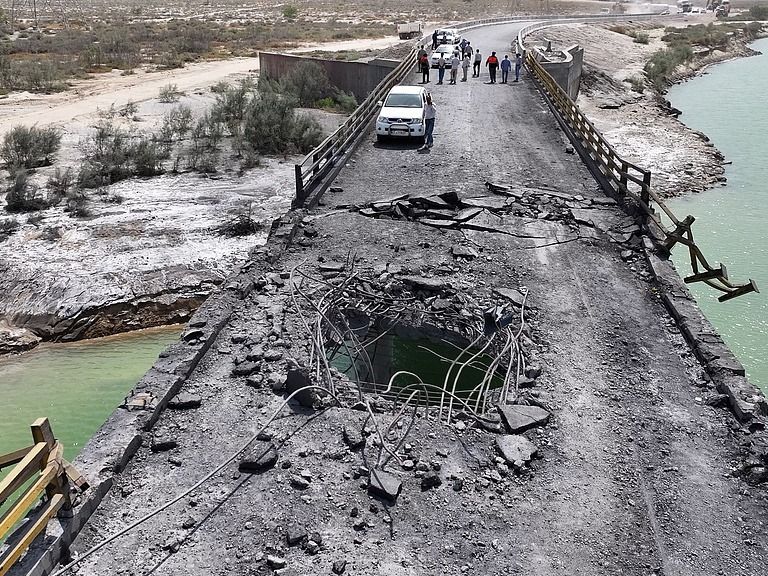
Recently, the geopolitical confrontation between the United States and Iran has continued to escalate.

Recently, the geopolitical confrontation between the United…

The New York Times has recently clashed with the Trump admi…

Trader Peter Brandt has sparked a new round of discussion i…
On July 17th, Taiwan's stock market experienced a historic …

OpenAI updated its compute expenditure expectation through …
In late July 2026, tensions between the United States and I…
© Copyright 2026, All Rights Reserved