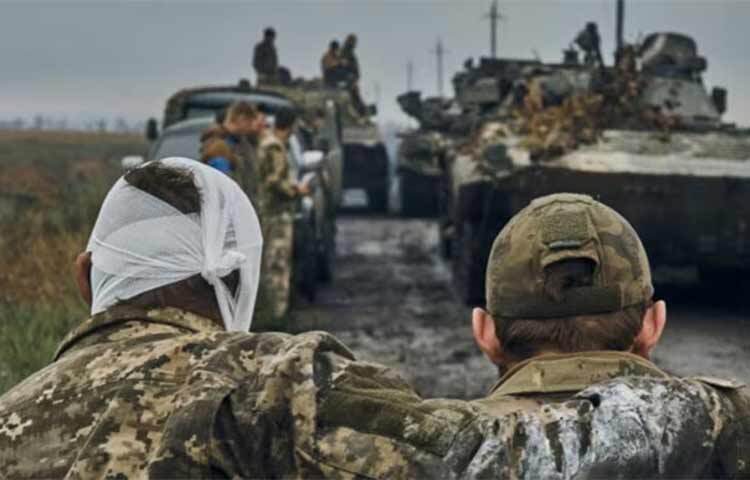
On February 26, 2026, the Russia-Ukraine conflict entered its 1,464th day, with both sides engaging in high-intensity military confrontations. The Russian Ministry of Defense and the General Staff of the Armed Forces of Ukraine released battle reports on the same day, revealing that the focus of battlefield offense and defense has shifted from traditional positional warfare to precision strikes on key infrastructure. At the same time, the frequency of using long-range precision-guided weapons has significantly increased, reflecting that the conflict is entering a new phase of 'unmanned' and 'intelligent' warfare.
According to reports from the Russian Ministry of Defense, over the past 24 hours, Russian forces launched systematic attacks on Ukrainian transportation and energy infrastructure. In the Donetsk direction, Russian forces destroyed a transport and loading vehicle paired with the U.S.-made HIMARS rocket launcher, cutting off the Ukrainian long-range fire supply chain. In the Zaporizhzhia direction, multiple Ukrainian domestically developed 'Flamingo' missile launchers were destroyed, weakening their short-range air defense capabilities. Notably, the Russian forces disclosed for the first time the use of a new electronic warfare system, successfully disrupting the control links of Ukrainian drones, causing three reconnaissance drones around the Zaporizhzhia nuclear power plant to crash.
The Ukrainian forces adopted an 'offense instead of defense' strategy, launching raids on Russian strategic rear targets. The Ukrainian General Staff claimed that Ukrainian forces used 'Flamingo' cruise missiles to strike the Votkinsk defense plant in the Udmurt Republic, which is a key production center for components of the Russian S-400 air defense system. Satellite images show that the attack triggered a fire lasting four hours, and preliminary assessments indicate that one production line was paralyzed. This marks the first time that Ukrainian forces have extended their cruise missile strike range to the Russian heartland, signifying a qualitative breakthrough in their long-range precision strike capability.
Both sides' battle reports reveal the dominant role of intelligent equipment in the conflict. The Russian military's 'Sea Hawk'-30 drones are equipped with autonomous target recognition capabilities and can automatically lock onto moving 'HIMARS' launchers; meanwhile, Ukraine's 'Flamingo' missiles use an AI-guided system capable of penetrating Russia's multilayered air defense network under complex electromagnetic conditions. This mode of confrontation, which relies on 'intelligence to counter intelligence,' has offset the traditional advantage of larger troop numbers through technological superiority.
In electronic warfare, Russia has deployed the 'Murmansk-BN' electronic warfare system, creating an interference zone with a 600-kilometer radius, forcing some Ukrainian drone operators to fly in manual mode; Ukraine, on the other hand, connects to NATO intelligence systems via Starlink terminals to achieve real-time battlefield awareness. This 'technology-tactics' closed-loop feedback turns local tactical victories into potential strategic advantages.
The Russia-Ukraine conflict exhibits a subtle pattern of 'fighting while negotiating.' Military escalations interact with diplomatic negotiations: hours before the release of the battle report, Zelensky met with U.S. representatives in Geneva, expressing a willingness to make 'creative compromises' on territorial issues, provided there are 'reliable security guarantees'; Peskov reaffirmed that Russia's special military operation objectives remain unchanged, but did not rule out achieving them through diplomatic means. On the battlefield, both sides adopt a 'limited escalation' approach: Russian strikes on Ukrainian energy facilities avoid civilian lines, while Ukraine notifies the International Atomic Energy Agency to evacuate foreign experts before attacking Russian factories, demonstrating military deterrence while leaving room for negotiations.
The conflict has triggered a global chain reaction: the attack on the Votkinsk Military Plant delayed deliveries of the S-400 system, while procurement contracts with India and Turkey face the risk of default; damages to Ukrainian energy facilities have driven up European natural gas prices. On a broader scale, the conflict accelerates the global spread of military technology, with Ukraine transferring 'Flamingo' missile technology to Poland and Russia exporting electronic warfare systems to Iran, creating a vicious cycle of 'conflict-technology-geopolitics.'
This four-year-long conflict has evolved from a regional confrontation into a strategic game reshaping the international order. Intelligent weapons, energy supply chains, and demographic impacts have become key factors. Human society must rethink the nature of war and the cost of peace; only by moving beyond a 'zero-sum game' mindset can we break the 'war spiral.'
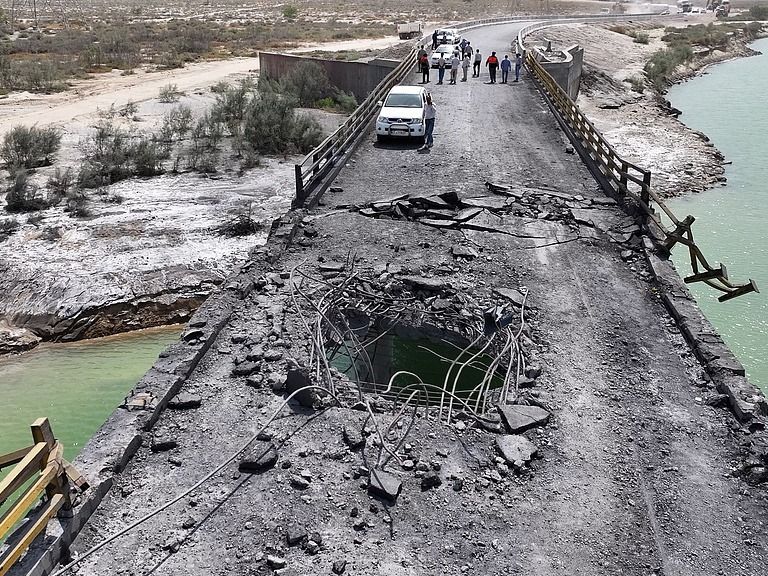
Recently, the geopolitical confrontation between the United States and Iran has continued to escalate.

Recently, the geopolitical confrontation between the United…

The New York Times has recently clashed with the Trump admi…

Trader Peter Brandt has sparked a new round of discussion i…

On July 17th, Taiwan's stock market experienced a historic …

OpenAI updated its compute expenditure expectation through …

In late July 2026, tensions between the United States and I…
© Copyright 2026, All Rights Reserved