The US government has announced the imposition of tariffs of up to 100% on certain imported medicines, but there are several key exemptions. This move is aimed at pressuring pharmaceutical companies to produce more medicines in the US.
Bloomberg reported that on Thursday (April 2nd), the White House issued a statement saying that US President Trump signed a document on that day. According to Section 232 of the 1962 Trade Expansion Act, the United States will impose a 100% tariff on imported patented drugs and pharmaceutical ingredients.
This measure also provides a path for exemptions or reductions in tariffs, aiming to force pharmaceutical companies to reach agreements with the White House on issues such as drug prices and the return of the industry.
This new tariff applies to patented drugs produced by companies in countries that do not have a tariff agreement with the United States, and where the production companies have not signed a Most-Favored-Nation Pricing Agreement with the US government.
According to the statement from the White House, tariffs on the production of medicines by certain large companies will come into effect after 120 days, while those for medicines produced by small companies will take effect after 180 days.
The statement said that for the major economies that reached an agreement with the White House, the import drug tariff ceilings for these countries, including the European Union, South Korea, Japan, Switzerland and Liechtenstein, are 15%.
The UK has agreed to double the proportion of government spending on new drug research and development to that of the country's GDP over the next 10 years. This is the result of another agreement reached by the UK on April 2nd. As a result, the tariff rate on imported medicines in the UK will be lower.
The White House stated that companies that have committed to partially manufacturing drugs in the United States will be subject to a 20% tariff on their imported drugs; if these companies sign a Most-Favored-Nation agreement with the United States, the drug tariff will be reduced to zero. This tax exemption policy will remain in effect until January 20, 2029.
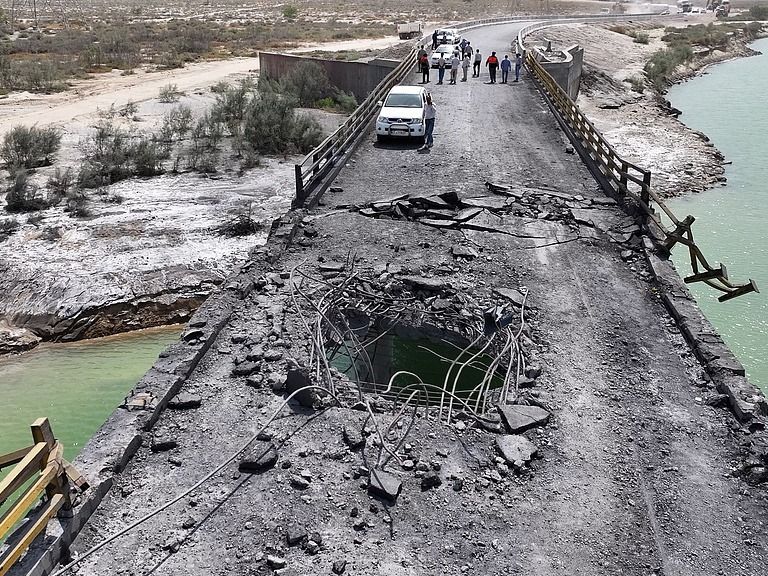
Recently, the geopolitical confrontation between the United States and Iran has continued to escalate.

Recently, the geopolitical confrontation between the United…

The New York Times has recently clashed with the Trump admi…

Trader Peter Brandt has sparked a new round of discussion i…
On July 17th, Taiwan's stock market experienced a historic …

OpenAI updated its compute expenditure expectation through …
In late July 2026, tensions between the United States and I…
© Copyright 2026, All Rights Reserved