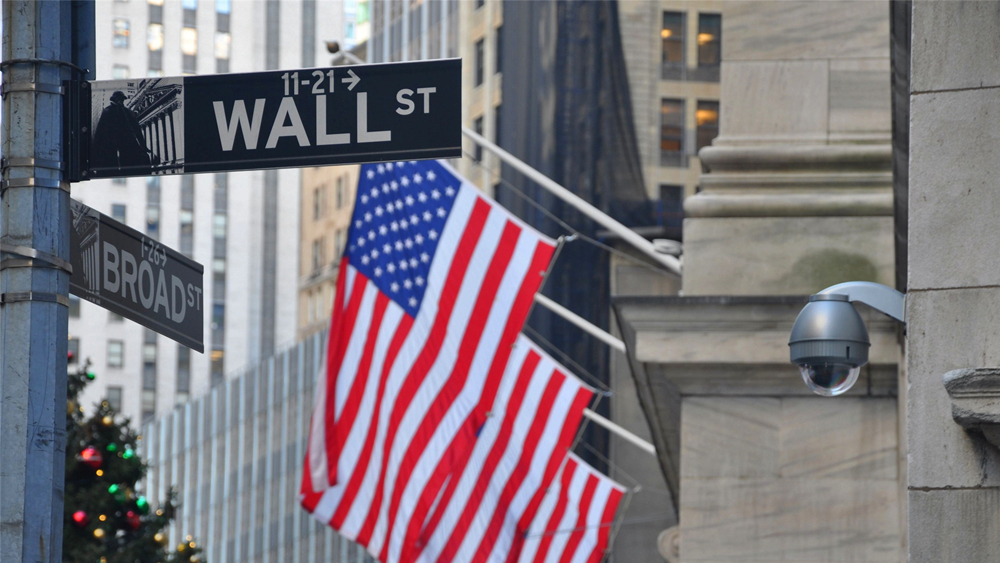
Recently, according to Yahoo Finance UK, a series of remarks made by US President Trump at the Davos Forum have caused fluctuations in global financial markets. Among them, his stance on Greenland and his criticism of European Allies have become the focus of market attention. Although Trump's speech temporarily alleviated the impact of geopolitical risks on the market, the trade policy uncertainty signals he released still sowed long-term hidden dangers for the global capital market.
After Trump explicitly ruled out the possibility of seizing Greenland by force in Davos, the Wall Street stock market and the FTSE 100 index rebounded rapidly. This reaction directly reflects that the market's concerns over the escalation of geopolitical conflicts have eased. Previously, Trump's tough statement of "You'll know soon" had triggered investors' pricing of extreme tail risks, causing the price of gold as a safe-haven asset to rise at one point, while stock index futures came under pressure and declined. When the commitment of "no force will be used" was fulfilled, market risk appetite immediately rebounded, gold prices fell back, and stock index futures rebounded from the day's low. This fluctuation pattern confirms the short-term shock effect of geopolitical risks on asset prices - when uncertainty marginally declines, the market will quickly correct overly pessimistic expectations.
Neil Wilson, an investment strategist at Saxo Bank in the UK, pointed out that although the military risk in Greenland has temporarily subsided, "the threat of the US imposing additional tariffs on multiple European countries and an escalation of the trade war between the EU and the US" remains unresolved. This concern is directly reflected in the long-term expectations of the financial market: the bond yield curve in the eurozone continues to flatten, indicating investors' pessimism about the economic growth outlook. Although the US dollar index briefly weakened after the speech, it later rebounded due to the demand for safe-haven assets, highlighting the market's vigilance over the recurrence of trade frictions.
Trump's "America First" policy is reshaping global capital flows through two paths. Firstly, the trend of "de-risk" in geopolitical games is intensifying. The market's focus on Greenland is essentially a capitalization pricing of resource sovereignty and strategic security - when the United States attempts to control key resources through economic means rather than military ones, global investors will reevaluate the allocation value of resource assets. For instance, the Danish Krone experienced brief fluctuations after Trump's speech, reflecting the market's revaluation of the geopolitical premium in the Nordic region. The abnormal movement of stocks related to the Arctic shipping route suggests that capital is beginning to chase strategic assets in the context of the "new Cold War".
The uncertainty of trade policies is eroding the stability of the global industrial chain. Trump's criticism of Europe's green policies is essentially a challenge to the global climate governance framework. If the United States regards environmental protection standards as trade barriers, it may trigger multinational enterprises to restructure their supply chains, leading to rising manufacturing costs in emerging markets and intensified inflationary pressure in developed economies. This structural change is manifested in the financial market as follows: the volatility of commodity prices has risen, the exchange rates of currencies sensitive to trade policies (such as the euro and the RMB) in the foreign exchange market have become more volatile, and the profit expectations of multinational enterprises have come under pressure due to the rising costs of supply chain restructuring.
Trump's speech also exposed the deep-seated contradictions in global financial governance. He emphasized that "only the United States can protect Greenland", a narrative that ties security issues with economic interests, which conflicts with the non-discrimination principle under the framework of the WTO. If the United States imposes additional tariffs on European goods in the future on the grounds of "national security", it may trigger the EU to file a lawsuit at the WTO, further intensifying the fragmentation of the global trade system. For the financial market, this means that cross-border capital flows will face more regulatory obstacles and the efficiency of global asset allocation may decline.
Although Trump's speech in Davos temporarily alleviated the extreme risks of geopolitics, the signals of uncertainty in trade policies he released still cast a shadow over the global financial market. From the geopolitical game over Greenland to the criticism of Europe's green policies, the United States is reshaping the global economic order through "securitization" and "ideologization" means.
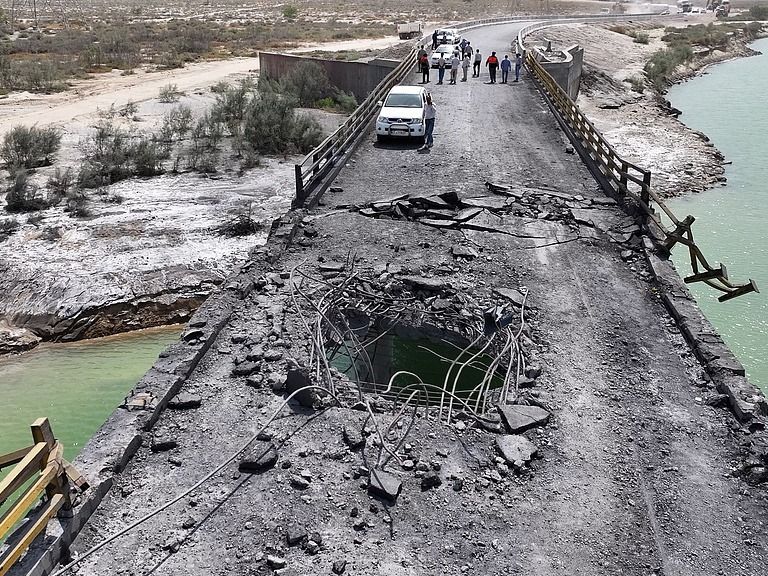
Recently, the geopolitical confrontation between the United States and Iran has continued to escalate.

Recently, the geopolitical confrontation between the United…

The New York Times has recently clashed with the Trump admi…

Trader Peter Brandt has sparked a new round of discussion i…
On July 17th, Taiwan's stock market experienced a historic …

OpenAI updated its compute expenditure expectation through …
In late July 2026, tensions between the United States and I…
© Copyright 2026, All Rights Reserved