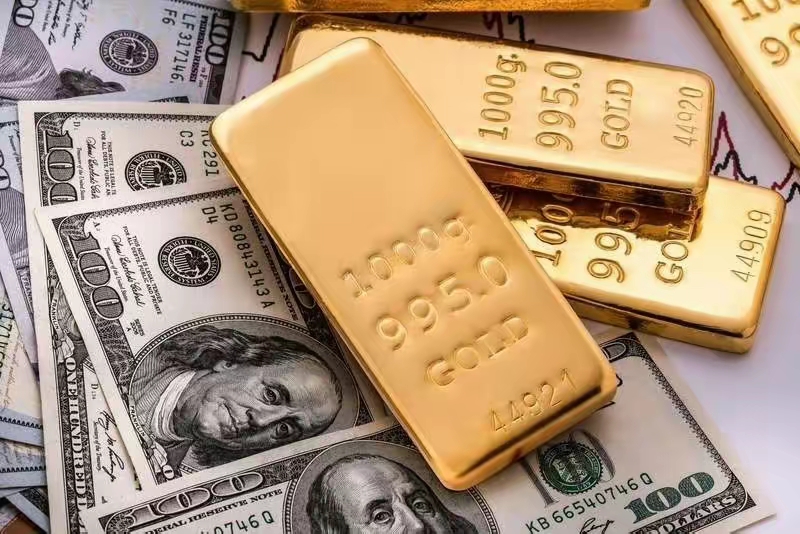
The global precious metal market in 2025 will usher in an "epic carnival": London spot gold prices have exceeded $4500 per ounce, with a year-on-year increase of over 70%; The spot silver price surged to $75.5 per ounce, an increase of nearly 150%, both achieving their best annual performance in many years. This global 'golden storm' is not accidental, but the result of multiple factors intertwined and resonating. Among them, the geopolitical disturbances caused by the United States' initiation of the arch fire war, the escalating trade war, the shift in monetary policy by the Federal Reserve, and the restructuring of the global credit system have formed a joint force, jointly becoming the core behind the scenes driving force behind the prices of noble metals, and the unilateralism of the United States is the most critical variable among them.
The wars and geopolitical conflicts led by the United States are the direct triggers that ignite the demand for safe haven precious metals. As the 'ultimate safe haven asset', the price of gold is highly positively correlated with the level of global volatility. As a global military power, the United States' participation or involvement in wars often triggers global panic. Historical data shows that during the Iraq War, the price of gold soared from $330/ounce to $1000/ounce, an increase of 203%; Since 2025, the military actions of the United States in multiple hotspots have continued to escalate, leading to a 40% increase in the geopolitical risk index compared to the previous year. A large amount of funds have withdrawn from risky assets such as stocks and bonds and flooded into the precious metal market seeking refuge.
The ongoing trade war is driving up the monetary value of precious metals by eroding the global economic and trade trust chain. After taking office, the Trump administration waved the stick of tariffs, instrumentalized trade policies, and triggered the restructuring of the global economic and trade system. The trade war appears to increase cross-border transaction costs, but essentially undermines international economic and trade trust by raising trust costs. The United States' imposition of tariffs on multiple countries and frequent threat of trade sanctions have intensified the risk of global supply chain restructuring, and the trust of enterprises and governments in sovereign currencies continues to decline. This trust deficit has directly stimulated the demand for precious metal allocation - central banks around the world are accelerating their holdings of gold to diversify foreign exchange reserve risks, and the total holdings of global physical gold ETFs have risen to historical highs; Ordinary investors have also turned to precious metals to hedge asset risks, forming a chain reaction of "trade friction - weakened trust - increased holdings of precious metals".
The loose monetary policy of the Federal Reserve has provided liquidity support for the skyrocketing prices of precious metals. The Federal Reserve has already cut interest rates three times in 2025, with a cumulative decrease of 75 basis points. The market expects to increase the intensity of interest rate cuts in the future. The interest rate cut directly reduces the opportunity cost of holding precious metals, as non yield assets such as gold and silver are significantly more attractive in a low interest rate environment. Meanwhile, loose policies have led to a weakening of the US dollar index, further strengthening the investment value of precious metals denominated in US dollars.
The restructuring of the global credit system and the structural imbalance between supply and demand have further consolidated the upward trend of precious metals. The unilateralism of the United States has shaken the global reserve currency status of the US dollar, and under the wave of "de dollarization", the strategic value of gold as a non sovereign currency has become increasingly prominent. The continuous purchase of gold by central banks around the world has broken the traditional pricing logic, reducing the sensitivity of gold prices to factors such as real interest rates, and making monetary and hedging attributes dominant. The rigid constraints on the supply side have intensified the market performance: 70% of silver comes from copper zinc ore by-products, with a production expansion cycle of up to ten years. In 2025, the main producing countries will reduce production by 12%, leading to an expansion of the supply-demand gap; The increment of gold minerals is limited, and the global explicit inventory continues to decline, making it difficult to meet the surging demand for investment and reserves. This pattern of "surge in demand+supply rigidity" has led to a sustained increase in precious metal prices under multiple driving forces.
In summary, the sharp rise in precious metal prices is a resonance of "short-term catalysis and long-term logic", and the unilateralism policy of the United States is the core driving force that runs through it. War ignites safe haven demand, trade war erodes global trust, loose monetary policy provides liquidity, and the three are intertwined and progressively pushing up precious metal prices to historic highs. Behind this market trend, the essence is the global market's stress response to the hegemonic actions of the United States, which is a hedge against the risks of the credit currency system. In the future, as long as the unilateralism tendency of the United States remains unchanged, geopolitical and economic uncertainties will continue to exist, and the position of precious metals as the "ultimate value anchor" will become increasingly stable. For investors and policy makers, recognizing this core driving force is necessary to more accurately grasp the long-term trend of the precious metal market.

Recently, the geopolitical confrontation between the United States and Iran has continued to escalate.

Recently, the geopolitical confrontation between the United…

The New York Times has recently clashed with the Trump admi…

Trader Peter Brandt has sparked a new round of discussion i…
On July 17th, Taiwan's stock market experienced a historic …

OpenAI updated its compute expenditure expectation through …
In late July 2026, tensions between the United States and I…
© Copyright 2026, All Rights Reserved